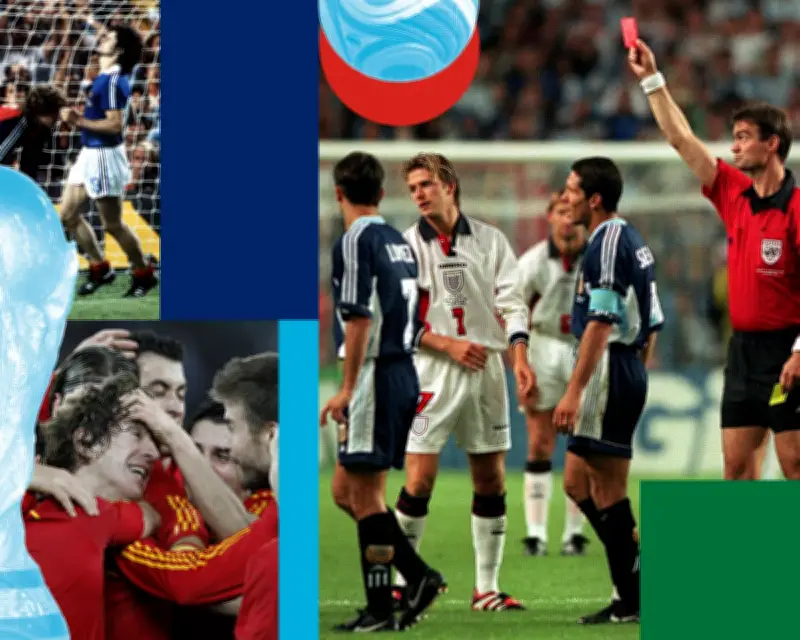
World Cup games carry immense weight, creating lasting memories and psychological burdens. For Spain, France, Argentina, and England, the semi-finals evoke past traumas that could influence their performances.
Spain's Semi-Final History
Spain have only reached one World Cup semi-final before, winning 1-0 against Germany in 2010 thanks to Carles Puyol's 73rd-minute header. Their long history of underachievement ended with Euro 2008 success. They have won five of six major finals, but their only final loss came in 1984 against France, their semi-final opponents. Additionally, they lost to France in a memorable Euro 2000 quarter-final when Raúl missed a late penalty.
France's Semi-Final Demons
France's most traumatic semi-final was in 1982 against West Germany. Substitute Patrick Battiston suffered a horrendous foul by goalkeeper Toni Schumacher, breaking his jaw and ribs and losing two teeth. France led 3-1 in extra time but paid for having one fewer substitute, eventually losing on penalties. They lost to West Germany again in the 1986 semi-final. Three consecutive semi-final wins since then may have eased anxieties, but demons can resurface.
England vs Argentina: A Historic Rivalry
England and Argentina share a deep rivalry dating back to 1951, with incidents including Bobby Charlton's 1962 goal, Antonio Rattín's 1966 sending off, Diego Maradona's "Hand of God" in 1986, David Beckham's 1998 red card, and Michael Owen's 2002 penalty. Their last meeting in 2005 saw Owen score twice in the final five minutes to win 3-2. The animosity may have lessened, but the historical tension remains.
England's Semi-Final Trauma
England have suffered semi-final defeats in 1990 (penalty shootout to West Germany) and 2018 (collapse against Croatia). They overcame part of their "Hand of God" trauma by winning at the Azteca in this tournament. The next challenge is beating Argentina in a knockout game.
The scarcity of World Cup games amplifies their significance. Each match becomes a defining moment, with players and teams haunted by ghosts of the past. Psychology plays a greater role in World Cup football than any other form of the game.