
World Cup Qualifying Reaches Climactic Finale Amid Format Concerns
The final round of World Cup qualifying matches this week delivers a captivating spectacle of international soccer drama, with twelve teams battling for the last six spots in the 2026 tournament. These playoff games represent the pinnacle of competitive intensity before the expanded format potentially dilutes the tournament's early stages.
The Thrill of Qualification Versus Tournament Anticlimax
World Cup qualifying consistently produces more excitement than the initial group stage matches of the tournament itself. The recent November qualifiers demonstrated this perfectly with memorable moments including Troy Parrott's hat-trick, Scotland's spectacular goals, DR Congo's dramatic penalty victory over Nigeria amid crowd disturbances, and Honduras's scoreless stalemate against Costa Rica.
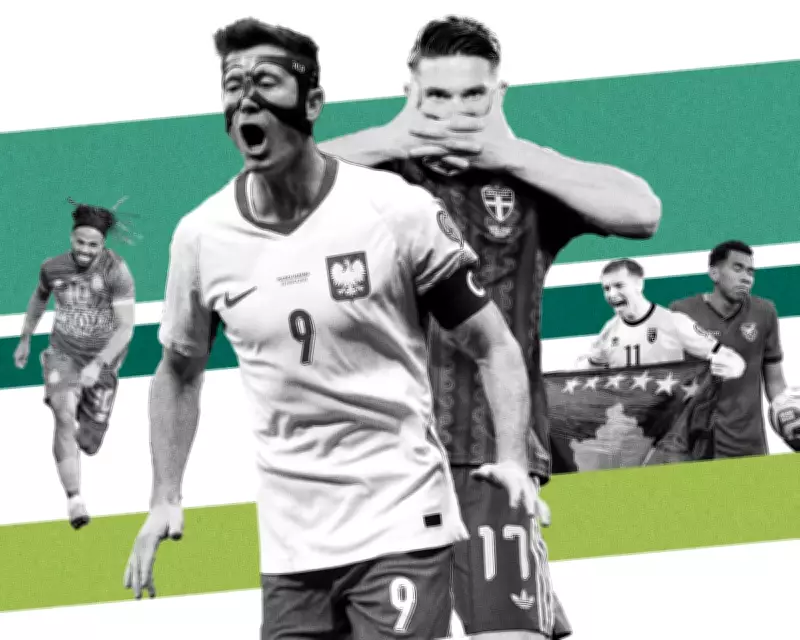
Tuesday's matches promise similar drama as nations like Kosovo, DR Congo, Iraq, Bolivia, Sweden, Poland, Denmark, and Czech Republic compete for their World Cup dreams. Kosovo seeks its first qualification just a decade after playing its inaugural official international match, while DR Congo aims to return to the tournament for the first time since 1974 when competing as Zaire.
The Problematic Expansion of World Cup 2026
The expansion to 48 teams for the 2026 World Cup introduces significant structural changes that threaten to undermine the tournament's competitive balance. The shift from eight groups of four to twelve groups of four, with the top two teams plus eight third-place finishers advancing, fundamentally alters the tournament dynamics.
This format creates several concerning issues:
- Reduced jeopardy in group stages where a single victory may guarantee progression
- Potential for mutually convenient draws in final group matches
- Extended tournament duration requiring 72 group games instead of 48
- Increased randomness in knockout rounds beginning at the last 32 stage
The new structure means teams could potentially advance from the group stage with just one win and two losses, then progress through knockout rounds via penalty shootouts after goalless draws. This randomness increases the likelihood that the quarter-finals might not feature the tournament's eight strongest teams.
FIFA's Format Reversal and Its Implications
FIFA initially planned for 16 groups of three teams when expansion was approved in 2017, following comprehensive studies considering sporting balance, competition quality, financial projections, and logistical factors. The organization's own research indicated this structure would maintain tournament duration and player release periods while ensuring competitive integrity.
However, FIFA President Gianni Infantino reportedly changed course after witnessing the success of four-team groups during Qatar 2022, opting instead for 12 groups of four. This decision extends the tournament length, increases player fatigue, and creates an uneven distribution of jeopardy - minimal tension for 17 days followed by sudden, extreme pressure in single-elimination knockout matches.
Contrasting International Friendlies
While World Cup playoffs deliver genuine drama, nations not involved in qualification face unsatisfying friendly matches featuring experimental lineups and weary players. Recent results like Belgium's 5-2 victory over the United States and Austria's win against Ghana represent little more than glorified training exercises with minimal competitive significance.
After Tuesday's qualifiers, attention will shift back to domestic leagues until the World Cup begins on June 11 with matches including Mexico versus South Africa and South Korea facing either Denmark or Czech Republic. The expanded format then threatens to deliver what many fear will be extended anticlimax until the round of 16.
This week's qualifying matches represent World Cup soccer in its purest form - high-stakes competition with everything on the line. What follows in 2026 may prove to be a bloated tournament structure that sacrifices competitive integrity for expanded participation, potentially diminishing the very drama that makes World Cup qualification so compelling.