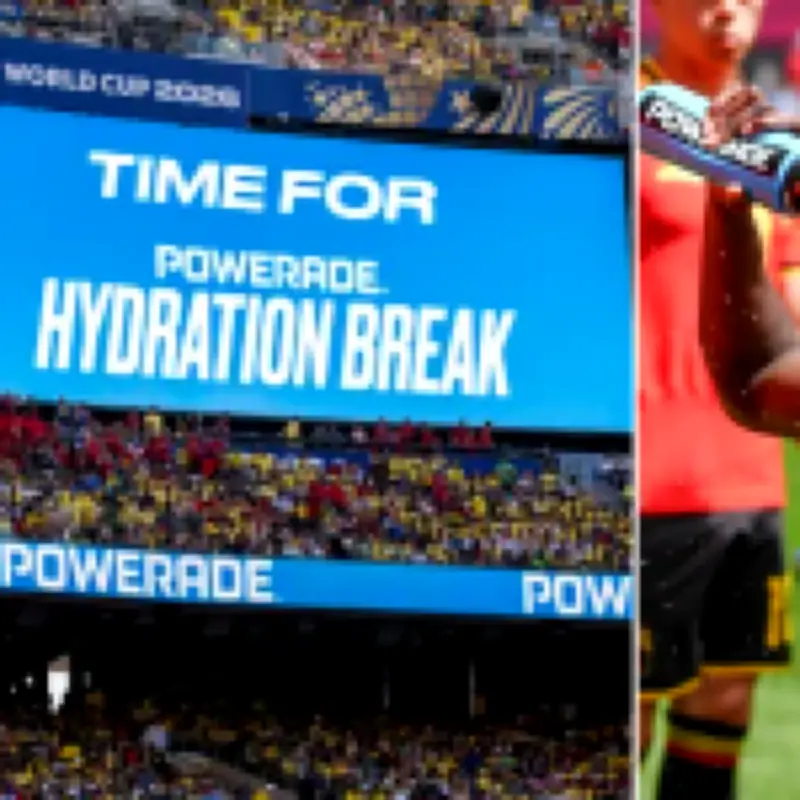
FIFA's mandatory three-minute hydration breaks during World Cup matches are proving as controversial as they are cooling. Players appear split over interruptions that some say kill the flow of the game, while coaches embrace them as tactical timeouts.
Introduction of hydration breaks
The breaks were introduced after the sweltering Club World Cup in the United States last year when soaring temperatures and oppressive humidity fueled concerns among players, coaches and fans. Matches will have hydration breaks taken around the 22nd minute in each half, effectively breaking the game into four quarters, much to the ire of fans.
Fan reactions
‘It’s for good adverts, bad for football. It’s a game of two halves, not four quarters,’ said one unimpressed fan, Jo Coutoure. Andy Fellows observed: ‘It’s not a hydration break, it’s a coaching break and they have a drink, they are splitting football into quarters like basketball and American football.’
While FIFA would argue the water breaks were implemented with player safety in mind, fans and players alike have a more cynical view. ‘I think hydration breaks are a bit interesting because I was obviously watching almost all the games… Every time, going to commercial is a bit not really that I like it,’ Netherlands skipper Virgil van Dijk told reporters. ‘I think for the neutral watchers on TV, it’s also not great.’
Player perspectives
The Liverpool captain’s take was shared by many fans, including Lee Olney who wrote: ‘Hydration breaks, change it to Advertising breaks. Money, money, money.’ Although not all fixtures are played during the day, hydration breaks have been mandated in each game at the World Cup in the interest of fairness and uniformity. ‘As a player, it can work both ways,’ Belgium’s Youri Tielemans said. ‘In some cities, it’s not that hot and maybe we shouldn’t do it. But at the end of the day, if you do it in some cities, you should do it for everyone.’
Calls for common sense
Many fans argued that a common sense approach should be applied depending on conditions in different cities and stadiums. ‘Have it game by game, not required if temperatures are only around 20 degrees,’ suggested Ian Green. JamesHarrison said football should follow the example of other sports: ‘It should be done the same as it is done in tennis – when the temperature hits a certain level.’
Broadcasters and commercials
Broadcasters are allowed to cut away to commercials 20 seconds after the referee signals a hydration break but must return to live action 30 seconds before the restart. However, some broadcasters like Britain’s ITV and Spanish-language broadcaster Telemundo opted not to show commercials to preserve the sanctity of the live game so fans can watch players and coaches interact.
Impact on momentum
Critics say hydration breaks can also have an adverse effect on teams, affecting their momentum. World Cup debutants Curacao were in dreamland when Livano Comenencia equalized against Germany in their group opener in the 21st minute, only for the referee to signal a hydration break soon after, allowing Germany coach Julian Nagelsmann to rally his troops to a 7-1 victory. ‘Leave drink bottles at the side of the pitch. Players can pick them up as needed,’ said Teresa Engley. ‘All to do with making money, totally disrupts the flow of the game.’ Terry Bosworth added: ‘They are treating the football World Cup games like all the American football games! Trouble is it’s halting the game and stopping the momentum! There is only 90 mins to play not five hours.’