How World Cup Expansion is Transforming Asian Football
The landscape of Asian international football is undergoing a dramatic transformation as nations scramble to secure their place in the expanded 2026 World Cup. With Asia's allocation doubling from four to eight automatic qualification spots, countries previously on the periphery now see a genuine pathway to football's greatest stage, sparking what experts describe as a naturalisation arms race across the continent.
The Qualification Revolution
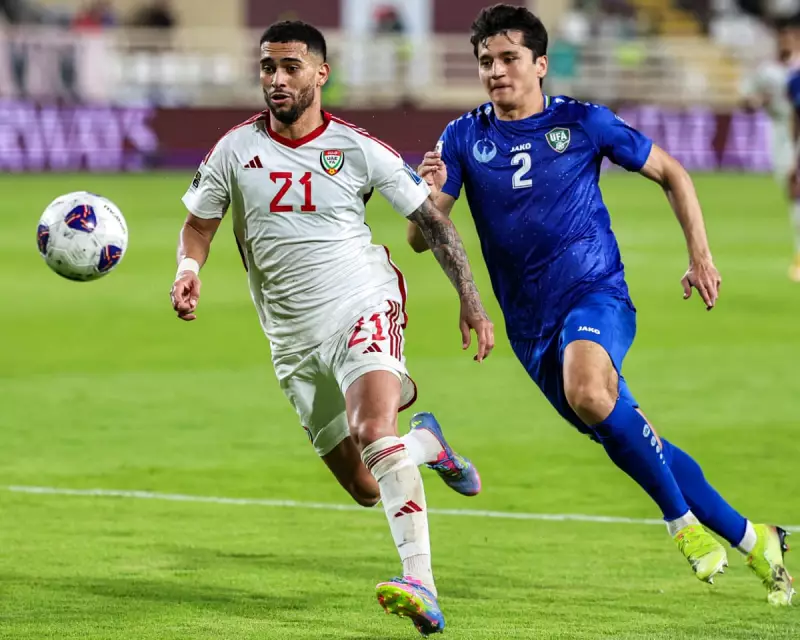
When the United Arab Emirates face Iraq in Abu Dhabi this Thursday during the crucial fifth round of Asian World Cup qualification, spectators will witness a team where over half the starting lineup likely hails from outside the country. This phenomenon isn't unique to the UAE but represents a broader continental trend accelerated by FIFA's decision to expand the tournament from 32 to 48 teams.
The mathematical reality has fundamentally altered ambitions. Asia's eight guaranteed spots for the 2026 North American World Cup represent a seismic shift from the traditional four, breaking the historical dominance of Japan, South Korea, Iran, Saudi Arabia and Australia. These nations, alongside North Korea's 2010 appearance, previously constituted the exclusive club of Asian World Cup participants.
Shaji Prabhakaran, a member of the AFC's executive committee, confirms the strategic thinking behind this shift. "The expansion has fuelled this drive to naturalise," he stated. "More World Cup places mean more hope for countries everywhere and more opportunities. They feel that if they pursue a program of naturalisation then they can fast-track to improve their quality, performance and results."
Global Talent Transforming National Teams
The United Arab Emirates exemplifies this approach, building a squad heavily reliant on naturalised Brazilian talent. Their current selection includes Lucas Pimenta, Marcus Meloni, Luanzinho, Bruno Oliveira, Caio Lucas, and Caio Canedo, alongside Argentine-born players Nicolás Giménez and Gastón Suárez, with additional representation from Morocco, Tunisia and Côte d'Ivoire. Under Romanian coach Cosmin Olaroiu, the UAE could field an entire starting eleven of foreign-born players.
Indonesia represents another compelling case study, achieving their best qualification performance since 1938 by reaching the final twelve teams. Their success stems largely from leveraging historical ties to the Netherlands, their former coloniser. The Indonesian Football Association has systematically recruited Dutch-born players with Indonesian heritage, sometimes fielding eight or nine European-born starters. The strategy proved so transformative that it attracted former Dutch star Patrick Kluivert to take the coaching role in January.
The impact of these naturalised players is undeniable. Kevin Diks, who recently scored his first Bundesliga goal for Borussia Mönchengladbach, now represents Indonesia, demonstrating how high-calibre talent can elevate a national team's competitive level.
Controversy and Competitive Pressure
This rush to naturalise hasn't been without controversy. In September, FIFA accused the Football Association of Malaysia of forging documents for seven players from Brazil, Argentina, Spain and the Netherlands to falsely claim Malaysian grandparents. These players participated in Malaysia's impressive 4-0 victory against Vietnam in June before receiving one-year suspensions, with the FAM fined $438,000 (£333,000).
The Malaysian case, now referred to the Court of Arbitration for Sport, highlights the intense pressure federations face. Neighbouring Vietnam has reportedly identified three or four Brazilian-born players approaching the five-year V-League residency requirement, while Sri Lanka has also improved their fortunes through European and Australian-born recruits.
Despite these controversies, fan enthusiasm appears undiminished. The UAE, typically playing before four-figure crowds, has sold out the 36,000-capacity Mohammed bin Zayed Stadium for their crucial qualifier against Iraq. When World Cup qualification becomes tangible, supporters clearly prioritise success over pedigree.
As the global football landscape continues to evolve, Asia's naturalisation trend represents both a pragmatic response to new opportunities and a fundamental rethinking of national team identity in pursuit of World Cup glory.