
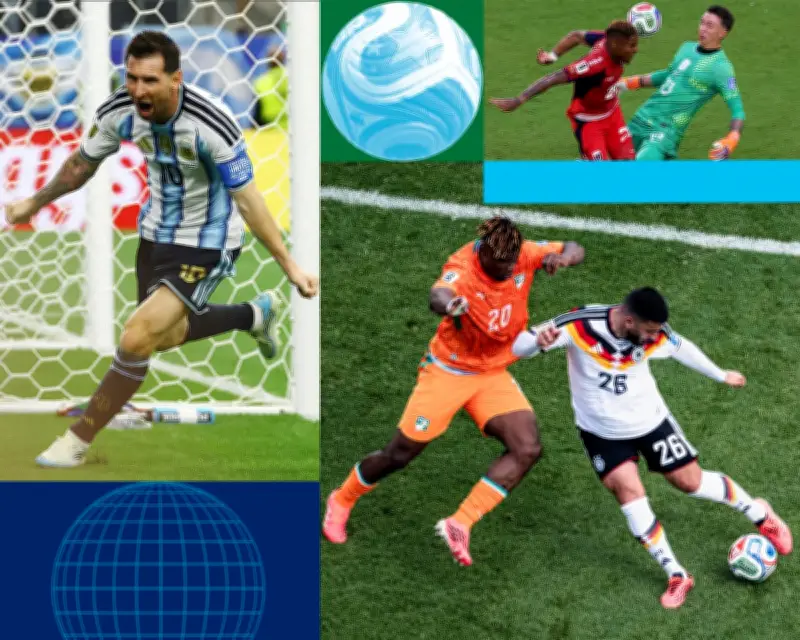
The 2026 World Cup has emerged as the most prolific tournament in decades, with an average of 2.94 goals per game after all 48 nations have played twice. This rate is the highest since 1970, surpassing recent editions. Only four matches have ended goalless, and three of those—Cape Verde vs Spain, Curaçao vs Ecuador, and Iran vs Belgium—featured gripping tension despite the lack of goals. England's 0-0 draw with Ghana was notably more subdued.
Goal-scoring surge compared to recent tournaments
Data shows the 2026 World Cup is outpacing its predecessors. The cumulative goal total after the first two matchdays exceeds that of Qatar 2022 and Russia 2018. Historically, goal rates often increase after the group stage, as seen in 2018 and 2022, partly due to extra time. If this pattern holds, the tournament could become one of the greatest in terms of scoring.
Multiple factors behind the goal glut
The surge stems from a combination of elements. The Golden Boot race features four elite forwards—Kylian Mbappé, Lionel Messi, Erling Haaland, and Harry Kane—each scoring at least twice in the opening round. They repeated the feat in the second round, with Cristiano Ronaldo also netting a brace against Uzbekistan. This competition has driven 21 instances of a player scoring at least twice in a match, surpassing the 20 from the entire 2022 tournament.
Long-range strikes are also on the rise. Yasin Ayari of Brighton scored twice from outside the area for Sweden against Tunisia, despite never doing so in English league football. Mbappé has scored from beyond the box against Senegal and Iraq, after managing only one such goal in his first two World Cups. The tournament has seen six more goals from outside the box than in 2022, challenging the notion that data analysis has reduced low-probability shots.
Impact of expanded tournament and defensive errors
The expanded format, with 48 teams instead of 32, has allowed weaker nations to qualify. Top forwards face defenders and goalkeepers less accustomed to elite finishers, encouraging early shots. Goalkeeping errors have also spiked. Uruguay's Fernando Muslera spilled a shot against Saudi Arabia and raced out of his box to allow Cape Verde's Helio Varela to score a famous equalizer. Iraq's goalkeepers gifted goals to Haaland and Mbappé. Opta has recorded 25 defensive errors leading to goals, compared to 37 across the 2018 and 2022 tournaments combined. Own goals have also risen; the USA alone have benefited from two, matching the total for all teams in 2022.
Substitutes making a difference
Teams are allowed up to five substitutes, a rule introduced after 2022. Deniz Undav has been directly involved in five goals off the bench, tying the record since 1966. Substitutes have contributed 28 goals, just two fewer than in the entire 2022 tournament, and have recorded eight goals both scored and assisted, an all-time high. England head coach Thomas Tuchel praised his substitutes after a win over Croatia: “We needed this quality to bring it over the line. I know they are all starters. So it is new for them. But they also know it is a period of time that is so special and they buy into this idea that we do it as a team. This is the only way.”