Emma Hayes' USWNT Navigates Selection Crossroads After 2026 Opening Games
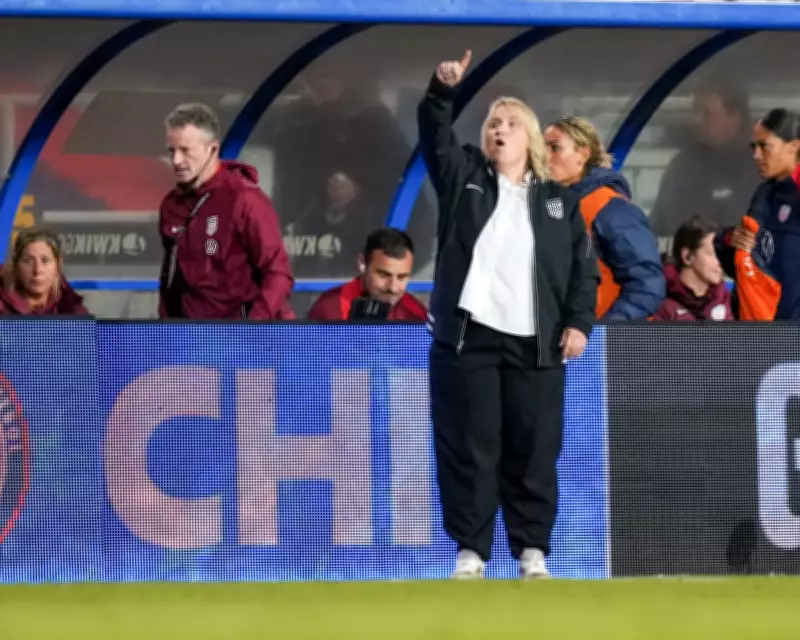
The initial international window of 2026 has concluded for the US women's national team, yet it feels like an extension of a recurring narrative under manager Emma Hayes. Once again, Hayes utilised this period to explore new talents within her exceptionally deep player pool, fielding an especially experimental squad. According to federation data, the starting lineup in the 6-0 victory over Paraguay averaged just 9.6 caps, the lowest in 25 years, a record that was further broken in the subsequent 5-0 win against Chile with a mere 5.2-cap average. In stark contrast, the 2024 Olympic squad averaged 51.4 caps per player, highlighting the transitional phase the team is undergoing.
While this phase may seem like a leisurely exploration, the upcoming year will introduce significant stakes, forcing decisive roster choices ahead of World Cup qualifying in November. Here is a detailed four-point analysis to guide understanding of the key positional battles and predictions for the future lineup.
The Quest for a New Goalkeeper
Following Alyssa Naeher's international retirement, the USWNT finds itself without a clear successor in the goalkeeper position. Phallon Tullis-Joyce of Manchester United, with four caps as of late January, appears to be the frontrunner, having seamlessly adapted to the team's possession-based style and demonstrated impressive shot-stopping abilities. Her performances at club level have only bolstered her standing.
Other contenders include Mandy McGlynn, who started against Paraguay but faced minimal challenge, and Claudia Dickey, who secured a clean sheet against Chile. Jordan Silkowitz, Jane Campbell, and Angelina Anderson have also received call-ups over the past year, while Casey Murphy, Naeher's former backup, has not added to her 20 caps since October 2024. With only 26 caps spread across six candidates since early 2025, the eventual starter will need ample game time to build defensive partnerships and confidence.
Early prediction: Tullis-Joyce is likely to start the Concacaf W Championship, supported by McGlynn and Dickey as backups.
Defensive Dynamics: Certainties and Contenders
Naomi Girma stands as a cornerstone of the USWNT defence, renowned for her composure and distribution, making her one of the world's top players. Emily Fox has similarly risen to prominence, excelling at right back for Arsenal and earning high rankings in global lists. However, the left-back position remains uncertain as Hayes seeks alternatives to Crystal Dunn, with Izzy Rodriguez, Kate Wiesner, Lilly Reale, and Kerry Abello all in contention. Notably, Dunn and Jenna Nighswonger from the Olympic squad have not been selected recently.
At centre-back, Tierna Davidson's recovery from an ACL injury opens opportunities for others to partner with Girma. Emily Sonnett offers veteran experience and complements Girma well, though her versatility might see her deployed in varied roles. Young talents like Jordyn Bugg and Emily Sams are also impressing, while Tara Rudd and Eva Gaetano have become squad regulars. The right-back backup role is fiercely contested by Avery Patterson and Gisele Thompson.
Early prediction: Sonnett is expected to start centrally alongside Girma, with Reale taking the left-back spot.
Midfield Reconstruction for Cohesion
The midfield has been a persistent area of concern since the dominant trio of Julie Ertz, Sam Mewis, and Rose Lavelle led the 2019 World Cup victory. Lavelle remains invaluable for her transitional play when fit, while Lily Yohannes contributes with long-range distribution. Sam Coffey's reliable defending earned her a move to Manchester City, but integrating captain Lindsey Heaps poses a challenge, as her role as a number 10 has sometimes led to spacing issues.
Additional options include Claire Hutton, who shows promise as a defensive midfielder, Hal Hershfelt with aerial strength, and dynamic players like Jaedyn Shaw and Croix Bethune for creative roles. With a potential 23-player World Cup squad limit, midfield selections will be particularly competitive.
Early prediction: Lavelle and Bethune may alternate at the number 10 position, supported by Heaps and Coffey in deeper roles.
Forward Line: Wealth of Talent and Selection Headaches
Trinity Rodman, now the NWSL's highest-paid player and recent captain, is a key figure on the right flank, provided her fitness holds. The anticipated returns of Sophia Wilson and Mallory Swanson from maternity leave add depth, though Swanson's goal drought since the Olympics and recovery timeline raise questions. Catarina Macario has re-established herself but faces rotation at Chelsea, while Alyssa Thompson's breakout form at Chelsea offers a dynamic option on the left.
Young forwards like Emma Sears, Michelle Cooper, and Ally Sentnor have also stepped up, making the attacking line Hayes' most abundant area for selection dilemmas.
Early prediction: Rodman is set for the right wing, Wilson at striker, and Thompson on the left, forming a potent forward trio.