
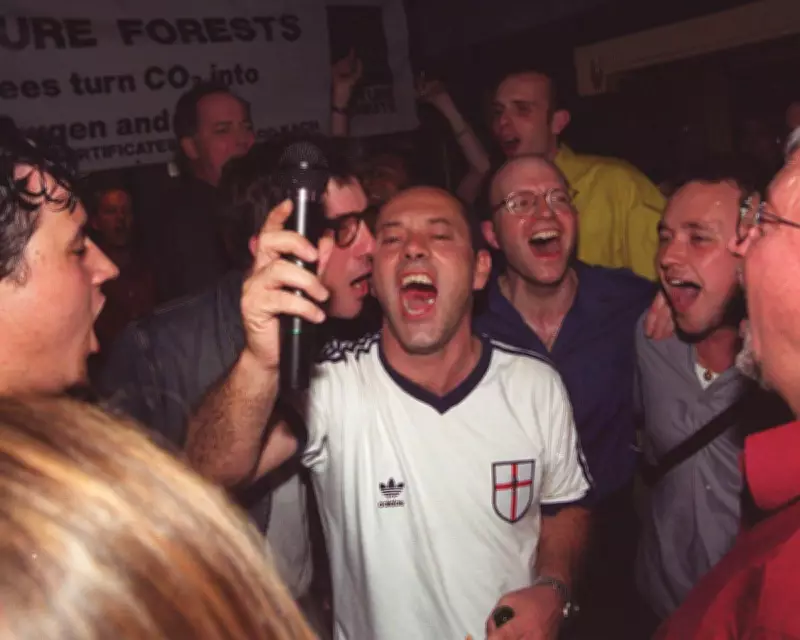
The Unlikely Rise of Unofficial World Cup Anthems
Keith Allen, the lead singer of Fat Les and co-writer of England's official 1990 World Cup song World In Motion, has revealed an astonishing financial detail about the band's iconic 1998 unofficial anthem Vindaloo. According to Allen, legendary bassist Guy Pratt earned more money from simply producing Vindaloo than from his extensive work playing with the legendary rock band Pink Floyd.
From Pub Basement to Cultural Phenomenon
The creation story of Vindaloo remains one of football's most charming musical anecdotes. Allen confessed that the entire concept emerged during a tipsy, hungry night after visiting The Star pub on Portabello Road. The only word he could think to rhyme with Waterloo - the railway station from which Londoners then traveled to France for the tournament - was Vindaloo. This spontaneous inspiration led to the recording of what would become England's unofficial 1998 World Cup anthem in Pratt's basement.
Despite attempts by some cultural commentators to elevate Vindaloo into a sophisticated commentary on English identity, particularly given the involvement of Blur's Alex James and artist Damien Hirst, the song and its bizarre video parody of The Verve's Bitter Sweet Symphony made little logical sense. Yet this mattered not at all to football fans who embraced its infectious energy and celebratory spirit.
The Scottish Adaptation and Commercial Evolution
The song's popularity reached such extraordinary heights that even Scottish fans were caught copying the English tune, though they cleverly amended the lyrics to reference Irn-Bru instead. From that watershed moment, unofficial World Cup songs transformed into serious business ventures, with subsequent efforts ranging from organically created fan anthems to carefully manufactured celebrity projects.
While some subsequent unofficial songs have achieved genuine popularity - such as the Will Grigg On Fire chant - others have been less successful. Freddie Flintoff's 2018 cover of Rasputin for the Russia World Cup, backed and financed by a betting company, represents what many consider the commercial low point of this trend.
The AI Takeover and Authentic Alternatives
The landscape has grown increasingly dystopian, with this year's early contenders for unofficial World Cup anthems largely consisting of AI-generated creations. One particular track, Imbattables (or Unbeatable) by French artist Crystalo, has been streamed millions of times despite being criticized for not promoting actual French musicians and largely ignored within France itself.
For those seeking unofficial World Cup songs with genuine substance created by human artists, Scottish musician and football journalist JJ Bull has released an unofficial anthem for The Tartan Army. This soaring, LCD Soundsystem-inspired call to arms represents the kind of authentic musical celebration that many hope will counterbalance the rise of AI-generated football anthems.
As the world prepares for another World Cup tournament, the battle between commercially manufactured anthems, AI-generated tracks, and authentic fan-created music continues to define this unique intersection of football and popular culture.