
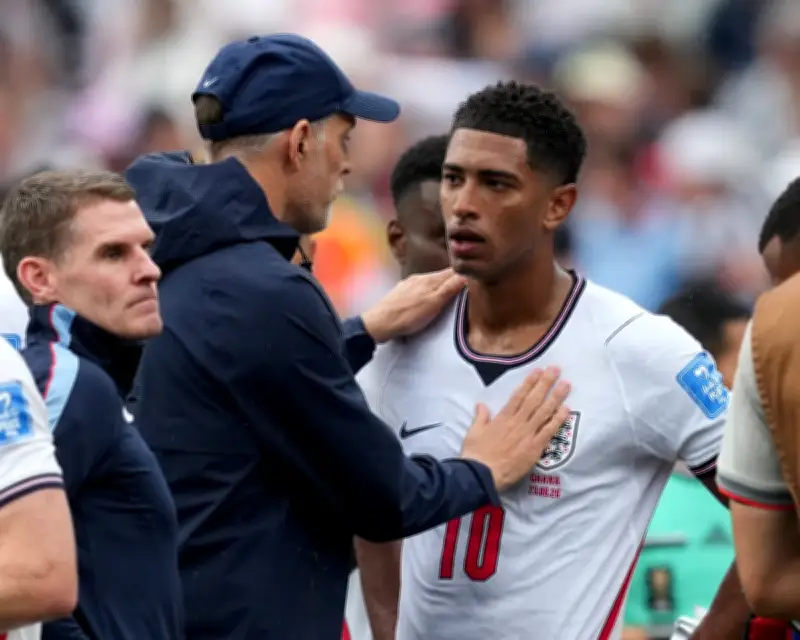
Thomas Tuchel's handling of Jude Bellingham will be key to England's hopes, as the new coach brings a distinct psychological approach that challenges traditional narratives. The difference between Gareth Southgate and Thomas Tuchel is not as simple as the former being less ruthless, as commonly assumed.
Tuchel's Half-Time Approach: Calmness Over Aggression
During England's first match against Croatia, pundit Gary Neville asserted that Tuchel must have "blasted them" and given "an absolute rocket" at half-time. However, Tuchel explained he gave the players calm time and reminded them: "Even if we lost, it will not change my perception of you from the last 17 days, but let's do it our way." This contradicts the outdated mythology that aggression is needed at half-time. By acknowledging losing as a possibility, Tuchel releases tension and reduces the fear of failure, allowing players to focus on performance.
Psychology of Acknowledging Failure
Psychology explains that acknowledging the possibility of losing frees the mind to focus on performance. Tuchel reassures players that his view of them won't change based on the result, which is deeply human and removes the threat of conflating self-worth with winning. This approach is seen as the most powerful thing a coach can say to a team under pressure.
Unconditional Love Before Results
Tuchel's philosophy aligns with his video tips for grassroots coaches: coach with love and passion, be in the moment, and love your team. Before the Ghana game, he stated a draw was OK, simply giving facts rather than increasing pressure. Assistant coach Anthony Barry's half-time feedback focuses on performance without blame, asking what's working, what needs improvement, and what to change—a high-performance mindset used by elite athletes.
Consistency in Performance Focus
Tuchel and Barry maintain consistent analysis regardless of results, which contrasts with pundits fixated on outcomes. This consistency helps players focus on improving. In Olympic rowing, the focus is on "making the boat go faster" rather than on uncontrollable results or personal criticism.
Connection as a Critical Tool
Tuchel's favourite word is "connection." He complained to Fifa about photographers blocking him during the national anthem because he wanted to connect with his team. He explains Bellingham's role in terms of connecting into the team. Leaving out Phil Foden and Cole Palmer was due to "cohesion." Connection enables tactics to work at speed.
Leadership Masterclass
Sports psychologist Jeremy Holt notes that winners in politics use "we" and "us" more than losers. He highlights that Tuchel and Harry Kane go further still. Beyond the scores, we are witnessing a fascinating team leadership masterclass.