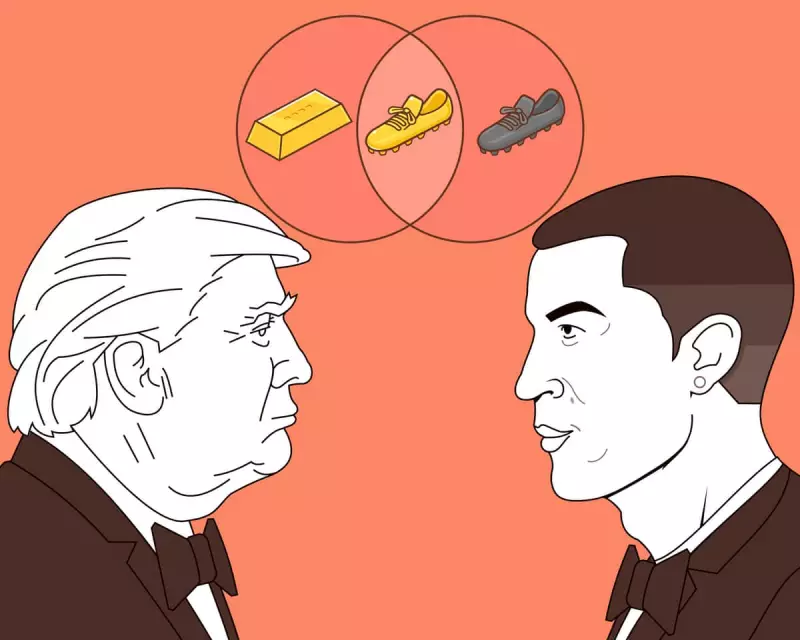
The spectacle at the White House this week offered a disturbing glimpse into football's increasingly politicised future, as former US President Donald Trump hosted Cristiano Ronaldo and Saudi Crown Prince Mohammed bin Salman in what amounted to a mutual endorsement ceremony.
The Unholy Trinity: Football Meets Power Politics
Images from the state dinner circulated widely across social media, presenting a jarring tableau of sporting celebrity intersecting with controversial political figures. Ronaldo, dressed entirely in black, appeared laughing alongside Trump in the halls of power, while FIFA president Gianni Infantino lurked in the background of photographs, described by observers as resembling 'a vampire who does card tricks'.
The event marked significant rehabilitation for both Ronaldo and MBS. For Ronaldo, this represented his first high-profile appearance in the United States since 2017 sexual assault allegations emerged, which he continues to deny and which have never been proven. For Mohammed bin Salman, it amounted to casual exoneration for his alleged involvement in the murder of journalist Jamal Khashoggi, with Trump telling reporters the Crown Prince 'knew nothing about it'.
The Quid Pro Quo Behind the Smiles
The mutual benefits were starkly apparent. Trump subsequently announced that Saudi Arabia would invest $1 trillion in the United States, while Ronaldo gained access to the American market that had previously been problematic for his brand. The Portuguese superstar's enormous influence among young men online makes him an invaluable asset for political figures seeking to broaden their appeal.
This explains why Trump was heard cooing 'Roonnnallldoo' from his dais in what observers described as sensuous tones. The footballer has become what analysts term 'the most winningest World Cup mascot' - a handsome, globally recognised figure who can lend credibility to virtually any enterprise.
Implications for Football's Future
The gathering carries profound implications for the beautiful game. With Saudi Arabia set to host the 2034 World Cup and the United States preparing to co-host the 2026 tournament alongside Canada and Mexico, the lines between sport and politics have never been more blurred.
FIFA president Gianni Infantino's presence raises serious questions about football governance. As the administrator of a supposedly non-political organisation, his dog-like devotion to Trump represents a fundamental breach of duty. The day before the Ronaldo meeting, Infantino sat nodding along while Trump discussed moving World Cup games from cities governed by his political opponents and even threatened to bomb FIFA's co-host Mexico.
This represents a new low in sporting cynicism, arguably surpassing even the controversies surrounding the Qatar and Russia World Cups. At least those nations never pretended to be liberal democracies, whereas the United States has long positioned itself as the world's leading advocate for freedom and human rights.
The spectacle serves as a stark reminder that while we don't have to abandon the World Cup itself, we must vigorously oppose those who would weaponise it for political purposes. Football belongs to the people, not to autocrats, controversial presidents, or their celebrity enablers.