
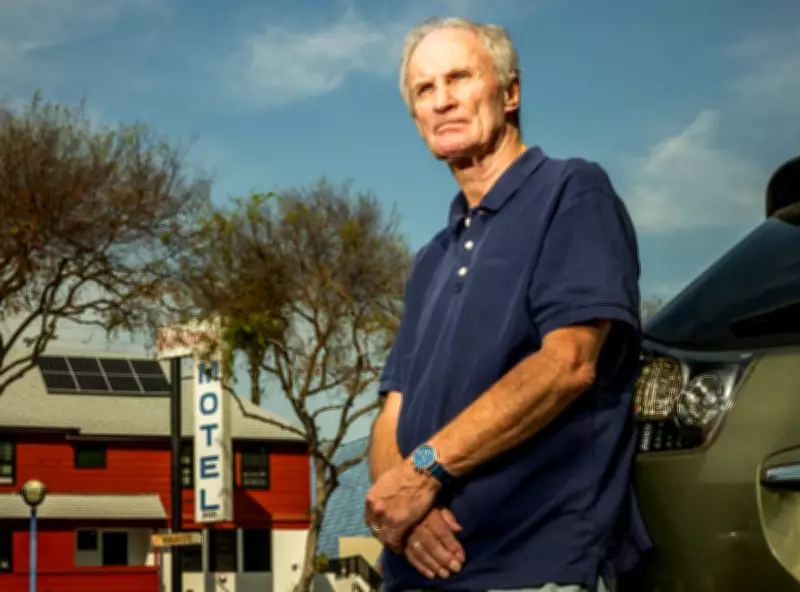
The Hidden Life of a Football Pioneer
Tony Powell, a former central defender for Norwich City and Bournemouth during the 1970s, spent decades concealing his true identity as a gay man in professional football. Now 78 years old and residing in Los Angeles, Powell reflects on a life marked by secrecy, isolation, and eventual liberation. His extraordinary story is the focus of a new documentary titled The Last Guest at the Holloway Motel, which explores his journey from the football pitches of England to a dilapidated motel in West Hollywood.
A Life in the Shadows
"I hated it," Powell admits, describing his past as a secretly gay footballer. During his career, which included 275 appearances for Norwich City and recognition as the club's player of the season in 1979, Powell lived a double life. He was a husband and father to two young daughters, all while burying his true self to avoid the homophobia pervasive in football at the time. "I just wanted to be who I am, but at that time it was not a good idea to come out," he says, his English accent still evident after 45 years in America.
Powell's experience is shared by a very small group of male footballers who have played professionally in England and come out as gay. He was teammates with Justin Fashanu at Norwich City between 1978 and 1981. Fashanu later became the first professional footballer in England to publicly reveal his homosexuality in 1990, a decision that led to severe backlash and ultimately his tragic suicide in 1998. Powell recalls Fashanu as "a very good footballer and a really nice guy," noting that even then, Fashanu feared his career would end if he came out.
Escape to America
In August 1981, Powell moved to the United States, seeking a fresh start. He continued his football career with clubs like the San Jose Earthquakes and Seattle Sounders but still felt compelled to hide his sexuality. "It's just not accepted. You can't be a professional soccer player and be gay," he explains. Convinced that his family in England would reject him if they learned the truth, Powell made the drastic decision to cut all ties with them, leaving them unaware of his whereabouts for over three decades.
Powell eventually settled in West Hollywood, an area known for its LGBTQ+ community. "People go to West Hollywood because they feel safe. They move from places where they're getting harassed to somewhere they can live freely," he says. For 25 years, he lived at the Holloway Motel, first as its manager and then as its last occupant before it closed in September 2023. "I miss it. It was a fun place," Powell reminisces, highlighting the motel as a symbol of his newfound freedom.
Connections and Reconciliation
The documentary also features Robbie Rogers, a former USA international who played for Leeds United and Stevenage and came out as gay in 2013. Rogers, 40 years younger than Powell, understands the pain of secrecy in football. "I kept it completely secret. I was so afraid it would get out and I'd have no control," Rogers shares. He notes that hearing teammates make homophobic comments at Leeds United reinforced his fear of being open about his sexuality.
Rogers became involved in producing the documentary after film-makers Ramiel Petros and Nick Freeman discovered Powell's story. Petros recalls first seeing Powell on the balcony of the Holloway Motel, appearing "serious and grumpy," and later learning about his football past. The film not only delves into Powell's life but also facilitates emotional reunions with his family in England. Powell has reconciled with his two sisters, Denise and Jane, and his daughters, though the latter chose not to be filmed. "It was good. They were accepting and our love for one another was there even after all they'd gone through," Powell says of reconnecting with his daughters.
Legacy and Hope for Change
Powell's story extends beyond football to his personal relationships. He cared for his partner, David Castro, who died from AIDS-related complications, demonstrating a tenderness that contrasts with his tough on-field persona. Former teammates describe him as "Mr Dependable"—"as hard as nails" with "courage and commitment"—yet gentle off the pitch. Powell also supported Erica, a trans woman and his assistant manager at the motel, during her transition, showing empathy and acceptance.
Despite progress in society, both Powell and Rogers express skepticism about the immediate future for gay footballers in top-level English football. "It's too difficult to come out and get accepted, especially in the Premier League. Nothing's really changed. It's still a homophobic league," Powell asserts. Rogers adds, "I've heard this from different people over the years—everyone is too afraid." However, they hold out hope that attitudes will evolve, allowing future players to live authentically without fear.
The Last Guest at the Holloway Motel is set to screen at the NFT in London as part of the BFI Flare film festival, bringing Powell's poignant narrative to a wider audience and highlighting the ongoing challenges faced by LGBTQ+ individuals in sports.