Squad Depth Emerges as Defining Factor in Women's Super League Title Race
In the fiercely competitive landscape of the Women's Super League, the ability to utilise an entire squad effectively has become a critical determinant of success. No longer is victory guaranteed by fielding the best starting eleven; instead, sustained performance over a gruelling campaign hinges on the contributions of every player, from first-choice stars to impactful substitutes.
Manchester City's Rotational Mastery Builds Commanding Lead
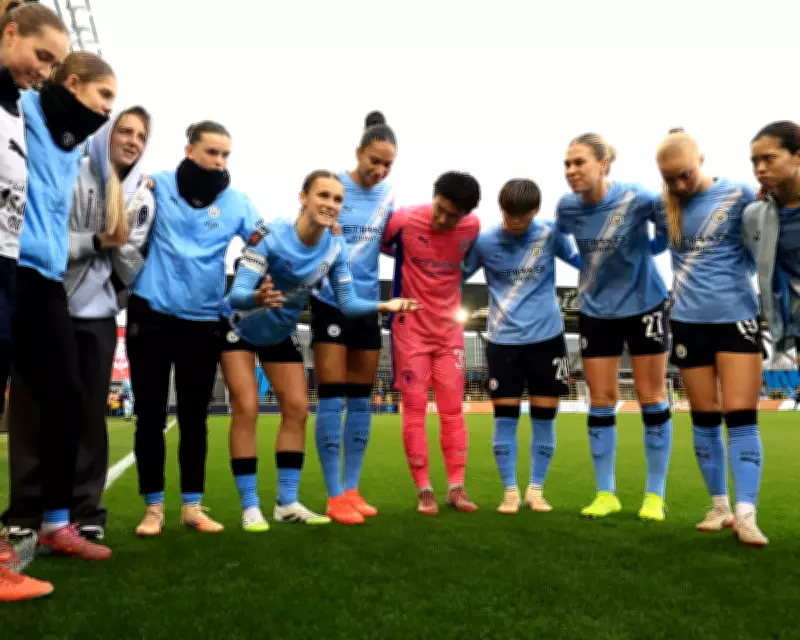
Manchester City's current position, holding a significant nine-point advantage over rivals Chelsea ahead of their pivotal Sunday clash, is a testament to their strategic use of squad depth. Under the guidance of manager Andrée Jeglertz, City have implemented a high-intensity style of play characterised by pressing, wide overloads, and sustained attacking pressure. This approach necessitates careful rotation to manage player workload and prevent burnout among key individuals.
The philosophy within the City camp is clear. "We have seen so many times this year the players that have been coming on have given extra gear to the team," Jeglertz stated recently. "We quite often say 'everybody counts', and we've shown that in our gameplan and in the contributions from the finishers." This was exemplified in a crucial October fixture against Arsenal, where substitute Iman Beney, introduced in the 59th minute, scored a dramatic 88th-minute winner, perfectly illustrating the tangible value of a deep bench.
However, Jeglertz emphasises that rotation must be controlled. "We can't just rotate, rotate, rotate. That's not the idea. It's to unload some players so they can manage three games in a week," he cautioned, highlighting the balance required to maintain team cohesion and key on-pitch relationships.
Chelsea and Arsenal Navigate the Depth Challenge
Chelsea, under Sonia Bompastor, continue to set a formidable benchmark for squad utilisation. For the Blues, depth is a proactive advantage, not merely a contingency plan. "When you want to compete in all four competitions I think it's essential to rotate players to keep a good balance between performance and physicality," Bompastor explained. Her team's strength lies in introducing fresh legs without disrupting their rhythm, allowing them to sustain pressure during congested fixture periods and in the latter stages of matches.
Despite a recent 2-0 loss to Arsenal, Chelsea's bench strength remains intimidating, with players like Johanna Rytting Kaneryd and Lauren James providing game-changing options. Defender Lucy Bronze acknowledged this impact, noting the "extra bit of energy" and different style such substitutions bring.
Arsenal, traditionally known for impactful substitutes like Beth Mead and Stina Blackstenius, have faced challenges this season. A spate of injuries has at times depleted their bench options, turning potential victories into dropped points. This shortage of available talent beyond the starting lineup could prove to be the decisive factor separating them from Manchester City in the title chase.
The Structural Shift in Modern Women's Football
The increasing importance of squad depth is a direct response to the structural evolution of the women's game. Multiple teams now challenge on several fronts—domestic league, domestic cups, and European competitions—leading to a congested calendar where fatigue, injuries, and dips in intensity are constant threats rather than occasional setbacks.
Managers are acutely aware of this new reality. Arsenal head coach Renée Slegers recently highlighted the complexity of selection, stating, "We have to make excellent decisions game by game and there will be so many factors going into those decisions. But we want an elite competitive squad to compete in all the competitions we're active in." The emphasis has decisively shifted from relying on a fixed core of players to fostering competitiveness across the entire squad, ensuring every member is prepared to contribute when called upon.
This trend extends beyond the traditional top three, with clubs like Manchester United actively bolstering their ranks through transfer activity, such as signing three players in the January window, in a bid to close the gap.
Broader Context and League Developments
The growth of the WSL, while promising, comes with financial considerations. The league's governing body, WSL Football, reported an operating loss of £8.2 million in its first year, against revenues of £17.4 million primarily from broadcasting and sponsorship. This loss was described as an expected investment phase for the new organisation, which has already seen revenue triple since taking control, with future accounts set to reflect improved media rights and commercial deals.
Looking further afield, the ambition to broaden the cultural appeal of women's football is evident. Organisers of the 2026 AFC Women's Asian Cup have confirmed that K-pop artist Audrey Nuna will headline the opening ceremony in Perth, a move designed to attract new global audiences to the tournament.
Ultimately, the WSL title race is being reshaped by a fundamental principle: in a league where every match is a tough battle, success is increasingly built not just on the quality of the first eleven, but on the strength and readiness of the entire squad. Manchester City's current lead is the most compelling evidence of this new competitive truth.