
Spanish Football's Unmatched European Dominance This Century
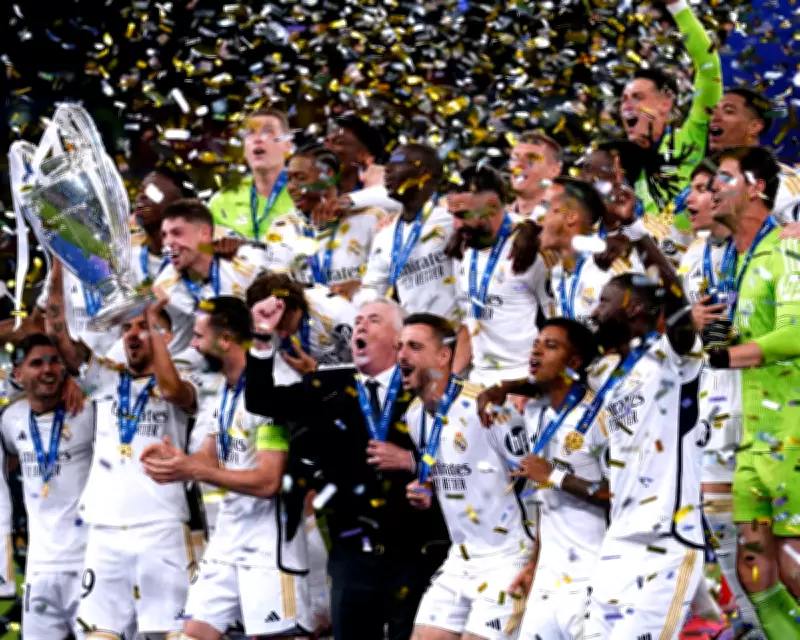
Spanish clubs have achieved a remarkable feat in European football, securing an impressive 24 titles across the three major European competitions since the turn of the century. This staggering number far surpasses the achievements of other footballing nations, with England trailing at 11 titles, while Italy and Germany have managed only five and four respectively. The Spanish model has clearly emerged as the superior blueprint for sustained success on the continental stage.
The Tactical Evolution: From Man-Marking to Positional Play
The traditional German coaching philosophy of "follow your opponent right into the loo" represented an era of strict man-marking that demanded little tactical thinking from defenders. While this approach made an unexpected comeback with Atalanta's 2024 Europa League victory, its limitations were brutally exposed when the Italian side faced Bayern Munich in the Champions League last 16. Bayern exploited vast spaces created by the man-marking system to score 10 goals in a one-sided knockout match that demonstrated the approach's fundamental flaws against superior opposition.
In contrast, Spanish football has perfected a different tactical philosophy centered on ball-oriented defending, clearly defined positions and roles, and organized combination football that systematically shifts play into the opposition's half. This approach demands significantly more cognitive engagement than simple one-on-one battles, requiring players to cooperate, orient themselves within the team structure, and selectively engage in individual duels at precisely the right moments.
The Spanish Identity and Its European Success
For Spanish football, this tactical approach has become a matter of national identity with overwhelming evidence supporting its effectiveness. Six different Spanish clubs have shared in the 24 European titles won this century, demonstrating the system's widespread implementation and success across multiple organizations. During the same period, only two Bundesliga clubs have achieved similar European success.
The Spanish influence extends beyond club football into international competitions, with Spain winning three of the last five European Championship titles, including the 2024 tournament under Luis de la Fuente. This level of dominance surpasses even Germany's celebrated era of the 1970s and 1980s, rewriting Gary Lineker's famous observation about German football's inevitable success.
Spanish Coaching Dominance Across Europe
Spanish managers have established unprecedented influence across European football, with 11 Spanish coaches represented in the last 16 of all three European competitions this season—more than twice as many as the second-ranked nation. In the quarter-finals, three Spanish managers remain, more than from any other country.
The Spanish coaching tree continues to produce remarkable success stories across the continent. Xabi Alonso ended Bayern Munich's Bundesliga dominance with Bayer Leverkusen, Unai Emery consistently elevates second-tier clubs like Aston Villa to prominence, and Cesc Fàbregas is revolutionizing Italian football with Como in Serie A. Even Pep Guardiola's evolving Manchester City project, while experiencing a temporary dip in inspiration, continues to compete for major honors in England.
The Decline of Italian Football and Bundesliga Concerns
The Spanish school has decisively replaced the Italian model as European football's superior tactical approach. While Italy continues to produce internationally recognized coaches, including Carlo Ancelotti, Italian teams no longer achieve significant European success. This season marks the absence of Italian clubs from the Champions League quarter-finals, with Atalanta barely avoiding a complete Italian absence from the last 16 by eliminating Borussia Dortmund at the last second.
More concerning for Italian football is the national team's failure to qualify for three consecutive World Cups, most recently eliminated by Bosnia after previously falling to North Macedonia. The Italian game appears to lack the intensity, commitment, dynamism, athleticism, and initiative necessary to compete at the highest level, resulting in a dearth of world-class Italian players.
In Germany, concerning trends are emerging as Bundesliga teams increasingly revert to man-marking approaches. Bayern Munich under Vincent Kompany have experimented with this system, achieving some success against unprepared opponents like PSG in the group stage but struggling against well-prepared teams like Arsenal. The Bundesliga's lack of competitive pressure may allow such tactical experiments to go unpunished domestically, but European competition exposes their limitations.
The Future of European Football Tactics
The fundamental challenge facing managers attempting to transition between tactical systems—particularly from possession-based defense to man-marking—remains unresolved. No manager has successfully managed this switch without losing control, not even the most accomplished coaches in the game. As Spanish football continues to dominate European competitions with its distinctive style, other nations must carefully consider whether tactical regression represents a viable path forward or risks leaving them further behind in the evolving landscape of European football.