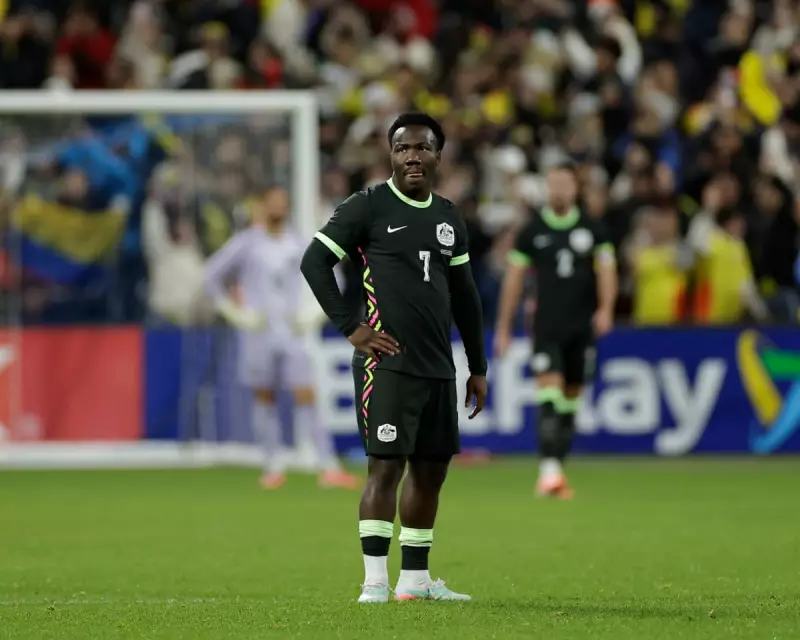
The Australian men's national football team, the Socceroos, are confronting a significant challenge as their journey towards the 2026 World Cup continues. Despite demonstrating defensive resilience, the team's inability to forge a consistent attacking threat is causing growing concern among fans and pundits alike.
A Defensive Anvil in Search of its Hammer
Manager Tony Popovic finds himself at a critical juncture following a 3-0 defeat to Colombia in New York. This loss, compounded by a 1-0 reverse against Venezuela in Houston, marks the first time in a decade that the Socceroos have suffered three consecutive defeats. The recent performance in Queens, however, showed signs of improvement for the first 75 minutes, with the team holding its own against one of South America's most potent attacks.
Popovic revealed a significant mitigating circumstance after the Colombia match, stating that several players and staff had been bedridden by a virus just 48 hours prior. This context adds a new dimension to the team's resolute defensive display and helps explain the late collapse that saw three soft goals conceded.
Youth Integration Comes at a Cost
Since securing World Cup qualification in June, Popovic has deliberately chosen to cast a wide net, testing new talent rather than focusing solely on a settled starting eleven. This strategy has yielded positive discoveries, with young players like Nestory Irankunda, Paul Izzo, and Mo Touré emerging as genuine contributors at the international level.
However, this experimental phase has come with a trade-off. The team has managed to score just a single goal in its last 270 minutes of football against credentialed opponents. The match against Colombia highlighted this blunt attacking trend, with Australia outshot 16 to two and managing only one shot on target, a Riley McGree free-kick.
The Clock is Ticking Towards the World Cup
With just seven months and four games remaining until the World Cup commences, the pressure is mounting on Popovic to find a solution. The central question is whether the integration of new players justifies the missed opportunities to hone a cohesive best XI.
Popovic has acknowledged the issue, stating, "We've got some young boys there that we're trying to get experience with. You've just got to get better when we get in that front third so we can turn that good play into a good chance on goal."
While this new-look Socceroos squad appears to have a higher baseline quality than the 2022 version, evidenced by wins over Japan and Saudi Arabia, unlocking the attack is now the manager's most urgent task. The team's grit and defensive organisation are established, but the search for a reliable, creative spark in midfield and a consistent goal threat continues. Time to find that crucial attacking edge is rapidly running out.