Shevchenko Seeks Face-to-Face Meeting with Infantino to Uphold Russia's Football Ban
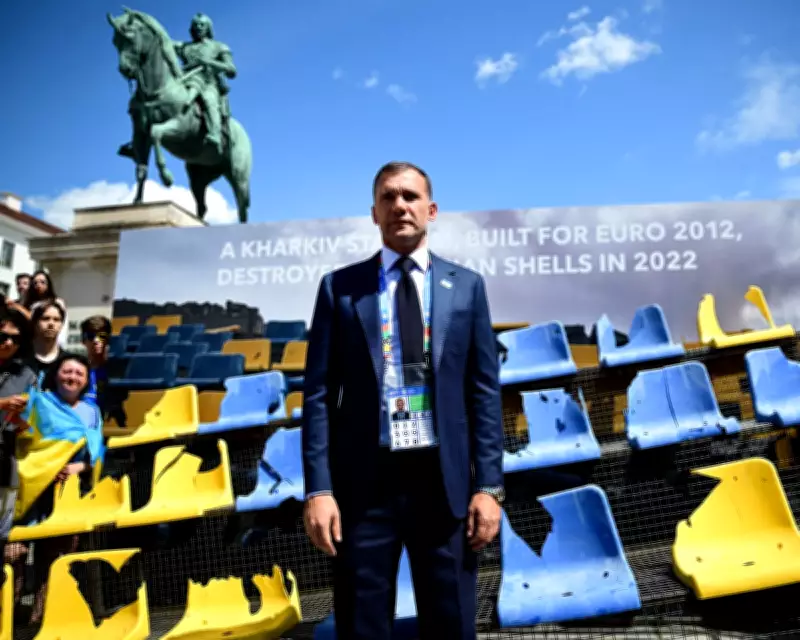
Andriy Shevchenko, the president of the Ukrainian Association of Football, is set to confront Gianni Infantino, the president of Fifa, in a private meeting scheduled for Thursday. The discussion will focus on Infantino's recent comments suggesting a reassessment of Russia's ban from international football competitions, a stance that has sparked widespread condemnation in Ukraine.
Uefa Congress in Brussels Serves as Backdrop for Critical Talks
The meeting is expected to take place on the sidelines of Uefa's annual congress in Brussels, where both officials are due to attend. Shevchenko aims to use this opportunity to reiterate Ukraine's unwavering position that Russia's exclusion from football must remain in place, citing the ongoing full-scale invasion that began four years ago. In a statement to a domestic audience on Monday, Shevchenko expressed his intent to convey concrete information about the war and Ukraine's stance, hoping to counter any moves toward normalising Russia's return.
Russia's continued membership in Fifa and Uefa has allowed figures like Alexey Sorokin, an advisor to the Russian Football Union, to interpret Infantino's remarks as a positive sign for a potential comeback. However, Shevchenko and the UAF maintain that nothing has changed since the invasion, making any reintegration of Russian clubs or national teams unthinkable under current circumstances.
Practical and Ethical Barriers to Russia's Football Return
Despite Infantino's comments, practical obstacles severely hinder Russia's path back to competitive football. Prospective opponents have consistently refused to play against Russian teams, creating a de facto ban that lacks broad support for reversal. Even if Fifa were to welcome Russia back, their participation in World Cup or European Championship qualifiers would likely be unviable due to widespread boycotts and logistical challenges.
Infantino's statements risk normalising the idea of Russia's return, raising serious concerns in Kyiv, where Ukraine continues to endure a harsh winter marked by plummeting temperatures and disrupted power and water supplies from Russian strikes. In response, the UAF has provided humanitarian support, including overnight accommodation and showers at the House of Football in Kyiv, as well as indoor play spaces for children during extreme cold.
The outcome of Shevchenko's meeting with Infantino could have significant implications for football politics, as it underscores the deep divisions over how sports bodies should respond to geopolitical conflicts. With the European Super League project officially concluded, attention now shifts to how Fifa and Uefa will navigate the sensitive issue of Russia's status in international football.