
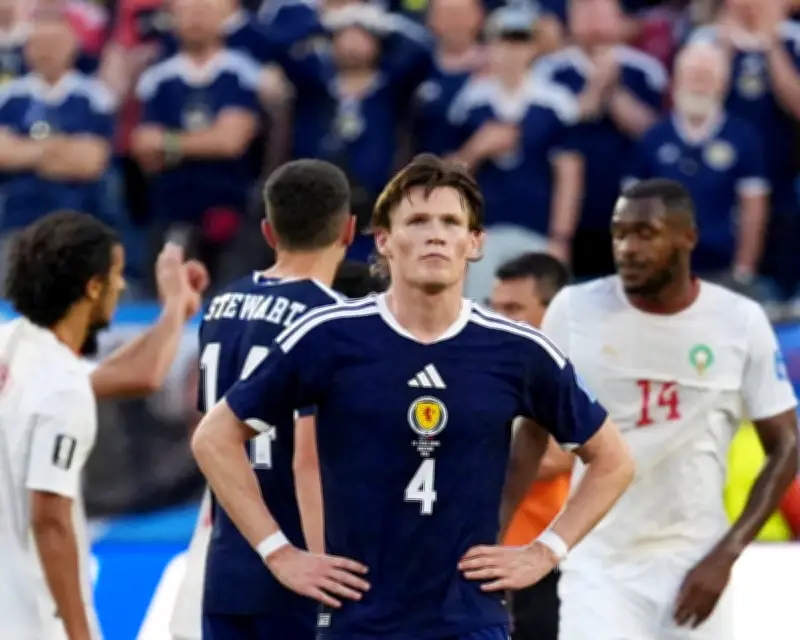
Scotland's 2-0 loss to Morocco in the World Cup on Thursday night in Foxborough, Massachusetts, provided a quick lesson for new American fans about the Scottish psyche. The match, which saw Morocco score after just 70 seconds through Ismael Saibari, encapsulated the duality of Scottish football: the buoyant, party-loving side and the sceptical, realistic side that expects things to go wrong.
Early setback defines Scotland's start
Morocco struck early when Saibari raced past Grant Hanley to slam home, with Hanley's arm raised in vain for an offside call. Minutes later, Bilal El-Khannouss whipped a low ball across the Scotland box that narrowly missed two teammates. The Atlas Lions almost scored again from a counterattack, but failed to convert. Scotland struggled to complete passes, attempting intricate one-twos in the defensive third that left them exposed when their touch faltered.
The early concession seemed to cut through Scotland's confidence and determination. Morocco dominated physical duels, especially in midfield where Ayyoub Bouaddi and Neil El Aynaoui won battles. Scotland's midfield, with Lewis Ferguson dropping between centre-halves, was often smothered by the Moroccan press.
Second-half improvement but no reward
A hydration break allowed Scotland to regroup. By half-time, they began crossing balls into the box, and John McGinn had a chance in added time but volleyed over from 10 yards. The second half saw Scotland keep possession for over a minute, setting the tone for an improved display. Ferguson embodied the renewed determination, never shying from confrontation and leading a counter that ended at the byline.
Ben Gannon-Doak's introduction on the hour raised Scotland's level further. The 20-year-old winger played with unwavering confidence, linking with Nathan Patterson and encouraging Scott McTominay into the game. McTominay teed up Ryan Christie for an effort blazed over in the 64th minute, had a strong penalty claim in the 82nd, and saw a fierce drive deflected into the side-netting minutes later. Scotland were the better team in the second half, but could not find an equalizer.
Lessons for the US and Scotland
The match offered American fans a tour of the Scottish psyche. As Steve Clarke said before the game: "Sometimes the Scottish psyche – we're more comfortable when we're the underdogs." The team struggled to find their identity, desirous of asserting themselves but unsure they were capable. In the end, Scotland proved they could compete against the best. Against Brazil, they should remember that as they seek a result to progress.