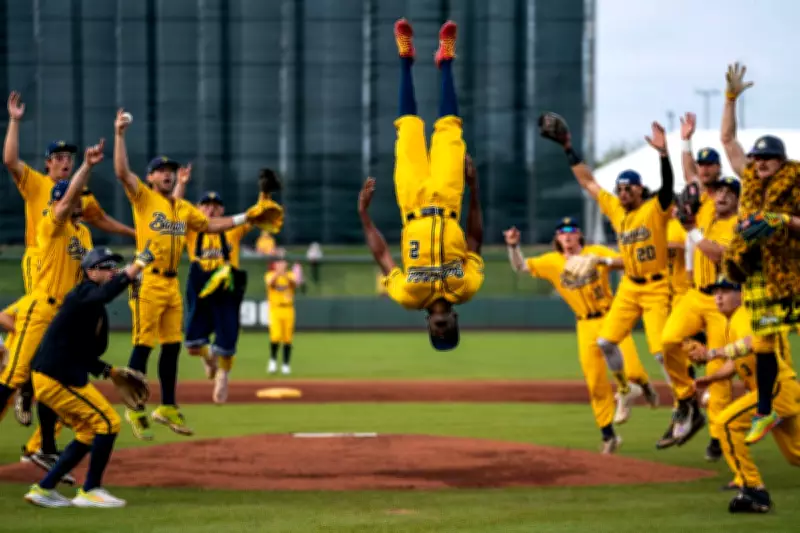
The Savannah Bananas brand has arguably become bigger than the team itself. What seemed crucial to the Bananas experience—the actual team—is increasingly absent from games featuring the showboating version of baseball they popularized. Fans, however, don't seem to care.
From Collegiate Roots to Bananaball
When the Guardian last examined the Bananas in 2023, the organization had just abandoned its amateur roots in collegiate summer baseball to focus strictly on "bananaball," a funhouse-mirror reflection of baseball emphasizing trick plays, player antics, and crowd engagement. Initially, bananaball was limited to two teams: the Bananas and their forever foes, the Party Animals. This seemed to follow a well-trodden path to moderate success, similar to basketball's Harlem Globetrotters, who have run circles around the same scripted-to-lose opponent since the 1950s.
A Growing League
A bananaball game on a sunny May evening at Richmond's CarMax Park reveals how the organization is doing things differently. Most fans outside the ballpark answered with variations of "I'm going to the Savannah Bananas game tonight," but they were actually attending a matchup between the Firefighters and the Indianapolis Clowns—two of six full-time professional bananaball teams touring the US. Simultaneously, the Party Animals played the Loco Beach Coconuts in Las Vegas, while the Bananas drew over 100,000 fans in College Station, Texas, against the Texas Tailgaters. What was once a pair of barnstorming exhibition teams has become a small but growing league—a leap the Globetrotters never made.

Broadening Appeal
The eccentric team names are part of an effort to broaden bananaball's appeal. The Texas Tailgaters lean into cowboy imagery, while the Coconuts exist at the intersection of Jimmy Buffett and the South Pacific. The Firefighters are composed of square-jawed hunks, and the Clowns have the most organic origin story: the original Indianapolis Clowns were one of the best-known Negro League teams in the early to mid-20th century.
Merchandising is abundant, with stalls selling caps and koozies—indicative of a larger change. In 2023, there was an enjoyable "everybody's here" element, with families, bachelorette parties, and older baseball fans sitting together. In 2026, bananaball feels less like a baseball game and more like a day at Disney World. The target demographic is clearly children, with nearly everyone at the Richmond ballpark either a child or accompanying one. Music sets the ambience, with gen Alpha poultry-themed anthems like "Chicken Banana" and "Steve's Lava Chicken" blaring from speakers.
Disney Influence
The Disney comparison is no coincidence. Multiple players note an overlap between Disney fandom and bananaball fandom, and founder Jesse Cole identifies Walt Disney as a key influence. Crowds aren't solely families; hardcore baseball fans also attend. Heather Albrecht, who has visited 29 of 30 MLB ballparks with her sister, says, "Seeing the crowds and hype, I think bananaball could overtake MLB in popularity. They're selling out MLB parks that were empty ghost towns for MLB games."
MLB need not worry yet; average attendance last season was 29,386. But MLB could take pointers from bananaball as it seeks younger fans. If bananaball's TikTok dances, pyrotechnics, and crowd work were stripped away, the on-field product might make an interesting side competition—like T20 cricket to MLB's test counterpart.
Showmanship at Heart
Showmanship sits at the heart of bananaball. Cole's creation is best understood through comedy: the game's outcome is less important than laughs per minute. If a competitive element emerges, all the better.
Despite the Bananas' achievements, no significant attempts have been made to replicate their process in other sports. Format innovation continues within baseball; for example, the Tri-City Chili Peppers in Richmond are pioneering "cosmic baseball" (played with UV-reactive gear under black lights), openly citing the Bananas as inspiration. Cole welcomes the competition: "I commend anybody trying to do something different to make their sport fun and bring joy."

Critics who denounce bananaball as a passing fad receive thoughtful responses from Cole. "I see the comments: 'This will be done in a year.' If you look at history, that would be a strong bet. But only a few companies sustain creativity over time—Disney, SNL. They continually try new things and aren't afraid to fail. I think we share that."
Focusing on a young demographic may secure this lofty goal. Towards the end of the game in Richmond, two Little-League-aged fans in bananaball gear played catch beyond centerfield, copying trick plays. When asked if they want to be ballplayers, one shouted, "I want to be a Firefighter. I want to fight fires." Clearly, his future family will be rooting for the Bananas' league.