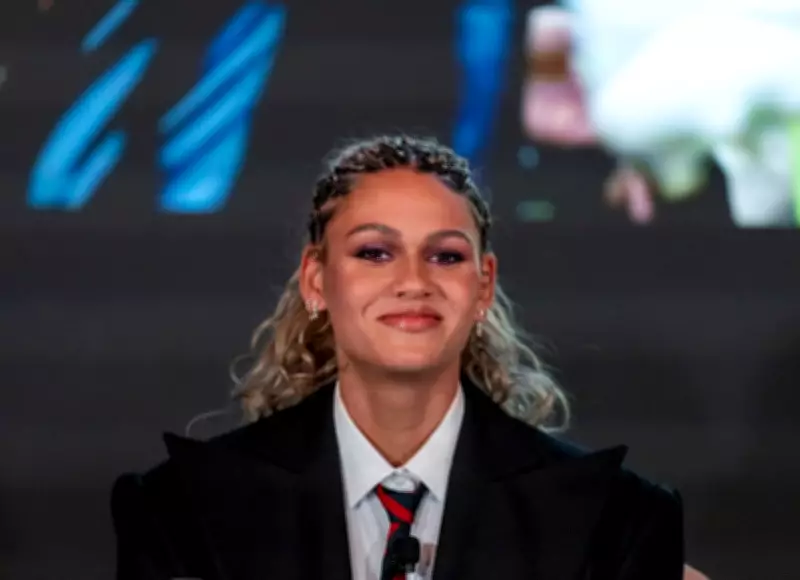
The announcement of Trinity Rodman's contract renewal with Washington Spirit was a moment of high drama, marked by tears and triumph. Flanked by owner Michele Kang and a young fan, Rodman signed what is reportedly the most lucrative deal in women's football history, valued at around £1.5 million per year. This event has ignited fierce debate across the sport, centring on the so-called 'Rodman Rule' and its potential impact on the National Women's Soccer League (NWSL).
A Content Creator for the Modern Era
At just 23, Rodman has already cemented her status as a global star. With an Olympic gold medal, 49 international caps, and a flair for viral moments—from spectacular goals to vibrant hairstyles—she embodies the TikTok generation's footballer. Her ability to package the joy of the game into digestible clips has made her a marketing dream, but it's this very appeal that has led to contentious financial manoeuvres.
The 'Rodman Rule': A Desperate Measure?
Introduced late last year, the 'Rodman Rule' allows NWSL clubs to exceed the salary cap to retain star players who meet specific marketability criteria. The league insists this isn't its official name, but the label has stuck. This move came amid growing fears of a talent exodus to Europe, where clubs offer lucrative contracts and Champions League football. US head coach Emma Hayes now fields a significant number of overseas-based players, a stark shift for a nation once dominant in women's football.
The rule has faced stiff opposition from the players' association, which argues it violates the collective bargaining agreement and could create a two-tier system. Two grievances have been filed, leaving the long-term financial implications uncertain. Despite this, many fans have celebrated Rodman's extension, viewing it as a necessary step to keep top talent stateside.
European Abundance vs. American Anxiety
In a reversal of traditional stereotypes, Europe now represents a land of plenty in women's football, with fat contracts and state-of-the-art facilities. American clubs, meanwhile, grapple with retaining their best players. This dynamic has fuelled what some term 'Europoors' discourse—a mocking jab at Europe's perceived inferiority in other spheres—but in football, the tables have turned. The loss of players like Naomi Girma and Alyssa Thompson to European sides has heightened anxiety, making Rodman's retention a symbolic victory.
The Risks of Tinkering with Structure
The NWSL is far from a struggling entity. Its salary cap has tripled since 2022, set to reach £3.6 million by 2030, and teams are collectively valued at an estimated £1.4 billion. The league boasts healthy crowds, a strong union, and remarkable competitive balance, with four different champions in the past five seasons. Only 2.2% of games last season were won by four or more goals, compared to much higher rates in European leagues like Spain's Liga F or France's Première Ligue.
This parity is no accident; it stems from a financial structure designed to foster collective growth. However, the 'Rodman Rule' threatens to unravel this by introducing inflationary pressures. Haley Carter, Washington Spirit's president of soccer operations, has praised the influx of money, but critics warn this could lead to an unsustainable spiral, eroding the salary cap and creating an unequal league dominated by a few wealthy clubs and untouchable stars.
A Short-Term Fix with Long-Term Consequences
Status anxiety often drives poor decisions, and the NWSL's move to tweak its cap risks mirroring historical missteps in other sports. While Rodman's deal is hailed as a show of strength, it may ultimately signal weakness—a desperate bid to cling to market dominance. The league's unique culture, built on community engagement and player welfare, could be sacrificed for fleeting gains.
As the debate rages, one thing is clear: the 'Rodman Rule' is more than a financial tweak; it's a litmus test for the NWSL's future. Will it preserve the competitive soul that makes it great, or succumb to the pressures of a lawless financial landscape? Only time will tell, but for now, the league stands at a crossroads, with Rodman's signature symbolising both triumph and turmoil.