Real Madrid's European Ambitions Hinge on Strategic Reinvention
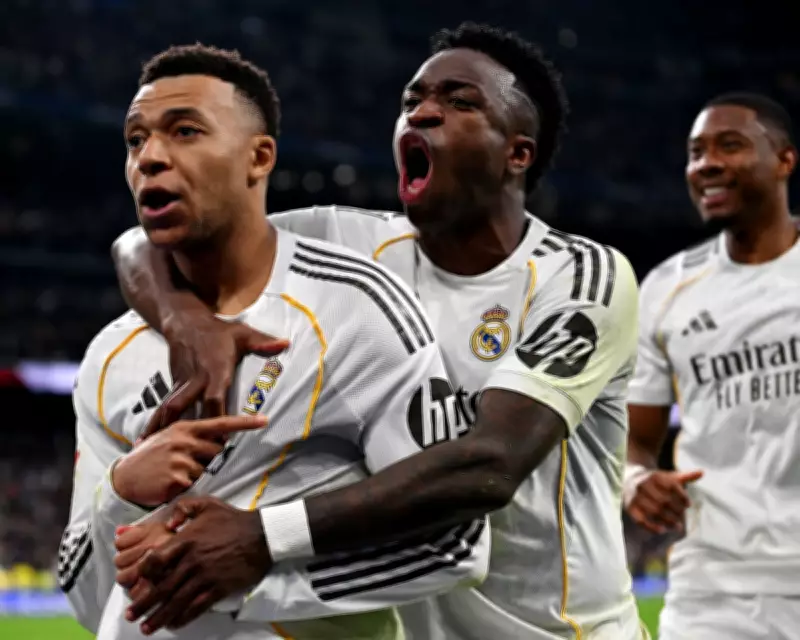
Real Madrid, the storied 15-time Champions League winners, find themselves at a crossroads as they aim to reassert their dominance in European football. After a surprising 4-2 defeat at Benfica in the final league fixture, the Spanish giants are in the playoffs for a second consecutive season, a position unfamiliar to a club accustomed to being among Europe's elite eight. This shift underscores the urgent need for reinvention, with key players like Kylian Mbappé and Vinícius Júnior poised to play crucial roles in their resurgence.
The Legacy of Ancelotti and Zidane: A Blueprint for Success
The impact of former managers Carlo Ancelotti and Zinedine Zidane on Real Madrid cannot be overstated. Both legends, who once graced the pitch as outstanding footballers themselves, brought a unique aura and firsthand experience to the club. Ancelotti, who played under Arrigo Sacchi at Milan, and Zidane, known for scoring pivotal goals in Champions League and World Cup finals, commanded respect from top talents. Their ability to assess player qualities and unify diverse characters into a cohesive team set a high standard for leadership at the Bernabéu.
Zidane's achievement of three successive Champions League titles highlights the effectiveness of this approach. Similarly, Ancelotti's tenure reinforced the importance of managers who understand the nuances of elite football from a player's perspective. This legacy serves as a benchmark for future leaders, emphasizing that success at Real Madrid requires more than tactical acumen—it demands an innate connection to the club's winning culture.
Xabi Alonso's Unfulfilled Potential and the Leverkusen Contrast
Xabi Alonso, with a profile reminiscent of Ancelotti, brought his own institutional knowledge from a decorated playing career in defensive midfield. However, his move to Real Madrid proved challenging, as the experiment ultimately failed, though it provided valuable insights for his future. In contrast, at Bayer Leverkusen, Alonso enjoyed absolute authority, leading the team to their first German championship and an unbeaten double, showcasing his ability to instill stability and belief.
Yet, Real Madrid is not Leverkusen. The spirit of Alfredo Di Stéfano, who inspired five European Cup triumphs, still permeates the Bernabéu, making it a radical players' club. President Florentino Pérez's galáctico policy, marked by lavish spending on stars like Mbappé and Vinícius Júnior, creates an environment where coaches are seen as interchangeable. This dynamic makes managing Real Madrid one of the most challenging roles in world football, as players often perceive teamwork as a restriction on their individuality.
Mourinho's Struggle and the Limits of Defensive Tactics
Even José Mourinho, the self-proclaimed Special One, faced difficulties adapting to Real Madrid's ethos. Arriving in 2010 after a treble-winning stint with Inter, Mourinho employed his results-oriented methods, including a famous defensive strategy to defeat Pep Guardiola's Barcelona. While this led to a La Liga title and a record 100-point season, the approach proved unsustainable. The 5-0 loss to Barcelona and a subsequent 4-1 Champions League semi-final defeat in Dortmund highlighted the risks of imposing tactics that clash with the team's self-image.
Mourinho's tenure demonstrated that while defensive football can be effective, it strains both body and soul at a club built on attacking flair. Xabi Alonso's early substitution in that Dortmund match symbolized the personal toll of such conflicts, reinforcing that long-term success at Real Madrid requires alignment with their inherent style.
The Path Forward: Building a New Pack for European Dominance
To dominate Europe again, Real Madrid must navigate special circumstances. The era featuring legends like Sergio Ramos, Luka Modric, Toni Kroos, Karim Benzema, and Cristiano Ronaldo showcased a royal form of teamwork, where the whole exceeded the sum of its parts. Currently, such a congenial mix across defence, midfield, and attack is lacking, and available coaches like Pep Guardiola, Mikel Arteta, or Luis Enrique, while charismatic, are influenced by the Barcelona school, potentially clashing with Real's identity.
President Pérez faces a critical task: intensifying efforts in the transfer market to recruit players for midfield and defence, fostering a new pack that establishes its own hierarchy and sharpens its competitive edge. This group must emulate the legacy of Di Stéfano, Ancelotti, and Zidane, creating a unified force capable of hunting success from game to game. With stars like Mbappé and Vinícius Júnior at the forefront, Real Madrid's reinvention could pave the way for a return to Champions League supremacy, but only if they embrace their unique heritage while adapting to modern demands.