Premier League's Group Stage Power Confronts Spring Reckoning
The Premier League's financial muscle and physical dominance have created a stark contrast in the Champions League group stages, where English clubs routinely overpower European opponents. Yet this early-season supremacy often fades by spring, raising questions about the competition's structure and the toll of domestic intensity.
The Group Stage Mismatch
This season's Champions League group phase has demonstrated the Premier League's overwhelming advantage during autumn fixtures. Tottenham's comprehensive 4-0 victory against Copenhagen in November featured Micky van de Ven's remarkable length-of-field run, symbolising how English sides physically overwhelm continental opponents. Similar patterns emerged across multiple matches, with Newcastle dominating Athletic, Arsenal overpowering Atlético, Liverpool controlling Real Madrid, and Chelsea overwhelming Barcelona.
The financial disparity between Premier League clubs and most European counterparts enables English teams to recruit players specifically suited to their high-intensity playing models. This season, six Premier League clubs occupy positions in the top eleven heading into the final group matches, with only Manchester City currently outside the automatic qualification spots that avoid the playoff round.
The Historical Parallel and Spring Vulnerability
Despite this group-stage dominance, English clubs have secured only three Champions League titles in the past decade. This pattern echoes the experience of Italian clubs during the 1990s, when Serie A represented Europe's strongest league. Between 1992 and 1998, an Italian team reached the final every season, yet only two emerged victorious.
The explanation lies partly in the nature of knockout competition, where randomness plays a role, but primarily in the cumulative fatigue from demanding domestic campaigns. By April's quarter-finals, Premier League teams have endured months of intense competition against other English sides, leaving them vulnerable against Europe's freshest elite clubs.
The Financial Giants and Freshness Advantage
Recent financial analysis reveals a crucial distinction: while six Premier League clubs feature in Deloitte's top ten revenue generators, none occupy the top four positions. Real Madrid, Barcelona, Bayern Munich, and Paris Saint-Germain maintain financial parity with England's best while benefiting from less demanding domestic schedules.
This freshness advantage becomes decisive in spring. Last season demonstrated this dynamic clearly: Arsenal comfortably defeated PSG during group stages but succumbed to the French champions in the semi-finals. Similarly, Liverpool topped their group last campaign but fell to PSG in the round of sixteen.
Structural Questions and Future Implications
The current Champions League format raises questions about the group stage's significance. With most teams progressing and results having limited impact on eventual outcomes, the 126-group-stage matches increasingly resemble extended preliminaries rather than meaningful competition.
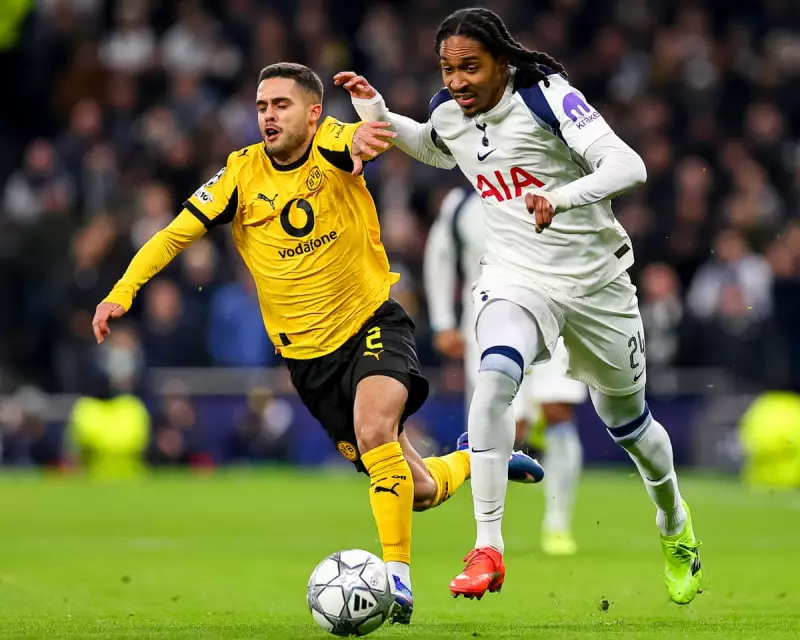
Tottenham's recent experience illustrates the contrast: their Champions League match against Borussia Dortmund proved straightforward compared to Premier League fixtures against West Ham and Burnley either side of the European encounter. The sight of Djed Spence, deployed as an emergency winger, repeatedly outpacing Yan Couto highlighted the physical mismatch, yet this advantage diminishes as the season progresses.
As European football continues to evolve, the tension between Premier League dominance in autumn and vulnerability in spring represents one of the Champions League's defining narratives, with implications for tournament structure, squad management, and competitive balance across the continent.