From Humiliation to European Summit: Arsenal's Remarkable Journey
A decade ago, Arsenal suffered one of their most humiliating European nights when Bayern Munich thrashed them 5-1 at the Allianz Arena. The Guardian's match report compared Arsène Wenger's team to 'the chicken feed from the lower reaches of the Bundesliga that Bayern routinely gobble up'. The Bavarian giants repeated this demolition job the following season, winning 5-1 both home and away, highlighting the vast gulf between English and European football at the time.
The Premier League's Astonishing Transformation
Between the 2015-16 and 2016-17 Champions League campaigns, only two Premier League clubs – Manchester City and Leicester City – managed to progress beyond the last 16. English football faced intense scrutiny about why its wealthy clubs consistently underperformed in Europe. Fast forward to today, and the landscape has transformed completely.
According to the respected Club Elo ratings, which analyse every team's results and opponent strength, Arsenal now rank as the best team in Europe, with Bayern sitting third. Even more remarkably, twelve Premier League clubs feature in Europe's top 20 teams, demonstrating the extraordinary depth of quality in English football.
Crunching the Numbers: Premier League's Competitive Edge
Omar Chaudhuri, chief intelligence officer at Twenty First Group, provided compelling data showing how much the Premier League has pulled ahead. While a top English club would expect to win approximately 66% of domestic matches, this figure would rise significantly in other leagues.
Arsenal and Manchester City would see their win rates increase by 9% in La Liga and by 13-15% in the Bundesliga, Serie A and Ligue 1. In practical terms, a top Premier League team averaging 86 points domestically would expect to accumulate around 97 points in Spain, 91 in Germany (over 34 matches), and over 100 points in Italy.
To contextualise these numbers, last season's champions Barcelona (88 points), Bayern Munich (82 points) and Napoli (82 points) all won their respective leagues with totals significantly below what elite Premier League clubs would be expected to achieve.
Does League Difficulty Impact European Success?
The analysis raises intriguing questions about whether clubs in less competitive leagues like Bayern and PSG benefit from easier domestic schedules when preparing for Champions League knockout stages. Opta's data reveals that PSG made an average of 4.78 changes between matches last season – more than any other Champions League club – while their key European players featured in fewer than 53% of league minutes.
However, Chaudhuri's examination of Europe's 14 richest clubs since 2016 found no clear correlation between domestic dominance and Champions League success. Bayern have maintained nearly identical win percentages in both Bundesliga (72%) and Champions League (71%) over the past decade, while PSG's impressive 72% domestic win rate translates to just 56% in Europe.
The quality of squad and smart spending appear more crucial factors than league difficulty, as demonstrated by varying European success rates among Premier League clubs themselves.
Money, Academies and Smart Management
Several factors explain the Premier League's ascent. Financial power has enabled English clubs to attract world-class talent and managers, while ownership has become more sophisticated in extracting value from investments. The Elite Player Performance Plan has revolutionised academy output, producing a generation of technically gifted English players that has transformed the national team's fortunes.
As Chaudhuri summarises: 'If Manchester City were relegated to the Championship tomorrow and retained their entire squad, we wouldn't expect it to make that much difference to their Champions League performance.'
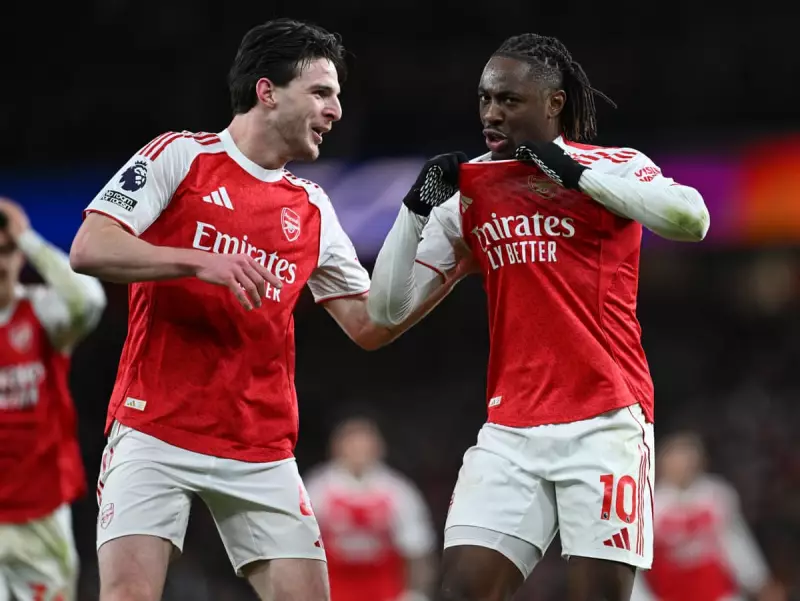
Wednesday's Emirates Stadium encounter between Arsenal and Bayern Munich serves as a powerful symbol of football's shifting power dynamics since those humbling defeats a decade ago, with the Premier League now firmly established as Europe's dominant force.