North Korea's Women's Football Team Returns to Asian Cup After Decade-Long Absence
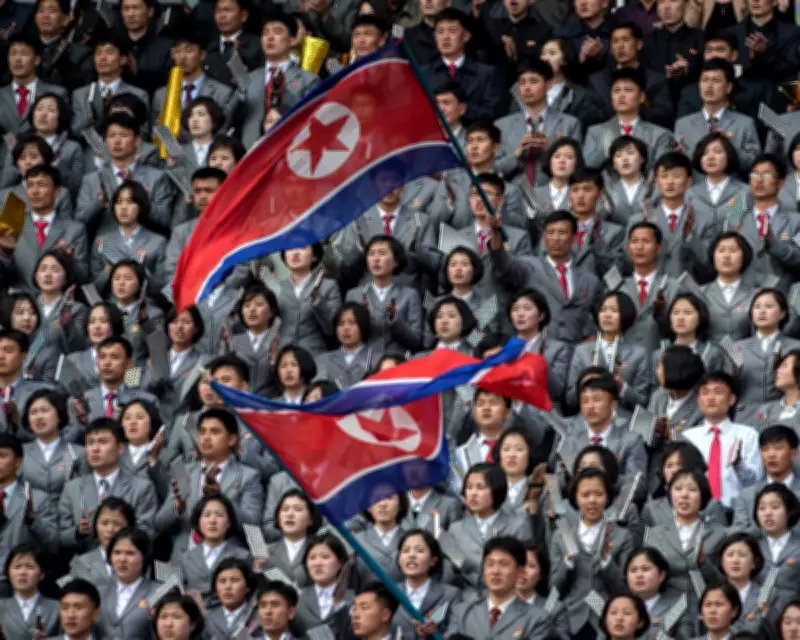
In a striking display of national pride, North Korean fans recently waved flags during a Women's Asian Cup qualifier in Pyongyang, signaling the return of their team to international competition. The world's ninth-ranked women's football team, which has been largely absent from global tournaments for over a decade, is set to compete in Group B at the 2026 Women's Asian Cup, starting this weekend in Australia. This marks a significant moment for the secretive nation, which has leveraged state-sponsored investment in women's football as a geopolitical tool since the late 1980s.
Historical Context and Geopolitical Strategy
The origins of North Korea's focus on women's football trace back to 1986, when Norwegian delegate Ellen Wille advocated for a Women's World Cup at Fifa's annual congress in Mexico. Inspired by this speech, North Korean delegates returned to Pyongyang with a plan to use women's football to reassert their influence on the world stage. Under the leadership of Kim Jong-il, reportedly a football enthusiast, the government initiated a comprehensive program that included integrating football into school curriculums, establishing full-time women's teams in the military, creating youth talent identification pathways, and constructing new facilities nationwide.
As political isolation intensified, sport became one of the few avenues for North Korea to achieve international success. The women's game evolved into a proxy platform for promoting the nation's political agenda, with the government viewing footballing triumphs as a means of political propaganda to reinforce authoritarian control and exclusive nationalism. This strategy mirrored that of their communist ally China, which had similarly invested in women's football and emerged as a powerhouse in the sport.
Early Success and Cultural Impact
The government's early investments yielded rapid results. From the mid-1990s to the 2010s, North Korea dominated Asian women's football, winning three Asian Cup titles between 2001 and 2008, along with numerous minor trophies. Home games attracted tens of thousands of spectators at venues like the 150,000-seater Rungrado 1st of May Stadium, far surpassing crowd sizes elsewhere in the world at the time. The state further promoted the sport through stamps, posters, and a multi-part television drama series about women footballers, aiming to inspire national pride.
In exchange for their success, players received significant rewards, including apartments, controlled travel opportunities, public celebrations, and residence certificates for themselves and their families in Pyongyang, where living standards are notably higher than in rural areas. The 2008 documentary Hana, dul, sed provided a rare glimpse into the lives of these players, capturing their experiences against the backdrop of North Korea's communist monuments and solemn gestures.
The Missing Decade and Recent Resurgence
However, the team's momentum halted abruptly in 2011 when five players tested positive for a banned steroid at the Women's World Cup in Germany. North Korea denied wrongdoing, offering a bizarre explanation involving a natural substance from musk deer glands after a lightning strike, but Fifa imposed a four-year ban. This led to missed tournaments, including the 2015 Women's World Cup, and subsequent failures to qualify for the 2018 Asian Cup and 2019 World Cup. Pandemic lockdowns further resulted in withdrawals from tournaments in 2022 and 2023, leaving the senior team largely inactive for over a decade, despite maintaining a top 10 global ranking.
Despite these setbacks, North Korea's long-term investment in women's football has continued to bear fruit. The opening of the Pyongyang International Football School in 2013 has fueled a second wave of success, with youth teams becoming reigning Under-17 and Under-20 Women's World Cup and Asian Cup champions. North Korea now holds 14 youth tournament titles, including four trophies in the past two years, making it the most successful national team across all youth competitions.
Looking Ahead to the 2026 Women's Asian Cup
The 2026 Women's Asian Cup, kicking off this weekend in Sydney, presents a pivotal opportunity for North Korea's return to the spotlight. The team will open against Uzbekistan on March 3 in Sydney's west, followed by a crucial Group B match against China on March 9. While it may be too early for young stars like Yu Jong-hyang, Choe Il-son, Jon Il-chong, and Chae Un-gyong to fully shine, the tournament offers the best glimpse yet into whether this unlikely superpower of women's football is rumbling back to life. As the world watches, North Korea's participation underscores the enduring role of sport as a tool for international engagement and national pride in one of the planet's most secretive nations.