The landscape of women's football is undergoing a significant transformation, driven by a wave of private investment and a controversial but growing trend: multi-club ownership. While this model faces scrutiny in the men's game, key investors argue it is a necessity for the growth and professionalisation of the women's sport.
The Investors' Vision: A Necessity, Not a Luxury
In June 2024, billionaire investor Michele Kang, owner of the then WSL2 side London City Lionesses, made a bold case for the model. "I am fully aware of the negative connotation of multi-club ownership on the men's side," Kang stated. "But I will submit to you that multi-club ownership is a necessity, not a luxury or greed, on the women's side." She argued that such investment is required to reach the potential the players deserve.
This sentiment is echoed across the industry. Groups like Mercury 13, which added Bristol City to a portfolio including Como, and Sixth Street's newly launched Bay Collective are building multi-club networks. Similarly, Crux Football, backed by former Netflix executive Cindy Holland, announced its first club, Montpellier, in October 2024.
Monarch Collective's Strategic European Entry
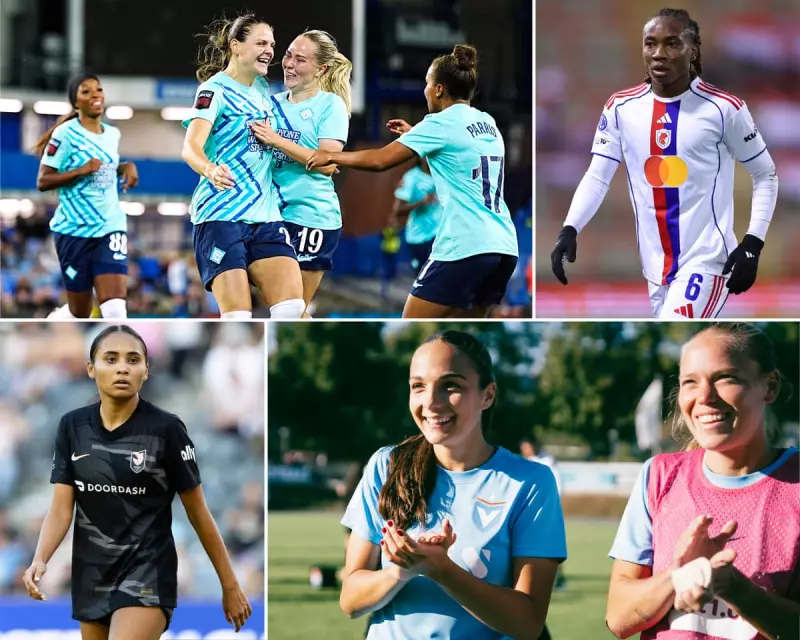
A prominent example is the venture capital group Monarch Collective, co-founded by Kara Nortman, who also co-founded the NWSL's Angel City FC. Last month, Monarch announced a minority investment in German club Viktoria Berlin, marking its first European foray after backing Angel City, Boston Legacy, and San Diego Wave.
Nortman saw clear parallels between Viktoria Berlin and the early days of Angel City. The Berlin women's team was independently split from the men's side in 2022 by a group of six female investors, including World Cup winner Ariane Hingst, and built a shareholder base of almost 250 with 90% female ownership before Monarch's involvement. "I actually got chills after the first conversation with them. They reminded me of me, [Julie] Uhrman and [Natalie] Portman in the early days," Nortman said.
The choice of Germany was strategic. Nortman highlighted the country's large GDP, its status as a football powerhouse with a successful women's national team, and Berlin's cultural cachet. "The football and women's football market specifically is primed and ready to go," she noted, seeing a major opportunity to build a "female-first and female-forward" project.
A Blueprint for Independent Growth
Nortman is keen to position this model as a viable blueprint for clubs worldwide, including in England. She advocates for creating independent women's teams that can leverage shared services with men's clubs while being run by a dedicated, focused group. "This is a version of something that every club can do," she asserts, emphasising the need for structural solutions tailored to each situation.
The ambition is undeniably vast. "We are building the Real Madrids, the Manchester Uniteds... of tomorrow, but it's not going to happen by accident," Nortman stated. For her, the drive comes from passion, not just profit, a sentiment shared by many new investors in the women's game who are motivated by equality and belief in its potential.
Despite concerns over private equity's role, multi-club ownership is currently being embraced by leagues and federations as a means to accelerate investment in a historically underfunded sector. Whether this model will deliver a sustainable and equitable future for women's football remains a central question as its influence continues to spread.
Other Women's Football News in Brief
FIFA The Best Awards: Spain's Aitana Bonmatí won her third successive FIFA The Best Women's Player award. England manager Sarina Wiegman was named best coach for a fifth time, and Lionesses goalkeeper Hannah Hampton won the best goalkeeper award.
UWCL League Phase Concludes: The UEFA Women's Champions League league phase ended with debutants OH Leuven progressing to the playoffs despite a loss to Arsenal. Barcelona, Lyon, Chelsea, and Bayern Munich qualified directly for the quarter-finals.