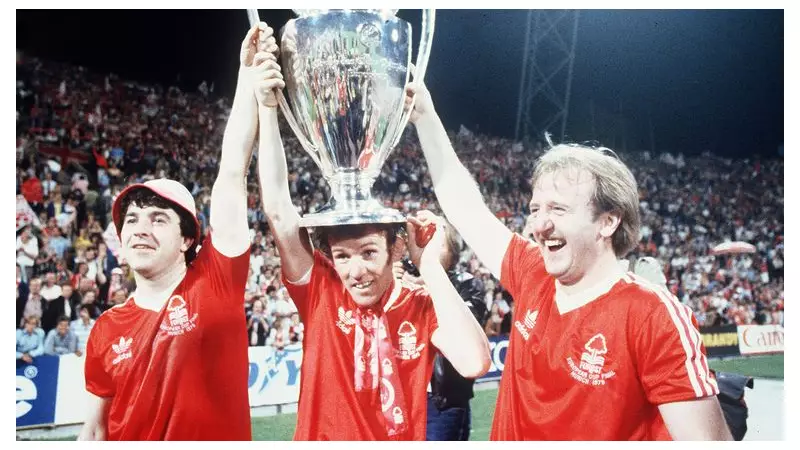
The football world is mourning the loss of John Robertson, the iconic Nottingham Forest winger who was instrumental in the club's historic European Cup victories. Robertson, widely regarded as one of Britain's finest footballers, has died at the age of 72.
From Ugly Duckling to European Picasso
Robertson's journey to greatness was not straightforward. Born in Viewpark, near Glasgow, in 1953, he joined Forest as a 15-year-old amateur in 1968. For his first few seasons, he struggled to make an impact, even developing a reputation for laziness as the club languished in the Second Division. His transformation began with the arrival of manager Brian Clough and his assistant Peter Taylor in 1975.
Clough, who would later call Robertson a "Picasso" of football, initially described the young player as a "scruffy, unfit, uninterested waste of time." Yet, he saw the raw talent within. The managerial duo shifted Robertson from midfield to the left wing, unlocking the skills that would make him a legend. Despite a stocky build and lack of blistering pace, his dazzling dribbling, sharp football brain, and pinpoint crossing became the creative fulcrum of the team.
The Architect of European Glory
Robertson's peak coincided with Forest's meteoric rise. After promotion in 1977, they won the First Division title in 1978. His genius, however, was cemented on the grandest stage. In the 1979 European Cup final against Malmö in Munich, he beat two defenders and delivered a perfect cross for Trevor Francis to head the only goal of the game.
A year later, in the 1980 final against Hamburg in Madrid, he scored the winner himself, cutting in from the left to curl a right-footed shot into the net. His mental fortitude was tested earlier in that campaign when his brother and sister-in-law were killed in a car crash; he attended their funeral shortly before a semi-final, yet still scored a crucial goal.
A Lasting Legacy in Coaching and Beyond
After leaving Forest in 1983 and a brief, injury-disrupted spell at Derby County, Robertson retired from top-level football. He later embarked on a highly successful coaching career, primarily as assistant to his old Forest teammate Martin O'Neill. Together, they enjoyed triumphs at several clubs, including:
- Promoting Wycombe Wanderers to the Football League in 1993.
- Winning the League Cup twice with Leicester City in 1997 and 2000.
- Securing three Scottish Premier League titles with Celtic (2001, 2002, 2004).
Robertson, who earned 28 caps for Scotland and played in two World Cups, was known for his warm, self-effacing personality. In his later years, he was diagnosed with Parkinson's disease. He is survived by his wife, Sharyl, his children, and grandchildren.
The passing of John Robertson marks the end of an era for Nottingham Forest and British football. He remains the embodiment of Brian Clough's alchemy—the unpolished gem who became a world-class artist on the pitch and a key figure in one of football's most remarkable success stories.