
Iraq's World Cup Dreams Threatened by Regional Conflict
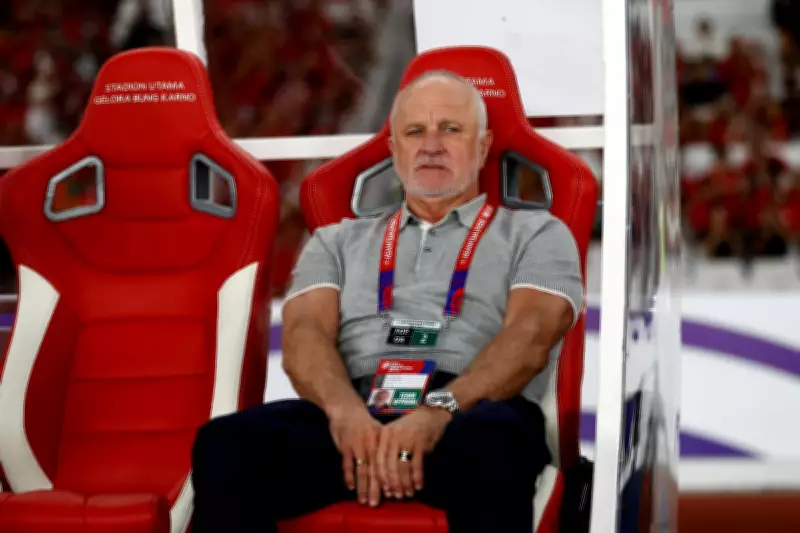
Iraq's national football team is facing an unprecedented crisis that could derail their hopes of qualifying for the World Cup for the first time since 1986. Head coach Graham Arnold has confirmed that the Iraqi Football Association has formally requested FIFA to postpone their crucial World Cup play-off match scheduled for 31 March.
Airspace Closure Creates Squad Crisis
The escalating conflict between the United States, Israel, and Iran has led to the closure of Iraqi airspace since late February, creating severe logistical challenges for the national team. Arnold revealed that this situation could deprive him of all domestic-based players, potentially eliminating half of his squad for what he describes as "the country's biggest game in 40 years."
The Australian coach, who previously led his native country at the Qatar 2022 World Cup, expressed deep concern about the situation: "We need our best team for this crucial match. The Iraqi people are incredibly passionate about football, and the fact that they haven't qualified for four decades was a major reason I accepted this position. But with airports shut down, we're working desperately to find alternatives."
FIFA's Unworkable Proposal
According to reports from The Guardian, FIFA suggested that Iraqi players could travel partially by road to circumvent the airspace restrictions. However, this proposal was quickly rejected as impractical. The journey would require approximately 25 hours of road travel from Baghdad to Istanbul, Turkey, followed by a long-haul flight to Mexico for the decisive play-off against either Bolivia or Suriname.
Arnold proposed an alternative solution: "If FIFA were to delay the game, it would give us proper preparation time. Let Bolivia play Suriname this month, and then a week before the World Cup, we could face the winner in the United States. The winner stays for the tournament, and the loser goes home. This approach would also give FIFA additional time to determine Iran's status in the competition."
Potential Qualification Through Iranian Withdrawal
The conflict's impact extends beyond Iraq's immediate logistical challenges. Iran's participation in the World Cup appears increasingly uncertain, with strong indications that they may need to withdraw from the tournament entirely. Should this occur, Iraq would have compelling claims to replace them as the next highest-ranked team from Asian qualifying.
This scenario would eliminate Iraq's need to participate in the play-off altogether. Arnold acknowledged this possibility: "If Iran withdraws, we would automatically qualify for the World Cup. This would then give the United Arab Emirates, whom we defeated in qualifying, the opportunity to prepare for the play-off against either Bolivia or Suriname."
The Iraqi authorities have stated that airspace will remain closed for the duration of the conflict, creating ongoing uncertainty for the national team's preparations. As the 31 March deadline approaches, pressure mounts on FIFA to make a decisive ruling that balances competitive fairness with the extraordinary circumstances facing Iraqi football.