
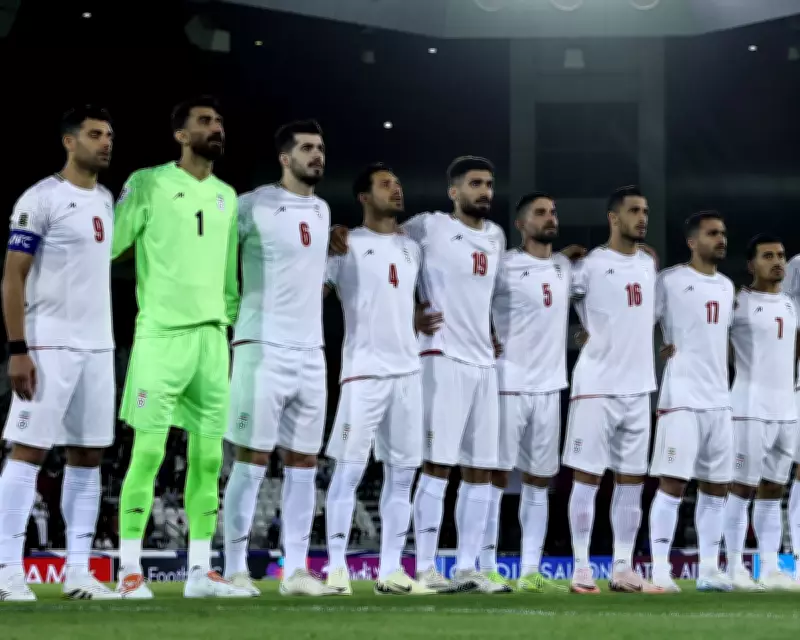
Iran's 2026 World Cup Participation Hangs in the Balance Amid Geopolitical Strife
Iran, one of the first teams to qualify for the 2026 World Cup, now faces an uncertain future in the tournament due to escalating political tensions with the United States and Israel. The situation has sparked a war of words involving FIFA, leaving the team's status unclear and changing rapidly.
Conflicting Statements Fuel Confusion Over Iran's World Cup Role
US President Donald Trump added to the confusion on Thursday by stating on Truth Social that he did not believe it "is appropriate that they be there, for their own life and safety." This incendiary post came less than 48 hours after FIFA President Gianni Infantino claimed Trump had told him in a White House meeting that Iran would be "welcome" at the World Cup. In response, Iran's football federation posted on Instagram, asserting, "No one can exclude Iran's national team from the World Cup," and suggested the US should be removed as host due to Trump's implicit threat.
Further complicating matters, Iran's Sports Minister, Ahmad Donyamali, told state media on Wednesday that his country would not participate, citing a lack of appropriate conditions. However, multiple state media publications later reported that no final decision had been made, expressing surprise at Donyamali's comments. The ultimate decision rests with higher levels of the Iranian government, highlighting the fluid nature of the saga.
FIFA's Delicate Position and Historical Precedents
FIFA has given itself until its annual Congress in Vancouver on April 30 to reach a conclusion on Iran's involvement. Multiple sources within FIFA have indicated that no decision has been made, with the organization's official position being a desire for Iran to participate. FIFA General Secretary Mattias Grafström emphasized last week that the focus is on "having a safe World Cup with everybody participating."
FIFA's statutes mandate political and religious neutrality, so the body aims to avoid forcing Iran out or being seen as complicit in their withdrawal. Historically, there is no modern precedent for a team being removed from a World Cup. The closest parallel is the 1992 European Championship, where UEFA replaced Yugoslavia with Denmark due to UN sanctions, a move that famously led to Denmark's victory.
In the past, FIFA banned Iran from Asian qualifying for the 1986 World Cup after they refused to play home matches on neutral territory, a punishment for earlier refusals. Under current regulations, member associations are not permitted to withdraw from competitions, and Iran could face disciplinary sanctions if they do so, including fines ranging from €275,000 to €555,000 and potential bans from future tournaments.
Potential Replacements and Political Ramifications
If Iran withdraws or is excluded, FIFA has "sole discretion" to replace them, as per World Cup regulations. Iraq and the United Arab Emirates are viewed as the most likely beneficiaries, being the next highest-ranked teams from the Asian Football Confederation not to have qualified. However, this process is fraught with political complexities.
Iraq, which secured a place in an intercontinental playoff against Bolivia or Suriname, has requested FIFA postpone that game due to airspace closures from the war, leaving their squad stranded in Baghdad. Replacing Iran with Iraq could have significant political ramifications. Meanwhile, the UAE, a close US ally, is believed to be lobbying FIFA for Iran's spot should it become available, adding another layer to the diplomatic tensions.
Looking Ahead: Resolution and Implications
The ongoing saga underscores the intersection of sports and global politics, with the 2026 World Cup already facing challenges. As FIFA navigates this delicate situation, the world watches to see how it will balance neutrality with practical and political realities. The decision on April 30 will be crucial, not only for Iran's football future but for the integrity of international sports diplomacy.