
Iranian Women Footballers Confront Impossible Choice Between Sport and Safety
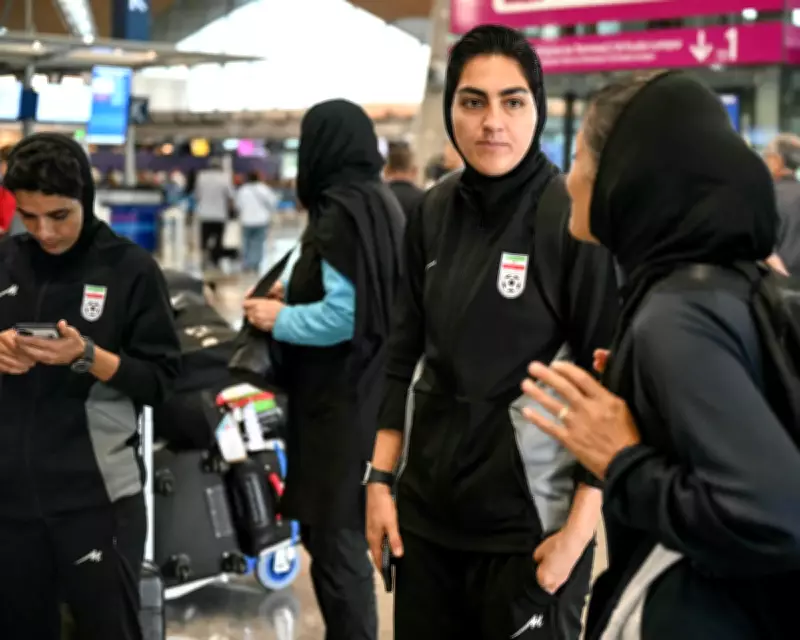
In a stark illustration of the pressures faced by athletes under authoritarian regimes, members of Iran's women's national football team have withdrawn their claims for asylum in Australia, returning to Iran amid fears of retaliation. Captain Zahra Ghanbari was photographed arriving at Kuala Lumpur international airport with teammates on Monday, following a decision that underscores the cruel lose-lose scenario confronting Iranian sportswomen.
Regime Repression Extends Beyond Borders
For Iranian female athletes, the most formidable opponent is not on the field but the regime that controls their lives. To compete internationally, they must navigate a system demanding obedience, restricting movement, and punishing dissent. State media has labeled national team players "traitors" for refusing to sing the anthem, while officials publicly promise a safe return—a narrative contradicted by history.
The case of climber Elnaz Rekabi serves as a chilling precedent. After competing without a headscarf in 2022, she faced a forced apology, reported demolition of her family home, and house arrest, revealing the regime's true intentions behind staged assurances.
Athletes Pay Devastating Price for Resistance
The list of Iranian athletes suffering severe consequences is long and tragic. Navid Afkari, a champion wrestler, was executed in 2020 for anti-regime protests, and karate champion Mohammad Mehdi Karami met a similar fate in 2023. Female athletes are not spared; footballer Zahra Azadpour was reportedly shot by security forces, and volleyball captain Forouzan Abdi was executed in 1988. These are not isolated incidents but state-sanctioned acts designed to intimidate.
Transnational Intimidation Tactics
Transnational repression has become a key strategy for the Iranian regime, using intermediaries to pressure athletes abroad. Reports suggest that Mehdi Taj, president of the Iran Football Federation, communicated through regime-linked handlers, restricting players' contact and poisoning the sanctuary Australia offered. Threats against families back home create a cruel dilemma: stay abroad and risk loved ones' safety or return to face uncertainty.
Several players, including Ghanbari, returned under such pressure, a decision not of free will but of coercion. This scenario trades an athlete's safety for family wellbeing, highlighting a system designed to make resistance nearly impossible.
Glimmers of Hope and Global Responsibility
Amid the tension, there is encouraging news: Iranian footballers Fatemeh Pasandideh and Atefeh Ramezani joined Brisbane Roar FC for training, showing that with genuine safety, athletes can thrive. However, the global sporting community must not treat these cases as isolated. Organizations like FIFA need mechanisms to protect athletes from transnational threats, ensuring sport is not an arena for political repression.
Australia has taken steps by offering protection, but ad hoc responses are insufficient. Legal systems must be equipped to address transnational repression, providing clear pathways to security for those facing coercion.
A Call for International Action
The regime's message is clear: escape is impossible. The international community must prove otherwise by standing against such intimidation. Athletes should never have to choose between their passion and their safety, and it is imperative that global efforts intensify to safeguard their rights and freedoms.