
Iranian Women Footballers Seek Asylum in Australia Following Anthem Protest Controversy
In a dramatic development that has captured international attention, five members of Iran's women's national football team have left their training camp and successfully sought refuge in Australia. The players reportedly fear "dire consequences" if they were to return to Iran following their controversial decision to remain silent during the national anthem before a recent match.
The Players and Their Precarious Situation
The office of exiled Iranian crown prince Reza Pahlavi has confirmed that players Fatemeh Pasandideh, Zahra Ghanbari, Zahra Sarbali, Atefeh Ramazanzadeh, and Mona Hamoudi are now in a "safe location" in Australia. This development comes after the team was eliminated from the Asian Cup tournament, raising immediate concerns about their welfare upon returning to Iran.
The global players' union FIFPRO has expressed being "really concerned" about the team's welfare and has so far been unable to establish contact with the players. This uncertainty has created an atmosphere of tension surrounding the team's future.
The Controversial Anthem Incident
The controversy began when the Iranian women's football team remained silent during their national anthem before their match against South Korea a week ago. This act was immediately condemned by Iranian state media, with a commentator on Islamic Republic of Iran Broadcasting declaring that the players had committed the "pinnacle of dishonor."
Presenter Mohammad Reza Shahbazi went even further, stating that "traitors during wartime must be dealt with more severely," according to reports from the Reuters news agency. This harsh rhetoric from Iranian media created immediate concerns about potential repercussions for the players.
Interpretations and Subsequent Developments
While some observers interpreted the team's silence as an act of resistance, others saw it as a show of mourning following initial US-Israel joint attacks on Iran. The team itself has not made any specific comment on their stance, adding to the ambiguity surrounding their actions.
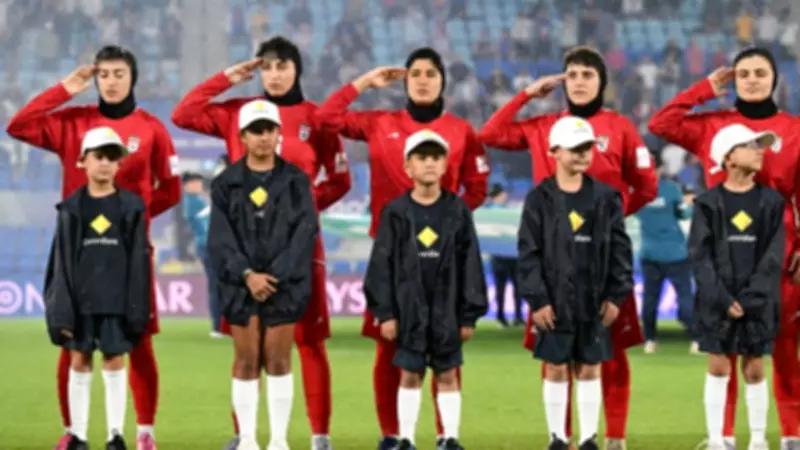
In subsequent matches against Australia on Thursday and the Philippines on Sunday, the team did sing and salute their national anthem. This reversal raised concerns that they might have been ordered to do so under pressure, further complicating their situation.
Public Support and International Response
The situation escalated dramatically after Sunday's match against the Philippines on the Gold Coast in Queensland. Dozens of supporters were seen chanting "let them go" as they surrounded the team bus during its departure from the stadium. Police and security teams had to create a safe passage for the bus to leave amid chants of "save our girls."
Supporters reported seeing at least three of the players on the bus making the international hand signal for help, according to CNN reports. This visible distress signal added urgency to calls for their protection.
Political Pressure and Diplomatic Considerations
Exiled Iranian dissident Reza Pahlavi had earlier warned that the team faces an "ongoing threat" following their "brave act" of not singing the anthem. On social media, he wrote: "As a result of their brave act of civil disobedience in refusing to sing the current regime's national anthem, they face dire consequences should they return to Iran."
The Australian Iranian Council had previously contacted Australia's government, urging protection for squad members during their time in the country. They also launched an online petition urging Australian authorities to "ensure that no member of Iran's women's national football team is to depart Australia while credible fears for their safety remain."
Australian Government's Position
Australian Foreign Minister Penny Wong declined to comment on whether the government had made contact with specific individuals. However, she told the Australian Broadcasting Corp: "It has been really moving for Australians to see them in Australia, and (Australia's women's team) swapping jerseys with them was a very evocative moment."
Minister Wong added: "We know this regime has brutally oppressed many Iranian women," acknowledging the broader context of women's rights in Iran while maintaining diplomatic discretion about the specific case.
Broader Implications and Future Concerns
This incident highlights the complex intersection of sports, politics, and human rights in international competitions. The players' decision to seek asylum represents a significant development in the ongoing struggle for women's rights in Iran and raises important questions about the protection of athletes who face political persecution.
As the situation continues to develop, international attention remains focused on the welfare of these five footballers and the broader implications for sports diplomacy and human rights advocacy in global athletic competitions.