Just over a month ago, the prospect of Patrick Dorgu being unavailable for Manchester United would have scarcely caused a ripple. However, a remarkable transformation that ignited with his first goal for the club against Newcastle United on 27 December means the Red Devils now face a significant void, missing a player whose influence has surged dramatically.
A Meteoric Rise Under Carrick's Guidance
United fans had seen flashes of his potential under previous managers Ruben Amorim and Darren Fletcher. Yet, it is under the stewardship of Michael Carrick that Dorgu has truly blossomed into a dynamic and clinical winger, netting crucial goals in consecutive appearances against Manchester City and Arsenal.
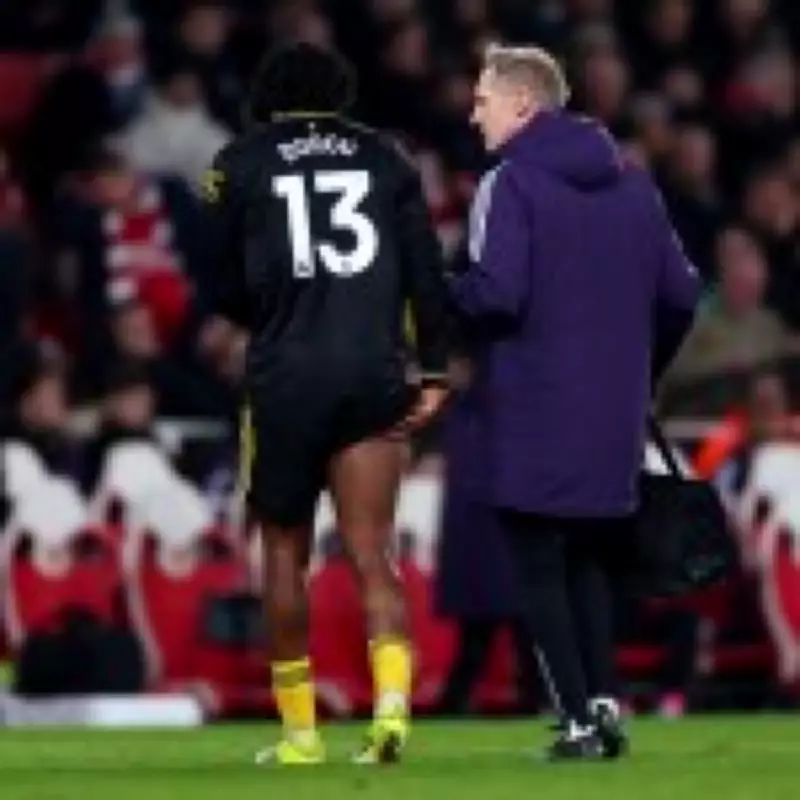
The elation that followed his spectacular half-volley at the Emirates Stadium on Sunday was swiftly tempered by concern when the Denmark international pulled up while chasing a long ball. While Carrick initially expressed hope it was merely cramp, subsequent reports this week indicate Dorgu sustained a hamstring injury that could rule him out for up to ten weeks.
Expert Analysis on the Injury Timeline
United are yet to officially confirm the severity of the injury, with Carrick anticipated to deliver an update on Friday ahead of the weekend's fixture. Stephen Smith, CEO and founder of Kitman Labs, a firm specialising in injury welfare and performance analytics, believes Dorgu suffered a more serious grade 2 hamstring tear in North London, aligning with that extended recovery period.
'This week they will have a clear picture of how long it is going to take [to recover from],' Smith told Metro. 'We have heard the estimations of it being 8-10 weeks so from the images they have seen they will have probably learned it is more serious than Michael Carrick was hoping for. They are likely looking at a high grade 2 tear. From that timeline, that’s what it would suggest.'
This prognosis would sideline Dorgu for the next eight matches, with a potential return against Leeds United on 11 April. While this represents a substantial blow to Carrick's tactical plans, Smith points to a notable silver lining: the injury appears to have occurred on Dorgu's non-dominant side.
The 'One Positive' in Dorgu's Setback
'They won’t treat him any differently when it comes to his recovery,' he said. 'The one positive we can maybe take from this is from looking at the video, it wasn’t his dominant leg or his kicking leg. That makes a difference because the demands being placed on that leg are slightly different.'
'If you have to run with that leg and also carry all the power you strike a ball with through it like we saw against Arsenal, the demands pushed through that leg to hit the ball with that power are huge. That changes the demands from a rehab perspective so I would think if it’s his non-dominant leg maybe it makes things a little more simple.'
Manchester United's Tactical Reshuffle
With Amad Diallo causing problems for defences down the right flank, Dorgu had provided United with a natural and threatening wide option on the left. Due to the team's shift to a 3-4-3 formation under Ruben Amorim, the squad is somewhat lacking in orthodox wingers. However, Matheus Cunha's excellent contributions against City and Arsenal position him as a likely candidate to step into the side.
The Brazil international replaced Bryan Mbeumo in both those matches as Carrick reconfigured his attack, supplying the assist for Dorgu against City before scoring the sensational winner at the Emirates. Mason Mount also remains an option to occupy that role on the left, while young talent Shea Lacey could receive an opportunity in the coming weeks.
Elsewhere, Carrick must deliberate on whether to continue with Mbeumo through the centre, given he also found the net in both recent games. Benjamin Sesko, who scored three goals in two appearances under Fletcher, is yet to secure a starting berth under the new manager.
Matches Patrick Dorgu is Set to Miss
- Fulham (H), Sunday 1 February
- Tottenham (H), Saturday 7 February
- West Ham (A), Tuesday 10 February
- Everton (A), Monday 23 February
- Crystal Palace (H), Sunday 1 March
- Newcastle United (A), Wednesday 4 March
- Aston Villa (H), Saturday 14 March
- Bournemouth (A), Friday 20 March