FIFA Chief Gianni Infantino Maintains Controversial Stance on Football and Politics
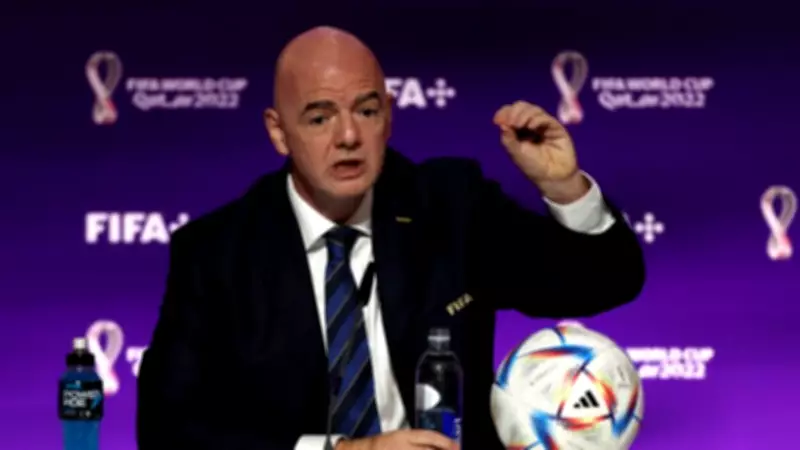
In an exclusive interview with Sky News, FIFA President Gianni Infantino has reinforced his unwavering position that football should remain separate from political disputes, while simultaneously defending some of his most contentious decisions. The Swiss-Italian administrator demonstrated remarkable consistency in his views, even as he navigated questions about international conflicts, controversial awards, and tournament boycotts.
Defending the Trump Peace Prize Decision
Infantino stood firmly behind his controversial decision to award former US President Donald Trump a FIFA peace prize, despite acknowledging the significant backlash the move generated globally. "I'm very fortunate to have an excellent, a great relationship with President Trump," Infantino stated, adding "Objectively, he deserves that prize. He was instrumental in resolving conflicts and saving thousands of lives."
The FIFA president elaborated on his philosophical approach, explaining that his organization should recognize any world leader attempting to end conflicts, regardless of political affiliations. He went so far as to predict Trump might receive further recognition, suggesting "I think he will get it" regarding the Nobel Peace Prize.
Rejecting Calls for World Cup Boycotts
When questioned about growing calls to boycott the upcoming World Cup in the United States - driven by safety concerns and immigration policy criticisms - Infantino delivered a characteristically blunt response. "I'm against bans, I'm against boycotts as well. I think they don't bring anything... they just contribute to more hatred," he asserted.
The FIFA chief drew a pointed comparison to international trade relations, questioning why football should be treated differently from other sectors. "Is anyone proposing that the UK should be stopping doing commerce with the US? I didn't hear that. So why football? Why football?" he challenged, highlighting what he perceives as inconsistent standards applied to the sport.
Russia Ban and Global Football Diplomacy
Infantino expressed clear views on Russia's continued exclusion from international football competitions, stating unequivocally that FIFA should lift the ban, at least at youth level. "Oh, definitely. We have to. Yes... at least at youth level. This ban has not achieved anything," he argued, maintaining that such restrictions "have just created more frustration, and hatred."
Throughout the interview, Infantino addressed multiple geopolitical concerns, including questions about protecting footballers in conflict zones like Gaza and Iran, as well as global tensions surrounding Venezuela and Iran. His responses consistently reflected his belief that football organizations should maintain engagement rather than implement punitive measures.
Controversial Comments and No Regrets
While maintaining his defiant stance on political matters, Infantino demonstrated a more conciliatory approach regarding comments that offended English football fans. He apologized for jokes made at Davos about arrest records of England supporters during major tournaments, explaining "It was meant to be more of a light heartened remark, to show that the World Cup in Qatar was a celebration, it was a peaceful event."
However, when his infamous pre-Qatar World Cup speech was described as "infamous," Infantino immediately corrected the interviewer. "It was not infamous," he insisted, "it was famous." He expressed no regrets about the speech that many consider the defining controversy of his presidency, believing it successfully achieved its purpose of being heard, discussed, and remembered.
A Consistent Philosophy Amid Controversy
What emerges most clearly from Infantino's remarks is his remarkably consistent worldview. Despite engaging directly with political matters through his role, he maintains that football should operate above political divisions. This philosophy extends to his personal approach to criticism and controversy.
The FIFA president apologizes when jokes misfire but remains steadfast when his principles are challenged. Even as critics label his legacy controversial, Infantino appears unconcerned, viewing controversy itself as a form of influence and power within the global football landscape.
His interview reveals a leader who has carefully crafted a position that allows him to navigate the complex intersection of international sports and global politics while maintaining what he views as the essential purity of football as a unifying force above geopolitical divisions.