Igor Tudor: The 'Ferryman' Tasked with Steering Tottenham to Safety
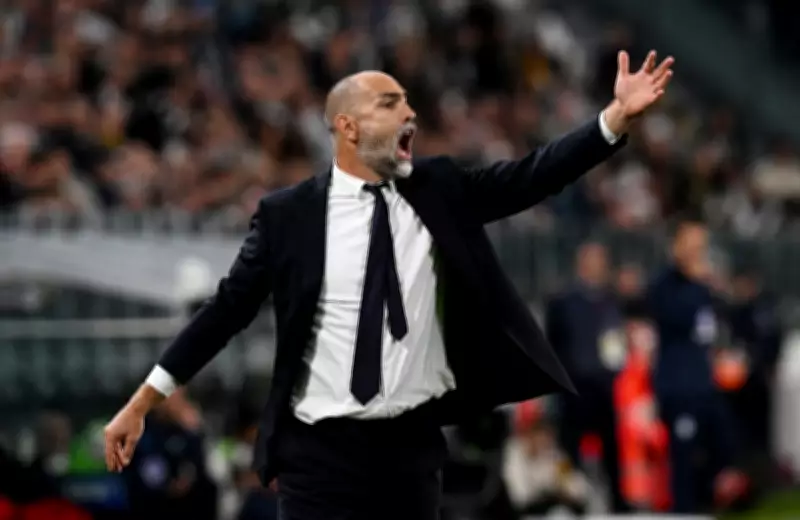
In Italian football, an interim manager is often called "un traghettatore" – a ferryman. When turbulent waters threaten, clubs don't seek an adventurous captain dreaming of distant horizons. They need a steady hand to guide them safely to shore. Igor Tudor, Tottenham Hotspur's newly appointed interim head coach until the season's end, has built a formidable reputation as exactly that kind of leader.
Though Tudor himself dismisses the label, noting that all managers live game-to-game regardless of contract length, his career speaks volumes. Tottenham marks the seventh club to hire him mid-season, and he has prevented all previous six from sinking into relegation or failure.
A Proven Record of Mid-Season Rescues
Tudor's management journey began at Hajduk Split, his boyhood club, where he took over with barely a month left in the season and clinched the Croatian Cup. At Galatasaray in February 2017, he secured European qualification. His Serie A rescue acts are particularly notable: at Udinese in April 2018, he inherited a team on an 11-game losing streak and rallied them to seven points from four matches, avoiding the drop.
When Udinese recalled him in March 2019, they were teetering one point above relegation; Tudor steered them to a comfortable 12th-place finish. At Verona in 2021, despite losing key players Mattia Zaccagni and Federico Dimarco, he achieved a ninth-place finish. More recently, at Lazio in 2024, he took over a struggling side under Maurizio Sarri and qualified them for Europe with five wins and three draws in nine games. An identical record at Juventus last season secured Champions League football.
The Challenge of Short-Term Success vs. Long-Term Stability
Critics might question why Tudor hasn't translated these short-term triumphs into enduring stability. At 47, he has rarely completed a full season, with a third-place finish at Marseille in Ligue 1 three years ago standing as a notable exception. The turbulent end at Juventus illustrates the complexities: despite meeting objectives, he wasn't initially retained, only receiving an extension after other targets fell through.
Frustrations boiled over as Juventus endured an eight-game winless run, with Tudor publicly criticizing the club's transfer strategy, contrasting his limited influence with Cesc Fàbregas's power at Como. The Bianconeri failed to score in his final four games – their longest drought in nearly 25 years. Yet, judging his entire career on this brief, difficult period would be unfair.
Tudor's Tactical Blueprint and Demanding Style
Clarity and consistency define Tudor's approach. Since his Verona tenure in 2021-22, he has embraced a man-to-man defensive system, moving away from zonal marking. A disciple of Gian Piero Gasperini, he favors a back three, high press, and rapid, direct transitions. This straightforward formula can be implemented quickly but imposes heavy physical demands – a potential concern for injury-hit Tottenham.
Players like Destiny Udogie and Pedro Porro could thrive as wing-backs, though both are sidelined for weeks. More intriguingly, Tudor might revive Randal Kolo Muani, who scored five goals in 11 games under him at Juventus but has yet to net in the Premier League since joining Tottenham on loan.
His man-management is famously uncompromising. At Marseille, he benched star playmaker Dimitri Payet for insufficient pressing, with Payet later describing Tudor's methods as "authoritarian" and "brutal," though he acknowledged some softening over time. In north London, with only 12 Premier League games remaining, philosophical debates are a luxury. The immediate priority is survival, and Tudor's track record suggests he's the ferryman Tottenham needs to reach safe harbor.