
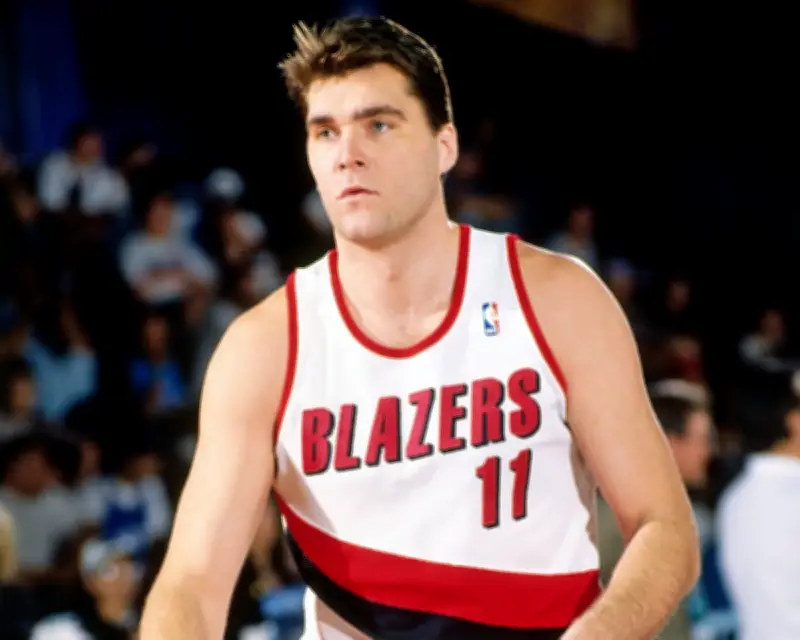
The Portland Trail Blazers selected Arvydas Sabonis with the last pick of the first round in the 1986 NBA draft, a move that drew boos and laughter but ultimately helped transform the league into a global powerhouse. Two rounds later, they picked Dražen Petrović from Yugoslavia. These selections marked a turning point for the NBA, which had long dismissed European players as risky.
Before 1986: European Players Overlooked
Prior to 1986, international draft picks were rare, typically falling into two categories: foreign-born players who attended US colleges or late-round gambles. NBA teams did not employ international scouts, relying on secondhand reports and grainy VHS tapes. “At that time, I never saw an NBA scout in that period,” said Dan Peterson, an American coach who worked in Italy. “Europeans were not yet on the radar. The NBA had no idea.”
Portland's Vision: Bucky Buckwalter's European Interest
Bucky Buckwalter, Portland's vice-president of basketball operations, had been intrigued by European players for years. He first heard about Sabonis during a 1982 exhibition tour of the US by the Soviet national team, where the 7ft 3in, 17-year-old outscored two-time National Player of the Year Ralph Sampson. Buckwalter also learned about Petrović, a Yugoslavian guard averaging over 40 points per game in the Yugoslavian league, who led Cibona to the European Cup title in 1986.
Obstacles to Signing International Players
Signing European players was fraught with challenges. Fiba's amateurism requirement discouraged Europeans from joining the NBA, as NBA players were deemed professionals and could not represent their countries internationally. Communist countries exerted additional control: the Soviet Union forbade players from signing abroad, leaving defection as the only option, while Yugoslavia prohibited players from leaving until age 28. NBA executives also doubted whether Europeans could compete or assimilate.
The 1986 Draft and Its Aftermath
Despite the obstacles, Buckwalter believed Sabonis and Petrović could propel the Blazers into contention. “We picked the best big man and best guard in Europe,” he said. However, signing them proved difficult. Buckwalter met Sabonis secretly in a Madrid hotel room at 3am during the 1986 Fiba Championship; Sabonis wanted to join the NBA but refused to defect due to family risks. Portland enlisted US state department officials to negotiate with Soviet bureaucrats, offering millions, but the Soviets wanted Sabonis for the 1988 Olympics.
Petrović was also hesitant, unwilling to forfeit his international eligibility. Buckwalter hired a scout to monitor him. In 1988, the Blazers paid for Sabonis to rehab his torn achilles in Portland, just in time for him to lead the Soviet Union past the US in the Olympics and beat Yugoslavia for gold.
Globalization Accelerates
In 1989, Fiba voted to allow professionals in international competitions, paving the way for the US Dream Team at the 1992 Olympics. This policy opened the door for five Europeans to join the NBA in 1989-90, including Petrović. After a slow start with Portland, he blossomed with the New Jersey Nets, averaging 22.3 points per game in 1992-93 and earning All-NBA Third Team honors. He died in a car crash in June 1993 at age 28.
The USSR's glasnost policy allowed players to leave by 1989. Sabonis chose to sign in Spain to rehab his achilles, finally joining the NBA in 1995 at age 30. Despite injuries, he averaged 14.5 points and 8.1 rebounds in 23.8 minutes per game in his first season, with per-36-minute numbers of 22 points and 12.2 rebounds—All-Star caliber. He played seven seasons for Portland.
Impact on the NBA's International Era
Commissioner David Stern, who took office in 1984, had a vision of globalizing the game. The 1992 Dream Team inspired Europeans like Dirk Nowitzki, Tony Parker, and Pau Gasol. By the late 1990s, NBA teams began hiring full-time international scouts. Today, most teams employ four or five. Sabonis and Petrović are in the Hall of Fame, demonstrating that Europeans could be stars. In 1986, fewer than 10 international players were in the NBA; by the 2025-26 season, 135 players from 43 countries were on rosters, over 25% of the league. The last eight MVP awards went to players born outside the US.