
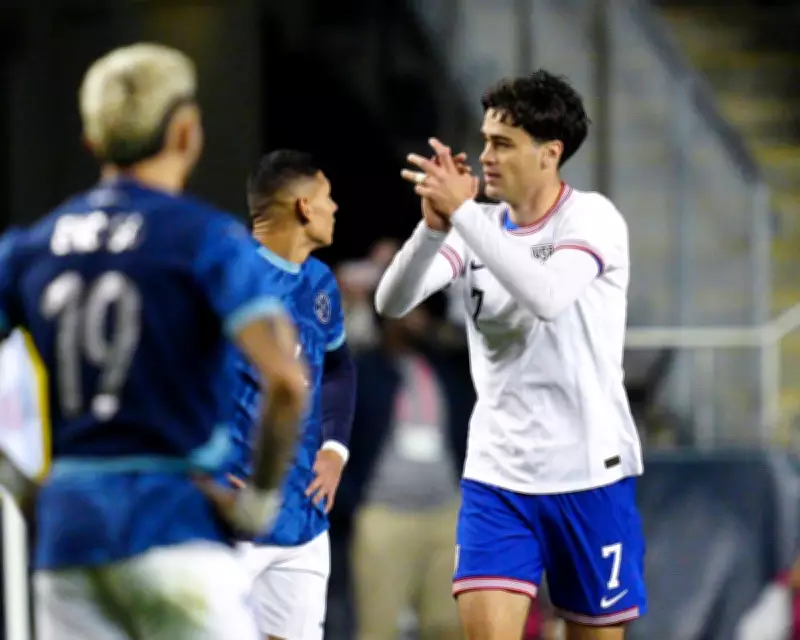
Gio Reyna: Mauricio Pochettino's Strategic Exception for USMNT
In the intricate world of international soccer, few dilemmas are as pronounced as that surrounding Gio Reyna and his place in the United States Men's National Team. Despite playing a mere twenty-six minutes in 2026 and having no appearances for Borussia Mönchengladbach over the past two months, Reyna remains a pivotal figure for US manager Mauricio Pochettino. This stark contradiction defies Pochettino's usual emphasis on club form, underscoring Reyna's unique value to the squad.
The Creative Catalyst Amid Physical Challenges
At just twenty-three years old, Gio Reyna continues to be regarded as the United States' most naturally gifted creative player. Injuries have undoubtedly impacted his physical conditioning, yet his ability to elevate the national team's offensive dynamics remains unmatched. This was vividly demonstrated during the November international window, where Reyna, despite minimal club action, contributed a goal and an assist against Paraguay and Uruguay. His performances reinforced the notion that his talent transcends conventional selection criteria.
Pochettino has openly acknowledged Reyna's special status, stating, "I think we really know that he's a very special talent and a very special player. And I think to give the possibility, even if it's not playing too much in his club, it can be very useful for us." This endorsement highlights a calculated exception in team-building philosophy, prioritizing Reyna's potential impact over rigid adherence to form-based metrics.
Navigating Past Controversies and Future Opportunities
Reyna's inclusion is not without its complexities. Lingering concerns from the 2022 World Cup, where issues with attitude and training effort limited his involvement, continue to shadow his reputation. Some critics argue he has not fully atoned for past controversies, questioning whether he merits further opportunities. However, Pochettino's unwavering support suggests a focus on harnessing Reyna's abilities for upcoming challenges, including friendlies against Belgium and Portugal and broader World Cup preparations.
The situation presents a fascinating case study in managerial flexibility. While Borussia Mönchengladbach may not currently leverage Reyna's talents, Pochettino's faith in his game-changing capabilities illustrates a strategic gamble aimed at bolstering the USMNT's creative arsenal. As the team evolves under Pochettino's cultural reset, Reyna stands as both a symbol of exceptional talent and a test of the manager's adaptability.
World Cup Playoffs: Geopolitical Tensions and Sporting Aspirations
Beyond individual player narratives, the intercontinental playoffs for World Cup qualification have emerged as a microcosm of broader geopolitical strife. Iraq's early arrival in Mexico, prompted by logistical challenges stemming from regional conflicts, underscores the intersection of sports and global instability. The ongoing war in Iran casts uncertainty over their participation, potentially altering playoff dynamics and qualification pathways.
These playoffs feature nations with historic ambitions: New Caledonia and Suriname seek their first-ever World Cup berths, while Bolivia, DR Congo, Jamaica, and Iraq aim to end decades-long absences. The potential for celebratory breakthroughs offers a poignant contrast to the surrounding turmoil, yet the logistical and political hurdles highlight the farcical elements infiltrating the qualification process.
Arsenal's Evolution: Defensive Strength Meets Creative Gaps
Shifting focus to club soccer, Arsenal's recent Carabao Cup final defeat to Manchester City revealed persistent shortcomings in high-stakes matches. Despite a strong defensive record and set-piece proficiency, the Gunners struggled offensively, failing to register a progressive pass for a critical twenty-minute period. The absence of creative midfielders like Eberechi Eze or Martin Ødegaard exposed a reliance on defensive solidity over attacking flair.
Arsenal's statistical profile reinforces this imbalance: they rank fourth in the Premier League for expected goals, trailing even Brentford in big chances created. Yet, their defensive metrics and unbeaten status in the Champions League quarter-finals suggest a foundation for success. The next evolution for Mikel Arteta's squad clearly involves enhancing creative output to complement their robust defensive framework, a necessary step for sustaining title challenges and European ambitions.