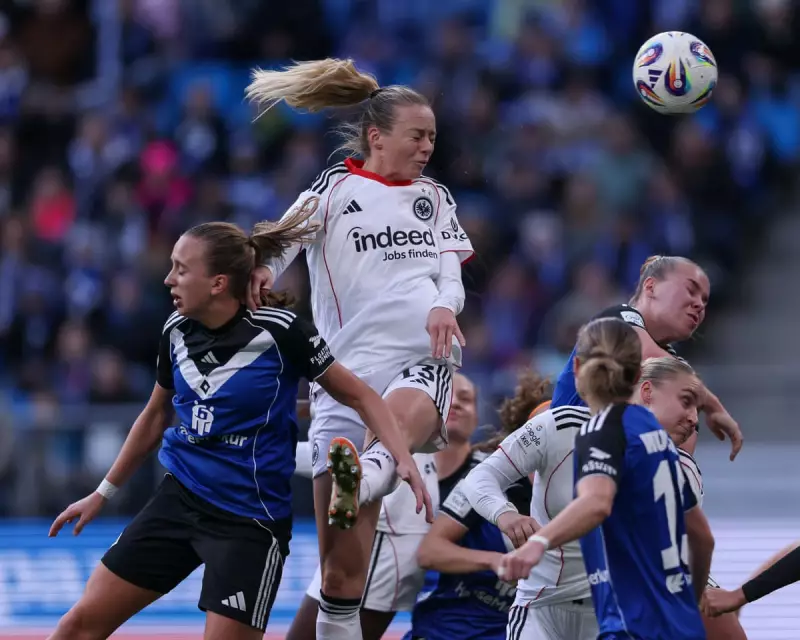
Germany's elite women's football clubs have taken a decisive step to regain their competitive edge, voting unanimously to split from the German Football Federation (DFB). The 14 clubs of the Frauen-Bundesliga will form their own independent committee, the Women's Bundesliga Association, to take ownership and commercial control of the league.
A Fear of Falling Behind
The primary driver for this historic move is a stark recognition that German women's football has been overtaken by the rapid growth of leagues abroad, particularly England's Women's Super League (WSL). Katharina Kiel, newly elected president of the association and head of women's football at Eintracht Frankfurt, stated the reason was "a fear of losing more and more the connection to the top."
Kiel, a former Bundesliga player, explained that a pivotal moment came when England capitalised on its home European Championship victory in 2022, accelerating development exponentially. "We've fallen behind – it is the reality," she admitted, noting that while costs for German clubs rose, revenue streams did not keep pace under the DFB's stewardship.
Learning from the WSL Model
The new model directly mirrors the path taken by the WSL when it became independent from the Football Association. Bianca Rech, a director at Bayern Munich, highlighted that commercial growth and self-determination were key objectives. "We are part of the DFB but don't have any power, so if the DFB want to do something we have to say yes," Rech said.
The clubs have actively studied the WSL's example, even working with an English agency to shape their plans. They aim to set their own rules on infrastructure and minimum salaries, and significantly boost sponsorship revenue. Rech conceded that Germany failed to leverage past successes like their World Cup wins, missing the commercial and fan engagement boom England experienced.
The Road to 2027-28
The targeted launch for the new independent league structure is the 2027-28 season, aligning with the start of a new media rights cycle. Kiel emphasised that the timeline is deliberate, allowing the newly formed association to build a capable organisation. "We'll use next season to get things sorted," she said, ensuring the framework provides economically for all clubs.
The move is seen as crucial preparation for the 2029 Women's European Championship, which Germany will host, offering a prime opportunity to showcase a revitalised domestic league. Despite the split, Kiel confirmed negotiations with the DFB are ongoing regarding the current league operation and future collaboration.
With historic clubs like Borussia Dortmund and VfB Stuttgart rising towards the top flight, there is optimism that a more commercially driven, club-owned league can spark a new era for German women's football and keep its star players from looking abroad.