
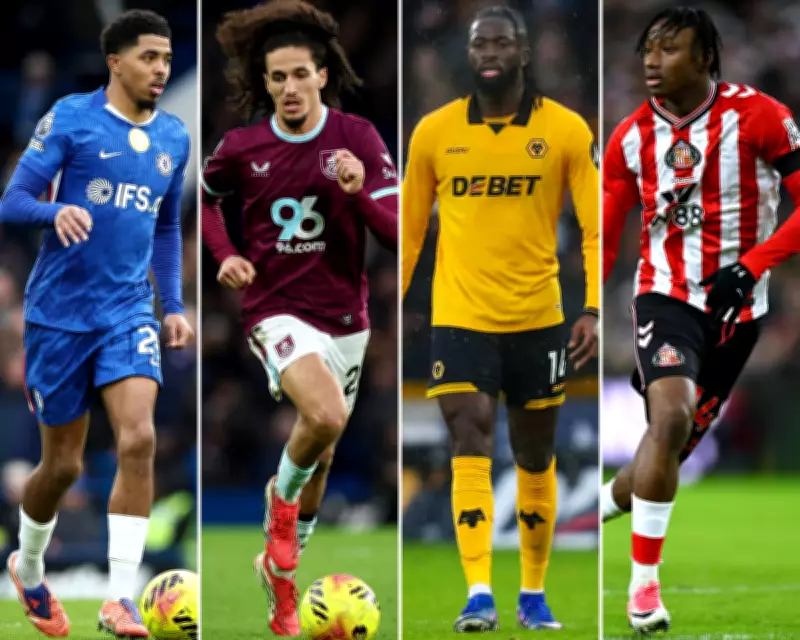
Premier League Players Confront Racist Abuse, Demand Action from Authorities
Last weekend, four Premier League footballers—Chelsea's Wesley Fofana, Burnley's Hannibal Mejbri, Wolves' Tolu Arokodare, and Sunderland's Romaine Mundle—were targeted with online racist abuse following matches. This incident has reignited calls for decisive action from those in power within football and society to address discrimination head-on.
Leadership from Players Sparks Urgent Calls for Change
The players' decision to publicly highlight the abuse they received demonstrates a growing trend of athletes taking a stand against racism. Similar actions were seen last summer when England defender Jess Carter reported online abuse during the Women's Euros, and former Bournemouth winger Antoine Semenyo addressed an incident at Anfield. These cases underscore a collective frustration and a demand for accountability, with legal proceedings underway in some instances.
Samuel Okafor, chief executive of Kick It Out, football's anti-discrimination organisation, emphasises that this leadership must be mirrored by those with greater influence in the game. He points out that recent events, such as comments from Manchester United co-owner Sir Jim Ratcliffe and Real Madrid's Vinícius Júnior reporting discrimination, have added complexity to ongoing discussions about whether racism is worsening or simply being reported more frequently.
Rising Reports and Evolving Challenges in Online Abuse
Statistics reveal a troubling increase in discrimination reports. Kick It Out has seen a 33% rise in online discrimination reports this season compared to the same period last year, with overall reports up by 45%. This suggests football often reflects broader societal issues. The UK Football Policing Unit notes that abuse frequently originates from overseas, with offenders using VPNs to mask their locations and tactics evolving from emojis to AI-generated images and audio files.
Compounding the problem, social media platforms have reduced monitoring efforts, leading to slower removal of abusive content. However, there is a growing alliance among football bodies, Kick It Out, the UK Football Policing Unit, and regulator Ofcom to tackle these challenges collectively. Clubs are increasingly supporting players and collaborating with police to ensure perpetrators face consequences.
The Critical Role of Representation and Accountability
Words and actions from influential figures carry significant weight. Criticisms have been directed at Ratcliffe for his comments on immigration and at José Mourinho for downplaying Vinícius's claims. Such responses undermine efforts to foster inclusivity in football, a sport that plays a vital role in uniting communities.
Representation at leadership levels remains a key issue. Data from this season shows that only 3.2% of board and senior leadership positions at Premier League clubs are held by ethnically diverse individuals. Greater diversity could ensure player concerns are better understood and accelerate long-term change. The new Independent Football Regulator is poised to play a crucial role in holding clubs accountable for improving representation.
In conclusion, as players continue to bear the brunt of abuse, there is an urgent need for collective action. This includes holding social media companies responsible, enhancing transparency in outcomes, and fostering a more equitable football environment through diverse leadership. The courage shown by players like Fofana, Mejbri, Arokodare, and Mundle must inspire sustained efforts to eradicate racism from the sport.