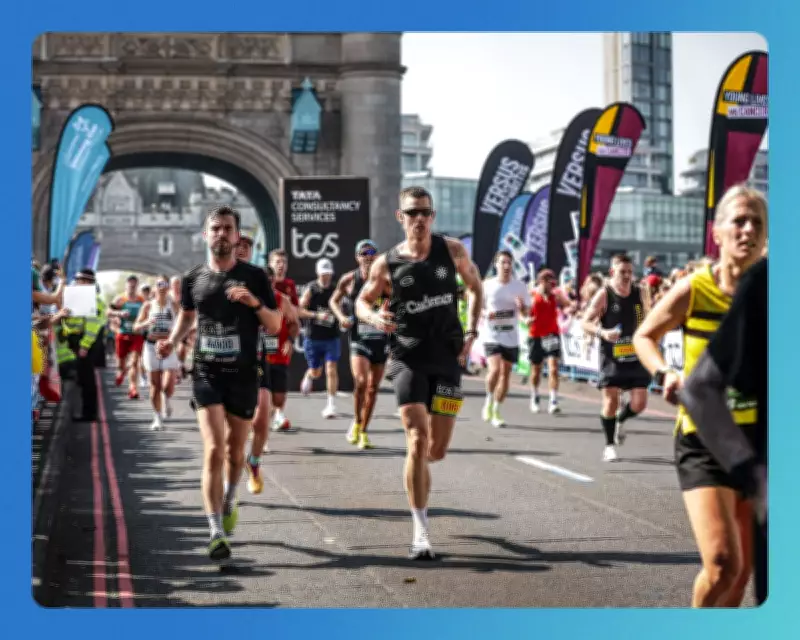
When you first start running, the marathon – all 26.2 miles of it – seems like an impossible distance. Whether you have taken the plunge at your local parkrun or completed your first 10k, the thought of anything longer probably feels beyond you. But this running milestone is more achievable than you think. My first marathon was Brighton in 2018, and crossing the line, I knew I had been bitten by the bug. Three more marathons and three ultra-distance events later, I am gearing up for number five in Berlin this September.
Over the years, I have found that if you commit to a training plan and stay consistent, the miles soon start to rack up – it is how a record 56,640 runners (including me) finished the 2025 London Marathon. In fact, if you start training now, there is no reason why you could not tick off your first marathon in 2026, with plenty of places still available at autumn marathons around the UK (see below).
Gear choice is also a big consideration. After eight years of consistent running and learning through mistakes, I have my favourite kit and tech, and would not think of starting a long run or marathon without a big dollop of anti-chafe balm.
From tips about shoes to advanced equipment you will not need, here is the best tried and tested advice from marathon winners, qualified coaches and yours truly for running gear that will get you round your first 26.2 miles.
The Best Running Kit for Your First Marathon
Everyday Shoes
Brooks is well known for making reliable, fuss-free running shoes, and its Glycerin 23 shoes have kept my feet comfortable and cushioned during more than 60 miles of testing this spring. Available in three widths (medium, wide, extra wide), it caters for a lot of foot sizes and shapes. The Hoka Clifton 10s are similar beasts and slightly less expensive depending on where you shop. Finally, if you are after a shoe that can cover pavements and light trails, the Nike ReactX Pegasus Trail 5s ensured my feet stayed gripped and moving throughout the winter. The range has recently been updated and is available with a significant discount, but you will have to be quick to bag a sub-£100 bargain.
Mike Gratton, winner of the 1983 London Marathon men's race and coach at Mike Gratton Coaching, says: "When you are starting out, the only important thing to get is a comfortable pair of shoes. Do not be bamboozled by technical features, such as an anti-pronation shoe – most of us are actually just neutral runners. So if the shoe fits well, it is comfortable and feels right, it almost certainly is right."
Alexandra Oliver of No Limit Run Coaching adds: "Get a gait check at a running shop – that helps beginners avoid things like blisters, injuries and wasted money – and you can test some shoes while you are there and see what works. Also, it is important to understand what terrain you are going to be running on. Is it a trail or road marathon? Summer or winter? Finally, your feet get hot as you run and start to expand; you need to be able to wriggle your toes, so you want a good toe box."
Carbon-Fibre-Plated Shoes
Carbon-fibre-plated shoes have revolutionised elite running and been partly responsible for a swathe of new marathon world records. The elite tech comes with pro-level prices, but if you have a goal time in mind or have been training for a while and want to set a fast yardstick in your first marathon, then you may be able to justify the outlay. If you can stomach spending more than £200, consider the Puma Fast-R Nitro Elite 3. It was a noticeable step up during training runs compared with other carbon shoes I had used. Alternatively, opt for a slightly older model, such as the Nike Alphafly 3: the 2023 release is discounted if you are not fussed about colours, and a new Alphafly is on its way. I won a 50k race wearing the shoes during testing.
Howard Calvert, marathon coach at Looped Run Coaching, says: "[Carbon-fibre-plated shoes] are useful for beginners: they boost propulsion and energy return, and also help recovery. But they come with caveats: you should not wear them for every single training run – there are plenty of non-plated options that provide increased levels of cushioning while helping to strengthen different muscles and tendons. Also, carbon shoes are not designed to last as long as the average trainer – the rubber on the soles is thin to save weight, so it quickly wears down. A good intro is Hoka's Rocket X 3."
Tops
For colder starts, it is a good idea to have a long-sleeve running top in your sportswear wardrobe. As someone who runs hot, thermal layers and jackets tend to turn me into a red-faced mess, but my New Balance core long-sleeve provides ample warmth, keeping me comfortable and sweat-free on days where the temperature is in the single digits.
Oliver advises: "You need to choose something that is moisture wicking – taking away the moisture you create when you are running from the body; quite simply, nothing made of cotton. It does not need to be expensive – you can get a really nice moisture-wicking T-shirt from Decathlon for about £10."
Shorts
As with tops, shorts need to be good at wicking away sweat from hotspots (and at marathon distance, these hotspots can become chafing epicentres if not kept dry). While some will prefer the coverage of leggings or half tights, if you want your legs to be free, I cannot fault Nike's Dri-Fit running shorts; in fact, I rate them so much that I own three pairs. Brief-lined, meaning I can forgo underwear, they are the shorts I reach for regardless of run type or duration. Their only snag is that they just have a small key-sized pocket, but if you are happy to carry your phone in a running belt or vest (or go off-grid completely and leave it at home), then they are tough to beat.
Leggings or Half Tights with Pockets
If you do not find running with a belt comfortable, leggings now have a range of spacious pockets designed to carry phones and nutrition. Many men are moving away from shorts to half tights, and one of the main reasons is the additional pocket space. The only downside is the more you overload the pockets, the more chance they have of slipping down at mile 10.
Underwear
Oliver says: "We are always told to buy cotton, but you need something that takes the moisture away. For affordability and accessibility, I would go with Decathlon. I also swear by Runderwear: it is a bit more expensive, but has great support and is sweat wicking."
Sports Bra
Oliver adds: "Women need a high-impact sports bra, but I coach men who need help in that department as well. It has to be labelled high-impact because running is a whole-body sport. Support and comfort matter way more than the brand or price. If you can, try it on, or even have one fitted. Sweaty Betty's sports bras are pricey, but you get fitted for them. The straps are crossed at the rear, so they give you support at the back too."
Socks
For road running, Stance's Run Light crew range has been my pick for a mid-calf sock for all distances, and they have kept their shape and sweat-wicking properties after years of wear and washes. Oliver recommends: "Socks need to be moisture-wicking, and always pair your sock with the right shoe – so a road sock with a road shoe, and a trail sock with a trail shoe. I am a great fan of Injinji toe socks because they individually layer the toes and keep them from rubbing each other. They do not suit everybody, but trail runners swear by them."
Waterproof Jacket
Calvert says: "One of the athletes I coach trained for this year's London Marathon while living in Aberdeen – in January and February, there were weeks and weeks of bad weather, so a waterproof jacket was one of her essentials. If you live in the UK, whether you enter a spring or autumn marathon, you will be running in all types of precipitation. Rab's Phantom jacket is lightweight, windproof, PFAS-free and packs down small."
Neckwear
Oliver notes: "A buff is a must-have because it is so versatile, year round. If you have one around your neck to keep the wind off but then you get too hot, you can wrap it around your wrist, and that absorbs the sweat from your wrist. If you wear one around your wrist covered in water, it keeps them cool."
Gloves
Signing up for a spring marathon means your training will start in the depths of winter. Gloves are therefore essential – particularly on sub-zero starts. The Ronhill classic gloves may look quite thin and flimsy, but they are great for taking the edge off without swamping your hands in thick, thermal layers that make them hot and sweaty. I have had mine for years, and they have held their shape well. For about a tenner, they are a great investment.
Running Belt
Calvert says: "The Naked running belt is without a doubt one of the most-used purchases I have made as a runner. There are plenty of running belts out there, but lesser belts bounce when you run, making them feel like you are carrying a rubber ring. The Naked belt sits tight – but crucially not too tight – and can carry a deceptively large amount of kit: keys, gels, gloves, phone, buff, even a soft flask with 500ml of liquid. I have used it for multiple marathons and ultras, and it has never let me down."
Hydration Vest
While I have only ever worn them during longer trail races with an element of self-sufficiency, a hydration vest is a great accessory to have during longer training runs, regardless of terrain. Salomon's Active Skin 4 has greater capacity than a running belt and can store two 500ml flasks, nutrition, extra layers and essentials such as phones, keys and bank cards. Available in a men's or women's design, I find them to be more comfortable than a running belt – the straps providing a more secure fit with everything less likely to bounce around. Oliver adds: "I love the Salomon ladies' running vest. It cinches in at the waist with a special drawstring that brings it close to the body, so there is no bouncing at all."
Free Smartphone App
Instead of splashing the cash on a running-specific GPS watch, it is possible to record and analyse your runs using a free smartphone app. Strava is a great starting point and uses your phone's signal to track your speed and distance, creating a fun little heatmap showing your route at the end of every activity. Although there is a paid-for tier, the free version is perfect for the basic information you need when preparing for your first marathon (it is what I used for my first 26.2-miler back in 2018). The data you are logging, such as weekly and monthly distance, is a great motivator as you build towards race day.
Energy Chews
Calvert says: "Fuelling your long runs, hard sessions and a marathon itself is non-negotiable – how you do that takes some experimentation, but I have found that a lot of first-time marathon runners prefer chews over gels. They have a consistency like Turkish delight, making them easy to nibble on rather than down in one, and provide the same amount of carbs as equivalent gels. Try Precision PF30 energy chews or SiS Beta Fuel energy chews."
Electrolytes
All that white stuff left on your top after a hard run is the salt you have lost in your sweat. To keep levels topped up and avoid cramping, it is worth adding electrolytes to your water during long training sessions. Styrkr's hydration tablets have a subtle berry flavour that does not taste overly synthetic and packs more sodium (what you are trying to replace) than many run-of-the-mill sports drinks.
Anti-Chafe Balm
Calvert says: "Aside from blisters, chafing can end many runners' marathons prematurely. Vaseline is the go-to for most new runners, but be warned: it can wash off with sweat or rain. I always recommend Squirrel's nut butter – it is used by many elite ultra runners who know a thing or two about chafed skin. It is all-natural and made with only four ingredients, including beeswax and coconut oil. I have used it on 100-mile races and not had to reapply. Slather it on your toes, thighs and nether regions, and you will be good for 26.2 miles."
Heat Pack
Calvert adds: "There is no hiding the fact that your marathon journey will involve multiple aches, pains, strains, niggles, bumps and bruises. It is all part of the joy of marathon training. Ensure you have a heat pack to hand to help speed recovery post-run."
What You Do Not Need
Recovery Tools
Calvert says: "Recovery tech can come at eye-popping prices and is expertly marketed at tired runners looking for an instant fix, but the best way to optimise recovery is free – sleep is where the magic happens. Aim for eight-plus hours a night consistently during your marathon training, and it will beat the latest recovery gimmick by a mile. To optimise your sleep where possible, you may need to invest in a better duvet, pillow, blinds or sunrise alarm clock, but that outlay is well worth it if it helps you get valuable shut-eye."
Headphones
Oliver says: "I would avoid music and headphones. They are banned at pretty much all events unless they are bone-conducting ones – but it is not about what you can hear, it is about what you can focus on. When you are listening to music and sounds around you, you are not listening to your body, and it is your body that is important. Having music on when you are doing your long runs on your own is nice if you want some company, but it is far nicer to be in the moment, knowing what your body can do, when you can push it and when you cannot, and hearing the birds sing in the trees."
Separate Heart-Rate Monitor
Calvert says: "Some runners may recommend an arm-based or chest belt HR monitor that connects to your watch via Bluetooth, as your watch's wrist-based heart-rate readings are not the most reliable; one study in the Journal of Sports Sciences found error rates on wrist-based HR monitors between 2% and 14%. However, for your first marathon, I would suggest not getting too bogged down in heart-rate data and accompanying zones – try to run on RPE (rate of perceived effort) rather than constantly checking your HR data."
Handheld Bottle
Oliver says: "Try never to carry anything in your hand. It affects your form and weight distribution, making you run skew-whiff. Also, your hand is tensed, and you cannot then use your hands and arms to help drive the body and the good form that you want."
GPS Watch
Running watches are fantastic pieces of kit that use satellite positioning to track stats such as pace and distance more accurately than a smartphone app, while built-in sensors can record performance metrics such as heart rate. But if you are just starting out, it is not a critical buy.
Bicarbonate of Soda
Calvert says: "We are not talking about the stuff in your baking cupboard here. Bicarb has become the latest supplement of choice for performance athletes because it has been shown to 'buffer' lactate – essentially meaning you can run harder for longer. But we are talking marginal gains – it has been described as 'the 1% for the 1%', so it is unlikely to produce significant performance gains for debut marathon runners. And when prices can hit £60 for four servings, you may want to spend your money elsewhere."
What You Need to Know
The Best Marathons in 2026 You Can Still Enter
New Forest, 13 September This multi-terrain course is set along the roads, old railway lines and tracks of the New Forest National Park. Although it is not all on asphalt, it is still a fast and predominantly flat course. Newforestmarathon.co.uk
Loch Ness, 27 September General entry might have sold out, but it is still possible to get a spot at this event if you can fundraise £400 for Macmillan Cancer Support. An A-to-B course that hugs the south side of the loch and finishes in Inverness. Lochnessmarathon.com
Isle of Wight, 4 October The UK's longest-running continuously held marathon, 2026 marks its 70th edition; the first men's event was run in 1957, while it was also among the UK's first marathons to officially open to women, in 1976. Undulating terrain means there are some hills to navigate in addition to the 26.2 miles, but at less than £30 for a place, it is one of the cheapest around. Rydeharriers.eventrac.co.uk
Chester, 11 October Chester has the crowds and feel of a big event without the need to enter a ballot to guarantee a place. Some ups and downs mean it may not be your fastest effort, but it is unique in that you will take in two countries (England and Wales) en route. Activeleisureevents.co.uk
Yorkshire, 18 October Another relatively speedy route along closed roads, the Yorkshire marathon starts and ends in the ancient city walls, with the bulk taking in the surrounding countryside. Runforall.com
How Long Does It Take to Train for a Marathon?
The time it takes to train for a marathon will depend on how much running you have done. I had already prepared for a half marathon when I signed up for my first in 2018, and a generic 16-week plan I found online provided ample training to get me to the line. For my PB-smashing run in 2024 (2:43, since you did not ask), I had many more years of cumulative miles in my legs, so I arrived at the start line after an intensive 10-week training block that my running coach had devised for me.
For beginners, Calvert recommends allowing "at least 12-18 months to build up to marathon distance, targeting shorter races such as 10ks and half marathons over that time" to get your body used to the impact that running puts on it and reduce the chance of injury. If you are more experienced and have already ticked off a half, he suggests a 20-week plan. "Five months is ideal to give you time to build a base and increase training volume as you get closer to race day, while lowering the risk of injury that can be a danger if using a shorter schedule."