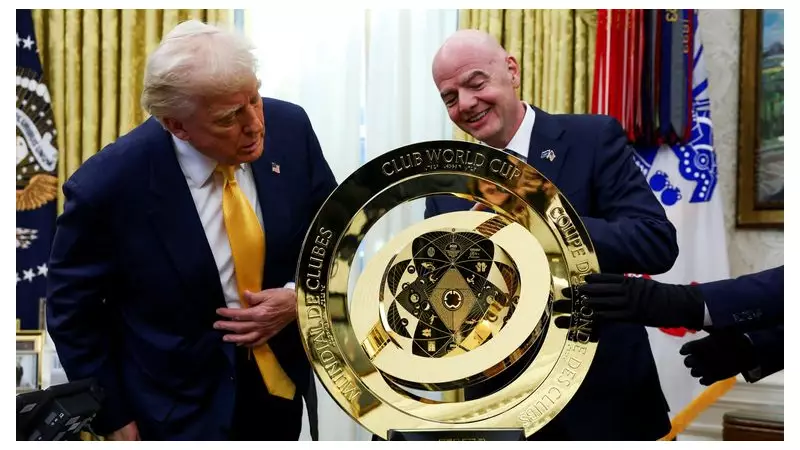
In a surprising political footnote, the most frequent visitor to the Oval Office during Donald Trump's first year back in the White House was not a fellow head of state, but the president of FIFA, Gianni Infantino.
An Unlikely Alliance in the Seat of Power
The boss of world football's governing body returned to the White House this week, where the agenda extended far beyond sport. The meeting followed the signing of a peace deal between Rwanda and the Democratic Republic of the Congo, yet conversation swiftly returned to football and the impending draw for the 2026 World Cup.
President Trump singled out Mr Infantino in the audience, diverting from talk of conflict resolution to boast about World Cup ticket sales, calling him a "great leader in sports and a great gentleman." The flattery is mutual. Mr Infantino has consistently aligned himself with the MAGA agenda, stating in January, "Together we will make not only America great again, but also the entire world."
From Champions League Draws to Presidential Access
Mr Infantino's proximity to the Trump presidency is unparalleled for a non-American. He has appeared alongside the president at diverse events, from a Saudi-backed financial conference in Miami to the Gaza peace summit in Egypt. This access is being leveraged to shortcut decision-making for the upcoming World Cup, smoothing the tournament's delivery with direct appeals to the Oval Office.
The FIFA president adeptly echoes Mr Trump's talking points, recently defending him by stating critics should lay off because he has a mandate from winning the 2024 election. "We should all support what he is doing because I think he is doing pretty good," Mr Infantino said.
World Cup Draw Amid Political Theatre
The bond will be on full display at the World Cup schedule draw at Washington D.C.'s Kennedy Center. The ceremony, featuring the 1970s disco group Village People and their song "YMCA," is seen as a direct indulgence of President Trump's tastes. Furthermore, FIFA has created its own peace prize to be awarded, a move interpreted by many as flattering a president who craves such recognition.
This relationship has created tangible policy alignments. When Mr Trump questioned on live TV whether matches could be moved from Democrat-run cities he deemed unsafe, Mr Infantino partly acquiesced, stating "safety and security is the number one priority." FIFA has also not dissented against the US block on visitors from Iran and Haiti, a stance that collides with its usual idealism about uniting the world through football.
The leaders of co-hosts Canada and Mexico, also due in Washington for the draw, will hope the football ceremony offers respite from Trump's threats of military action over drugs or a deepening trade war. Ultimately, the teams will discover their fixtures for next summer's tournament. For Gianni Infantino, it must come back to football, even if his political alliances now often overshadow the pitch.