FIFA's Controversial Decision on Ronaldo Suspension
FIFA has sparked widespread criticism after deciding to suspend Cristiano Ronaldo's three-match international ban, reducing his punishment to just one game following his violent conduct red card against the Republic of Ireland. The Portuguese superstar will now miss only Portugal's opening World Cup group game after FIFA's Disciplinary Committee placed the final two matches of his ban under a one-year probation period.
The Road to Controversy
The sequence of events began when Ronaldo received a straight red card for violent conduct during Portugal's defeat to Ireland, resulting in an automatic three-match suspension. He served the first game of this ban during his team's subsequent 9-1 victory over Armenia, a match where Portugal notably improved without their star player.
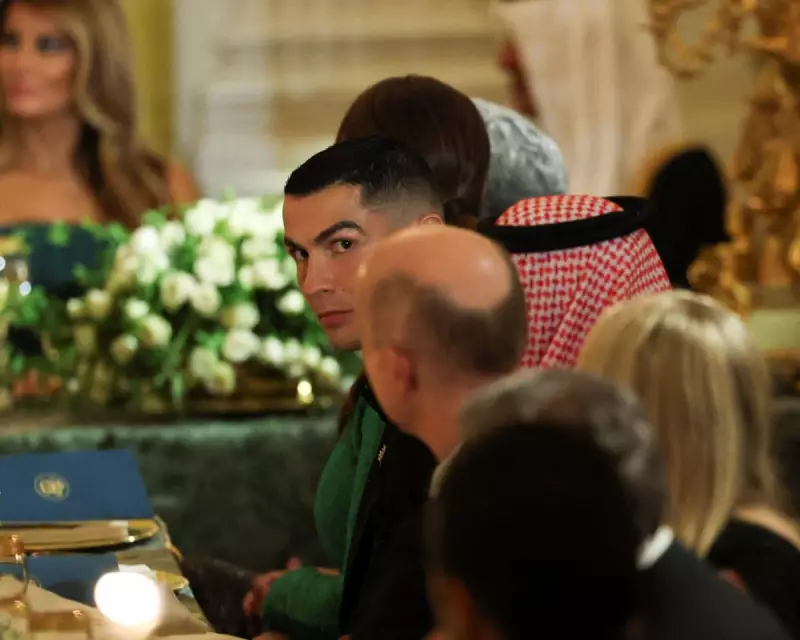
The plot thickened when Ronaldo attended a formal White House dinner hosted by former President Donald Trump, an event also attended by FIFA president Gianni Infantino and Saudi Arabian leader Mohammed bin Salman. Shortly after this gathering, FIFA announced its decision to suspend the majority of Ronaldo's ban, citing his previous good conduct as justification.
Double Standards Exposed
Football Daily has highlighted the apparent inconsistency in FIFA's disciplinary approach. When Armenia captain Tigran Barseghyan received his first ever red card for violent conduct in similar circumstances against an Irish player in Dublin, he was handed a standard three-match ban without any suspension option. Barseghyan has already served two games of his suspension and will miss his nation's next competitive match.
The disparity extends to other players too. Argentina's Nicolás Otamendi and Ecuador's Moisés Caicedo both received red cards during qualifying matches and will miss their respective nations' opening World Cup games, though neither was for violent conduct.
World Cup Draw Controversy
In further developments that have raised eyebrows, FIFA has revealed that next week's Geopolitics World Cup draw will ensure tournament favourites Spain and Argentina cannot meet until the final, provided both win their groups. This unprecedented arrangement for World Cup knockout stages could also benefit England, who would need to reach the semi-finals to potentially face either top seed, or the final to encounter France.
However, critics suggest this new system might increase the chances of England suffering an embarrassing early exit against potentially weaker opposition such as Scotland, Haiti or Curaçao in the Round of 32.
Broader Implications
The Ronaldo decision has intensified scrutiny of FIFA's governance under Gianni Infantino's leadership, with many observers noting an increasing pattern of preferential treatment for star players and influential nations. The Portuguese Football Association has yet to announce whether it will appeal against FIFA's decision, despite concerns that Ronaldo's presence might actually hinder Portugal's chances in a tournament where they otherwise appear strong contenders.
This controversy emerges amid other high-profile football news, including Arsenal's 2-2 draw with Bayern Munich in the Bigger Cup, and Coventry City establishing a ten-point lead at the top of the Championship after a thrilling 4-2 victory over Middlesbrough.