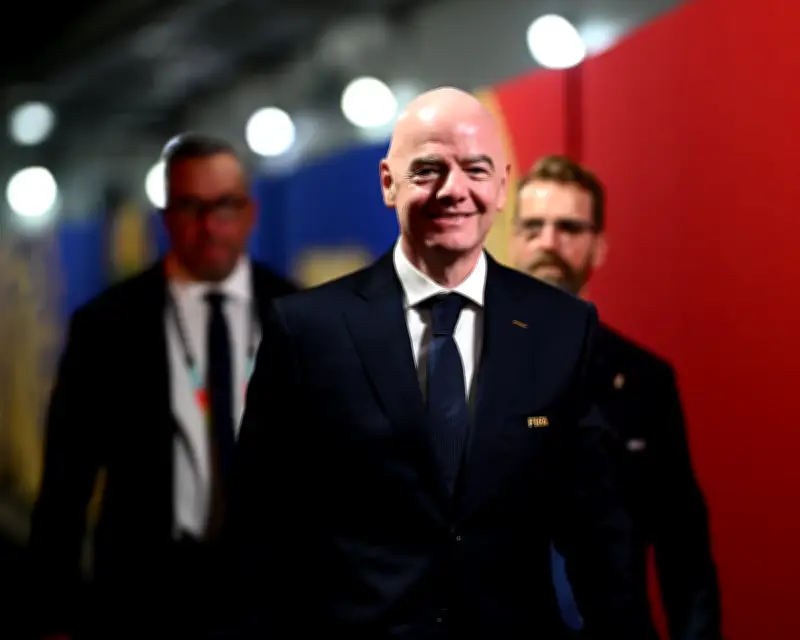
Fifa's controversial plan to sell off stakes in the World Cup has been officially scrapped, a move that has drawn praise from Football Australia and the Asian Football Confederation (AFC). The decision, confirmed by Fifa president Gianni Infantino on Saturday, follows a wave of opposition led by Uefa, which had threatened a boycott of all Fifa tournaments unless the proposal was withdrawn.
Football Australia's Stance
Football Australia chair Anter Isaac welcomed the climbdown, emphasizing that while football must evolve, certain core principles remain non-negotiable. "Football has never stood still, nor should it. Some principles, however, should never change. Integrity. Independence. Good governance. Transparency. Meaningful consultation. Due process," Isaac said in a statement.
Isaac also highlighted the importance of robust consultation in global football governance, noting that proposals of such magnitude require thorough engagement with member associations before being presented. "The discussions of recent days have reinforced an important principle of good governance: proposals of global significance should be developed through robust consultation, appropriate governance processes and meaningful engagement with member associations before they are presented for consideration," he added.
AFC's Response
The AFC, which represents 47 member nations including Australia, China, Japan, and Saudi Arabia, also issued a strong endorsement of Fifa's decision. AFC president Sheikh Salman bin Ebrahim Al-Khalifa stated that any initiative with the potential to impact global football must be discussed transparently with all stakeholders.
"The future of global football must always be shaped through proper consultation, collective dialogue and respect for the established governance structures of our game," Salman said in a letter posted on the AFC's website.
Background of the Proposal
The now-defunct Fifa Forward Enterprise (FFE) aimed to raise up to $4.2 billion by selling approximately a 20% stake to private investors, who would then have a say in the running of the World Cup and other Fifa events. The plan faced immediate backlash from Uefa, which asserted its member nations would boycott all Fifa tournaments unless the proposal was withdrawn. Concacaf, the governing body for North and Central America and the Caribbean, also strongly opposed the sell-off.
Football Australia had initially refrained from immediate criticism, instead requesting more information to "properly assess" the implications as part of a consultation process. The AFC similarly stopped short of threatening a boycott but issued a strongly worded statement echoing Uefa's concerns.
Impact and Future Outlook
The scrapping of the FFE proposal marks a significant victory for football governance advocates, who argue that the sport's integrity must be preserved against commercial pressures. Isaac noted that the strength of football's institutions depends on the trust of the global football family, which is earned through transparent processes. "Our attention must now turn to the future," he said.
The decision is likely to restore confidence in Fifa's leadership, which had faced intense scrutiny over the proposal. As the global football community moves forward, the emphasis remains on collaborative decision-making and adherence to established governance structures.