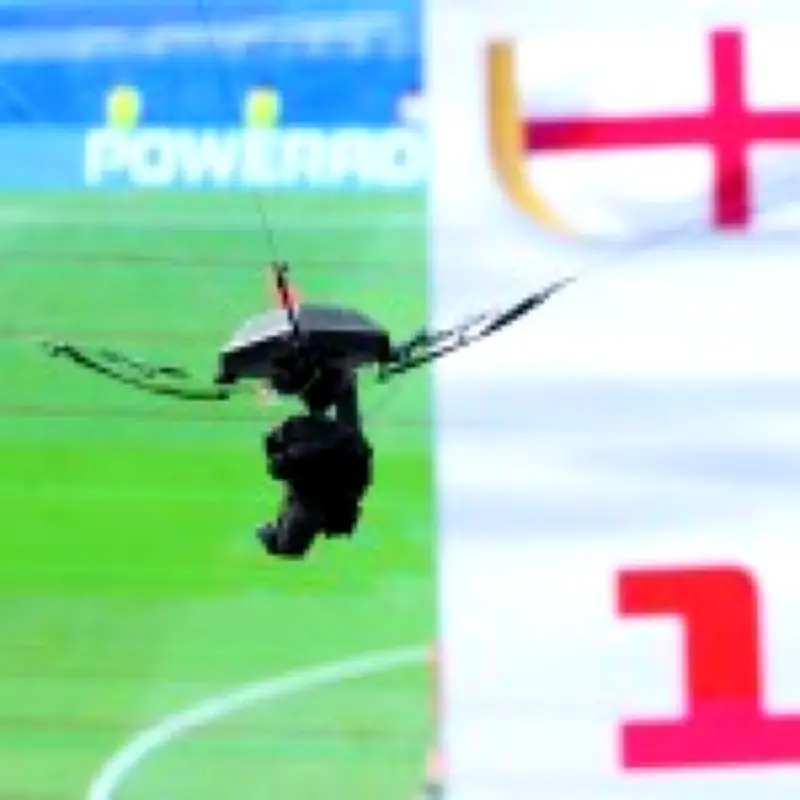
FIFA has dismissed Norway’s complaints about Jude Bellingham’s goal after the ball appeared to hit a cable connected to Spidercam in the build up to England’s equaliser in their World Cup quarter-final. Andreas Schjelderup put Norway ahead with what seemed to be a miss-hit cross in the 36th minute before Bellingham pulled England level shortly before the half-time whistle.
Controversial build-up to Bellingham’s goal
England’s move for Bellingham’s equaliser started after the goal kick from Norway goalkeeper Orjan Nyland appeared to hit one of the cables which is connected to the overhead Spidercam at the Miami Stadium. After the ball seemingly struck the cable, it immediately changed path and dropped down to England midfielder Elliot Anderson and two passes later, Bellingham was able to finish brilliantly past Orjan to equalise.
Norway were furious that VAR did not intervene and French referee Clement Turpin awarded the goal to England. The International FA Board (IFAB), which oversees the laws of football, states that if the ball hits Spidercam or one of its cables, the referee should give a drop ball at the point where the ball made contact. This means that Bellingham’s goal should have been ruled out and Norway’s lead would have been preserved by the half-time break.
FIFA’s response and sensor data
However, FIFA has responded to Norway’s complaints and claims that officials ‘have checked the data and no peak on the graph from the connected ball heartbeat sensor’. A statement from FIFA read: ‘Before England’s goal in minute 45+2 against Norway, the sensor in the Connected Ball showed no peak in the ‘heartbeat of the ball’ when in the air, and therefore no evidence that the ball touched the overhead wire and changed the movement of the ball.’
Inside the World Cup match ball is a built-in sensor chip which captures the ball’s position, speed, and exact kick point 500 times per second. The data is fed back to the team of officials who can detect whether a touch on the ball was made by the cable.
IFAB rules and expert opinions
IFAB’s Law 8 clarifies that the ball is dropped for the team that would have retained/gained possession had play not been stopped, which includes the team that would have taken the restart in situations where the ball would have gone out of play. If play is stopped because the ball makes contact with a match official (e.g. the referee) or an outside agent, the ball is dropped where the interference/contact occurred.
Former Premier League referee Mark Clattenburg said on Fox Sports: ‘Some will ask why did the VAR not interfere. Yes, they can intervene if the contact of the ball with the camera cable is part of the reviewable incident. An attacking phase of play leading to a goal is part of the VAR reviewable incident so it should have been picked up by the VAR.’
Speaking at half time, Norway’s assistant coach Kent Bergersen told TV2: ‘Before the goal, Orjan hits the wire for the camera over the field, so the ball is shorter than it should have been. The referees should have looked into that.’