European Football Plunged into Refereeing Chaos as VAR System Fails Spectacularly
European football finds itself mired in a deepening refereeing crisis, with a weekend of high-profile errors across multiple leagues exposing fundamental flaws in the Video Assistant Referee system and match officiating standards. From England to Italy and Spain, controversial decisions have sparked outrage, conspiracy theories, and dangerous online abuse against officials, revealing a sport stuck in a destructive feedback loop with no clear path forward.
Premier League Nightmare at Villa Park
Saturday's Premier League clash between Aston Villa and their opponents descended into farce as referee Chris Kavanagh and his assistants delivered what many are calling a hat-trick of howlers without VAR's safety net. The most glaring error saw Tammy Abraham clearly offside for Villa's opening goal, while Lucas Digne escaped with only a yellow card for a reckless challenge that many believed warranted red. Most baffling was the officials' determination that Digne handled the ball outside the penalty area, despite video evidence showing he both took off and landed inside the box while attempting to block a cross. The Professional Game Match Officials Limited has since stood down Kavanagh and one assistant, but the damage to public confidence in officiating has been done.
Italian Drama and Spanish Controversy
In Italy's Serie A, Juventus suffered from what manager Massimiliano Allegri called "a harsh call" in their 3-2 defeat to Inter Milan. Pierre Kalulu received a second yellow card for what appeared minimal contact with Andrea Bastoni, who collapsed dramatically. With VAR unable to review second yellow card decisions, Juventus officials confronted referee Federico La Penna at halftime, resulting in bans for the club representatives. La Penna now faces such severe online threats that police have advised him to remain at home for his own safety.
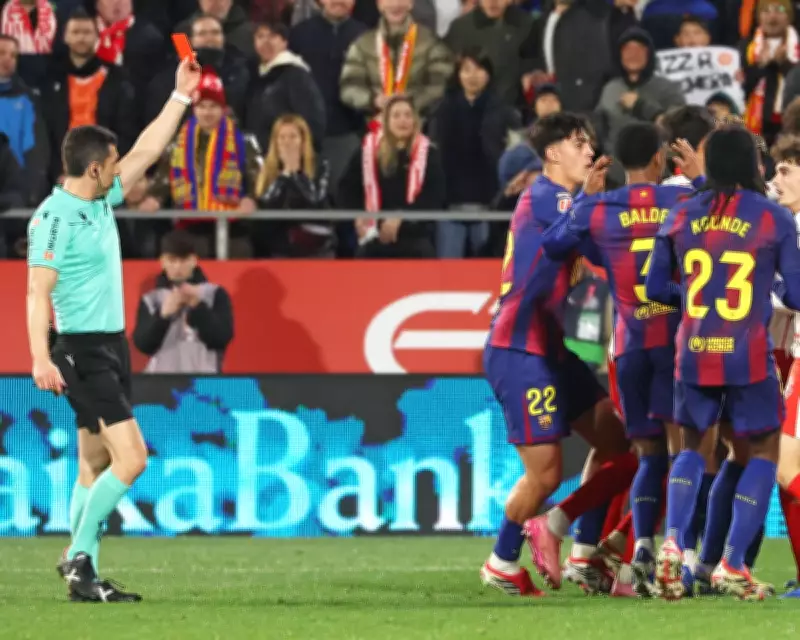
Meanwhile in Spain's La Liga, Barcelona's shock defeat to Girona featured another VAR controversy. Referee César Soto Grado missed a foul on Jules Koundé by Claudio Echeverri in the buildup to Fran Beltrán's winning goal, with VAR failing to intervene despite clear evidence. Barcelona manager Hansi Flick attempted diplomacy, stating: "The referees are doing their job. Sometimes their work isn't good. Sometimes the referees are at the same level that we play, which is not a good level."
The Verona Red Card Mystery
Perhaps the weekend's strangest incident occurred in Italy's Serie B, where Verona's Gift Orban received a straight red card after just 11 minutes for protesting a decision. Referee Luca Pairetto dismissed the player for dissent, suggesting Orban's comments must have been both profoundly offensive and remarkably concise to warrant immediate expulsion without warning.
Systemic Failure and Toxic Fallout
These four separate controversies represent different facets of football's officiating crisis: one where VAR was absent, one where VAR couldn't intervene, one where VAR should have intervened but didn't, and one where the referee had more information than VAR. This inconsistency has created what analysts describe as a "frustrating feedback loop" where technology intended to solve problems has instead created new ones.
The situation has escalated beyond sporting debate into dangerous territory. Referees now face death threats and sustained online harassment fueled by tribalistic accusations of corruption. Football managers, who suffer most directly from poor decisions, find themselves walking a tightrope—carefully choosing words to avoid inflaming digital witch hunts while still addressing legitimate concerns.
Formerly, a bad decision might result in analytical criticism on television programs like Match of the Day. Today, social media platforms erupt with digital rage clouds that refuse to disperse, with historical incidents dredged up as supposed evidence of wider conspiracies. The environment has become so toxic that serious questions emerge about who would willingly choose refereeing as a career.
No Easy Solutions in Sight
While some advocate abandoning VAR entirely, most experts recognize that returning to pre-technology officiating would not create the "righteous utopia" some imagine. The fundamental problem lies in inconsistent application and interpretation of rules, both by on-field officials and VAR teams. What remains clear is that referees deserve protection from abuse, and football's governing bodies must develop better systems for transparency, accountability, and support for match officials.
As the sport grapples with these challenges, one truth emerges: football's relationship with refereeing has reached a crisis point requiring urgent, systemic reform rather than piecemeal adjustments. Until football addresses the human, technological, and cultural dimensions of this problem simultaneously, controversies will continue to overshadow the beautiful game itself.