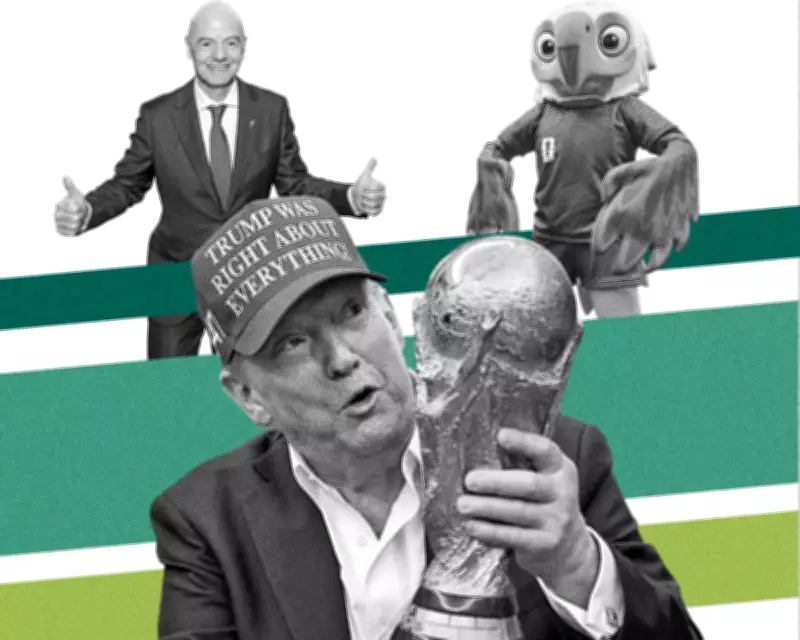
The World Cup's Political Battleground: From Putin to Trump
In retrospect, the 2018 World Cup in Russia appears as a subtle yet significant nod to its strongman leader, Vladimir Putin. The tournament not only showcased the nation but also validated Putin's project of gradual conquest, placing him at the forefront of global attention. Fast forward to this year, and the runup to the world's biggest sporting event has become a monument to Donald Trump, highlighting how political figures increasingly dominate the narrative.
Saudi Arabia's 2034 Hosting and Human Rights Concerns
The decision to award the 2034 World Cup to Saudi Arabia, despite its dubious human rights record, offers de-facto ruler Mohammed bin Salman a chance to remake his image and that of the kingdom. FIFA has shown reluctance to create independent oversight for the treatment of migrant workers, raising fears that stadium construction could be as lethal as it was for the 2022 Qatar World Cup. This trend underscores the urgent need to protect the World Cup from external forces.
Breaking Up the World Cup: A Radical Proposal
To safeguard the tournament, it's time to consider decentralizing the World Cup. Imagine splitting it into chunks, similar to breaking up a monopoly that has grown too powerful. This concept is already in motion, with the 2026 edition spread across three countries and the 2030 World Cup spanning three continents. Why not take it further? Play each group in a different city or region worldwide—Paris, Rio de Janeiro, Tokyo, Sydney, Johannesburg, London, or the Basque Country. Carve the knockout stages into sets and scatter them globally, with semi-finals and finals awarded through a bidding process.
Addressing Environmental and Economic Concerns
Critics may point to the carbon footprint, but if groups are located based on the median distance from participating teams, flight emissions might not significantly exceed those of a single-host tournament. Moreover, the financial burden of hosting has become so immense that only nations with ulterior motives, like image-building or political leverage, can afford it. Decentralization would reduce dependency on host nation whims, preventing leaders like Trump, Putin, or Prince Mohammed from manipulating the event for personal gain.
Benefits of a Globalized Tournament
Decentralizing the World Cup would maintain its status as soccer's top prize while advancing FIFA's goals: developing the game in more regions, creating a truly global spectacle, and bringing the sport closer to diverse populations. Financially, spreading out games could even boost revenue by creating premium, limited-event experiences in each host city, as seen with the 2020 European Championship, which was successful despite pandemic challenges.
In summary, deconstructing the World Cup may be the best way to preserve its cultural clout and social currency, ensuring it remains a celebration of sport rather than a tool for political agendas.