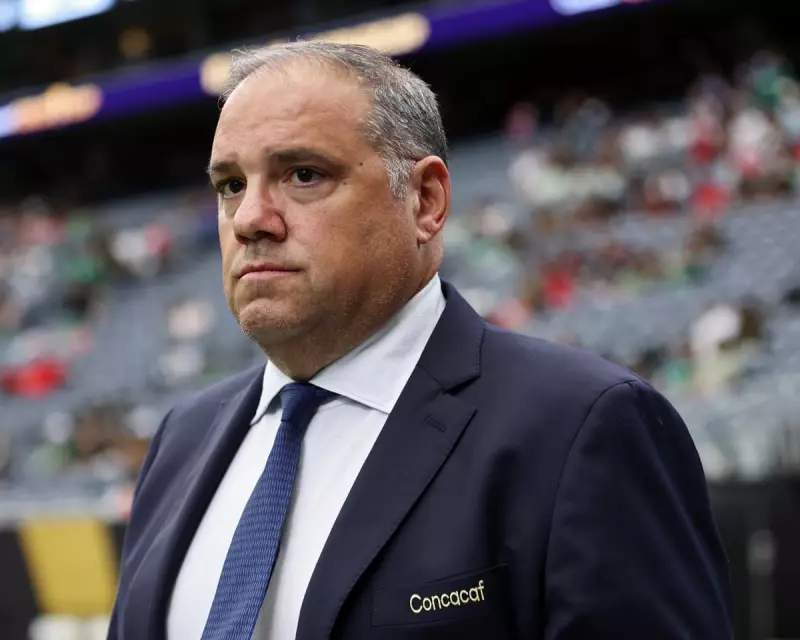
Victor Montagliani, the president of Concacaf, the football confederation for North and Central America and the Caribbean, has been revealed to earn over $3 million annually for what the organisation claims is just five hours of work per week. This information comes from the latest tax filing submitted to the US Internal Revenue Service, which has sparked scrutiny and debate over executive compensation in non-profit sports governance.
Tax Filing Details Exorbitant Compensation Package
Publicly available documents, initially reported by ProPublica, disclose that Montagliani, a Canadian national who has led Concacaf since 2016, received $2.1 million in base compensation during the 2024 tax year. An additional $893,750 was paid in unspecified bonus and incentive compensation, with a further $15,780 allocated to deferred or retirement benefits. This cumulative figure places his total remuneration well above the $3 million mark, making him the highest-paid official within Concacaf.
Comparative Analysis with Other Confederation Officials
The tax filing also highlights the compensation of Phillipe Mogglio, Concacaf's general secretary, who earned a base salary of $1,569,600. With bonuses and other payments, his annual income from the confederation exceeds $2.4 million. Notably, Concacaf reports that Mogglio works an average of 40 hours per week, in stark contrast to the five hours attributed to Montagliani. This disparity raises questions about the justification and transparency of such pay structures.
When compared to other global football confederation presidents, Montagliani's earnings are substantial. UEFA president Aleksander Čeferin was paid just over $4 million for the 2023/2024 financial year, while Conmebol's Alejandro Domínguez is estimated to earn over $1 million. In contrast, the Asian Football Confederation and Oceania Football Confederation do not publicly disclose their presidents' compensation, and CAF president Patrice Motsepe reportedly declines payment for his role.
Expert Skepticism Over Working Hours Claim
Richard Schmalbeck, a Duke University law professor specialising in taxation and non-profit organisations, has expressed doubt regarding the accuracy of Montagliani's listed working hours. "If it's really five hours then he is extremely well paid but I doubt it is the case," Schmalbeck remarked. He suggested that such figures might be routinely inserted without verification, noting that accountants often do not inquire about actual hours worked when preparing tax returns.
The filing was prepared by the international tax consultancy firm BDO and signed off by Concacaf's chief financial officer, Alejandro Lesende. Concacaf has declined to comment on the matter, maintaining a policy of non-disclosure regarding executive compensation, as Montagliani himself asserted during a 2023 Canadian parliamentary committee hearing.
Historical Context and Organisational Stability
Montagliani's election in 2016 followed a period of severe corruption that had tarnished Concacaf's reputation. His tenure has been credited with bringing stability to the 41-member body, which includes football associations from the United States, Mexico, and Canada. Under his leadership, Concacaf successfully bid for the 2026 FIFA World Cup to be co-hosted by these three nations, launched the men's Nations League, expanded club competitions, and attracted significant Saudi Arabian investment.
In 2024, the Saudi-backed Public Investment Fund, which owns Newcastle United, began funding Concacaf tournaments. Additionally, Saudi state oil company Aramco was named the "official energy partner" for all Concacaf competitions, and Air Riyadh became the confederation's official airline partner. These developments underscore the geopolitical and financial dimensions of modern football governance.
Compensation Committee and Broader Implications
Concacaf employs a compensation committee to determine remuneration for council members, including the president. However, the confederation has not disclosed the membership of this committee, further fuelling concerns about transparency. The 2025 tax filing also revealed that US Soccer Federation president Cindy Parlow Cone and former Canada Soccer president Nick Bontis each received $150,000 annually for five hours of weekly work as Concacaf council members.
This revelation highlights broader issues within non-profit sports organisations, particularly those designated under US tax law as 501(c)(6) entities, like Concacaf. Such organisations are exempt from corporate taxes, akin to groups like the American Medical Association, yet their executive pay practices can attract public and regulatory scrutiny. As football continues to grapple with governance reforms, the case of Montagliani's compensation serves as a poignant example of the ongoing challenges in balancing financial stewardship with competitive remuneration in the global sports arena.