
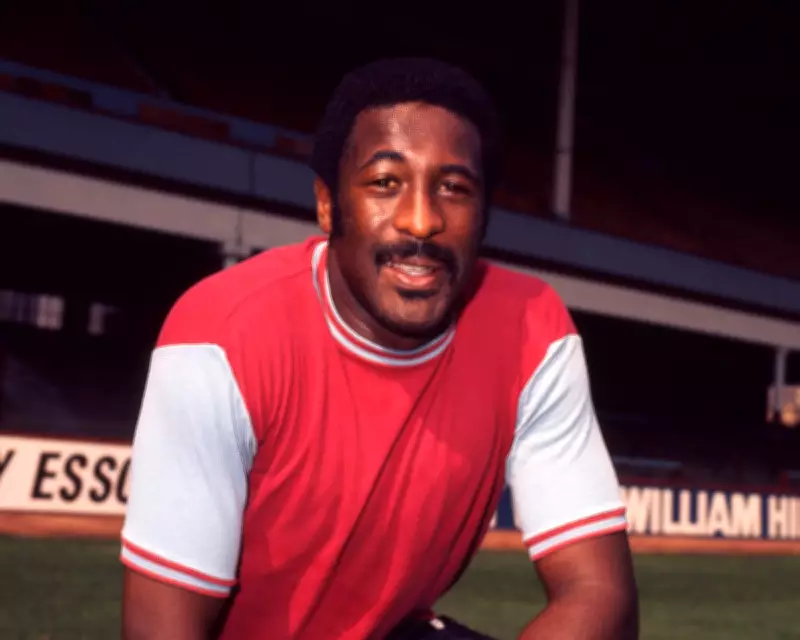
Transforming the Beautiful Game: The Clyde Best Story Review
A powerful new documentary film provides a long-overdue tribute to Clyde Best, the pioneering West Ham United striker who helped transform English football during the racially charged 1970s. While streaming platforms might suggest every football story has been told, this uplifting film proves otherwise by exploring Best's remarkable journey and its wider implications for racism and empowerment in the sport.
The Pathfinder's Journey
Clyde Best's status as one of English elite football's first black players is reasonably well-known, but this documentary ensures his story receives the attention it deserves. The film reveals how Best arrived in London from Bermuda as a 17-year-old for what was essentially a one-off trial session, after which he was signed by future England manager Ron Greenwood. Despite being quickly accepted by his West Ham teammates, Best faced virulent racism elsewhere during the post-imperial 1970s, finding himself at the sharp end of abuse that mirrored the era's troubling racial attitudes.
A Stellar Lineup of Voices
The documentary features an impressive array of talking heads who acknowledge Best's significance. West Ham contemporaries including Geoff Hurst and Harry Redknapp appear alongside those who followed in Best's footsteps, such as Viv Anderson, John Barnes, Les Ferdinand, Shaka Hislop, and Garth Crooks. Their collective testimony underscores Best's pathfinder role for succeeding generations of black footballers in the United Kingdom.
Historical Context and Landmarks
The film provides important historical context, noting that Best wasn't completely alone at West Ham. The club also featured Clive Charles and, slightly later, Ade Coker in their squad. When all three were selected for a game against Tottenham in April 1972, it marked the first time a top-flight team fielded three black players in the same match—a landmark achievement that wouldn't be repeated until West Brom's "Three Degrees" in 1978.
Additionally, the documentary reveals a poignant footnote about Jack Leslie, who scored dozens of goals for Plymouth Argyle in the 1920s and 30s and later cleaned Best's boots as a West Ham kitman. Leslie, who died in 1988, appears to have been denied the chance to become England's first black full international in 1925, with suspicions that selectors withdrew him after discovering his ethnicity.
Crossing the Atlantic
Best left West Ham in 1976 to play for Tampa in the original North American Soccer League (NASL), having missed West Ham's epic 1975 FA Cup victory over Fulham. While the film suggests race may have played some role in his being dropped for that final, it acknowledges football's general ruthlessness makes this difficult to determine definitively.
The documentary shows how Best encountered a different culture in the United States, free from the monkey chants and National Front presence he experienced in England. However, teammate Ade Coker recounts a frightening incident when he got lost in south Boston in 1975 and had to hide from a genuinely menacing mob, reminding viewers that racism remained a global issue.
Documentary's Shifting Focus
Once Best reaches the United States, the film's focus begins to waver somewhat, transforming into a detail-light celebration of the NASL and its ultimately unsuccessful attempt to establish soccer as a mainstream American sport. This shift perhaps reflects the documentary's uncertain aim, caught between appealing to British football nostalgists, selling the modern game to a US audience, and conducting a fervent examination of racism in football generally.
A Dignified Legacy
Despite these narrative challenges, Clyde Best emerges from the documentary with considerable dignity. The final montage shows his various special appearances and honorary degrees in his elder-statesman guise, revealing someone with deep appreciation for the importance of blazing trails. As Best himself reflects: "My father taught me: 'Clyde, when you go out there and play, you're not playing for yourself, you're playing for the people coming after you.'"
Transforming the Beautiful Game: The Clyde Best Story serves as both a fitting tribute to a barnstorming trailblazer and an important examination of racism's enduring impact on football culture.