
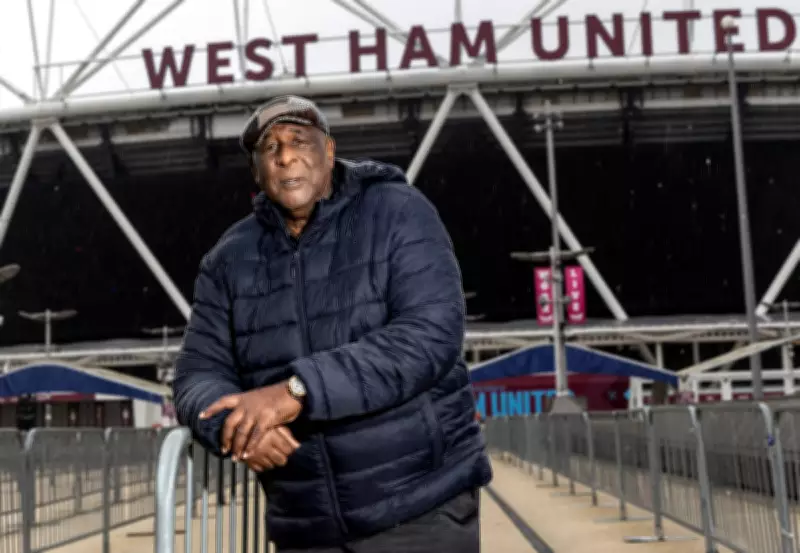
Clyde Best: The Trailblazer Who Changed English Football Forever
At just 17 years old, Clyde Best left his home in Bermuda with a singular focus: to seize an opportunity at West Ham United in England. It was 1968, and with unwavering determination, he embarked on a journey that would see him hailed as English football's first black superstar. Best recalls his father's poignant advice: "When you go to England, you're not playing for yourself, you're playing for those coming after you." This sense of responsibility shaped his entire career, as he carried himself with dignity in the face of immense challenges.
Early Days and Rise to Prominence
Best's footballing talent was evident early on. By age 15, he was already a Bermuda international, having honed his skills in tough matches against British sailors. His performance at the 1967 Pan American Games caught the eye of West Ham manager Ron Greenwood, leading to a trial. Upon arriving in London, a chance encounter with a stranger led him to the Charles family, where he found support and friendship with brothers John and Clive Charles, the former being the first black footballer to represent England at youth level.
Best quickly settled into life at West Ham, making his debut at 18 and playing alongside legends like Geoff Hurst, Bobby Moore, and Martin Peters. He became known for his speed, power, and skill, scoring over 50 goals for the club—a milestone for a black player at the time. Michail Antonio has credited Best with laying the groundwork for every black player in the Premier League today.
Confronting Racism and Inspiring Change
Despite his on-field success, Best faced horrendous racial abuse from crowds, including monkey chants at matches like those against Tottenham. In one chilling incident, he received an anonymous letter threatening acid would be thrown in his face. West Ham's response was swift: captain Bobby Moore organized the team to surround Best as they entered the pitch, showcasing remarkable solidarity.
Best handled the racism with resilience, often choosing not to retaliate to avoid escalating tensions. He reflects, "If I acted up all those years ago, how many black kids do you think would be playing football today?" His composure under pressure made him an inspirational figure, with icons like Ian Wright and Viv Anderson later praising his impact.
Legacy and Later Career
After leaving West Ham in 1975, Best joined the Tampa Bay Rowdies in the North American Soccer League, helping them win the Soccer Bowl and later playing for Portland Timbers. He even partnered with Pelé in exhibition matches, with the Brazilian legend dubbing him "the prince" to his "king." Today, at 75, Best promotes a new film, Transforming the Beautiful Game: The Clyde Best Story, which highlights his pioneering role and features interviews with black footballers who admire his contributions.
Best's story is a testament to courage and perseverance, reminding us of the barriers he broke and the path he cleared for generations of players. His legacy endures as a beacon of hope and progress in the sport.