When Celtic and Feyenoord meet in the Europa League this Thursday, their current struggles offer a stark contrast to a historic encounter more than half a century ago. The Dutch side languish in 29th place in the 36-team table, with Celtic only marginally better in 27th. This modern-day disharmony at Celtic Park, which recently saw fans disrupt the club's annual general meeting, feels a world away from the club's European pinnacle and a specific, painful night in Milan.
The Final Celtic Would Rather Forget
The European Cup final of 1970 remains a curious and painful anomaly in Celtic's illustrious history. It is the showpiece occasion the club would prefer to erase from memory. This was not just a defeat; it was a catalyst that triggered the break-up of the legendary Lisbon Lions, the team that had secured the trophy in dramatic fashion just three years earlier. Celtic have never returned to European football's biggest match since, and current evidence suggests they may never do so.
The context made the loss even more jarring. Under the immense Jock Stein, Celtic were domestically dominant and arrived in Milan with justifiable confidence, fresh from a semi-final victory over the mighty Leeds United. The received wisdom is that Stein, a manager ordinarily obsessed with detail, badly underestimated the Dutch threat. Feyenoord, an emerging force, had not been properly scouted, with a low-key end-of-season draw against Ajax misleading the Scottish camp.
A Night of Uncharacteristic Errors in Milan
The match itself at the San Siro began promisingly for the Glasgow side. Tommy Gemmell, a hero of the Lisbon triumph, fired Celtic into the lead just before the half-hour mark. However, any notion of a comfortable procession was shattered two minutes later when Rinus Israël equalised for Feyenoord.
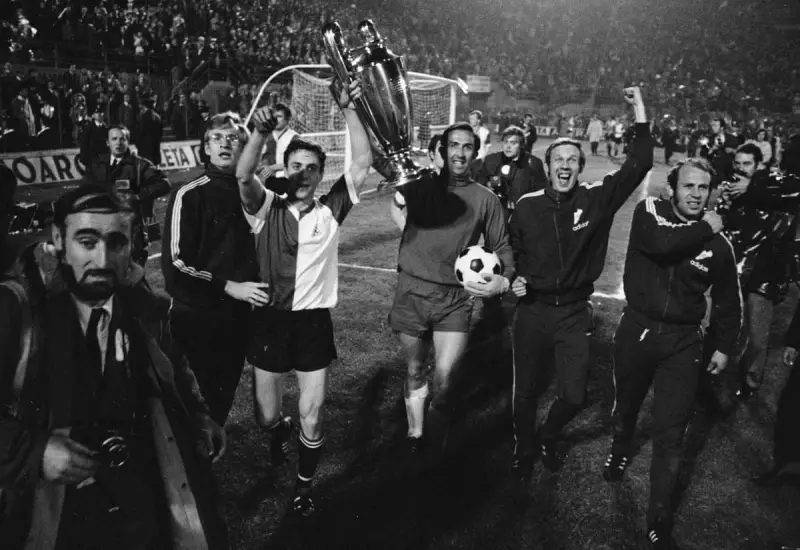
The game stretched into extra time, and with a replay looming if the scores remained level, disaster struck for Celtic. With just three minutes left, a rare error from the usually impeccable captain Billy McNeill allowed Swedish striker Ove Kindvall to score the winning goal. McNeill was brutally honest in his assessment, stating, "Two-one in extra time makes it seem close but we know the real difference was about four goals. Everywhere that mattered, we got stuffed."
The aftermath was symbolic of the miscalculation. A multiple-hour delay at Milan's Malpensa airport saw Stein handing out unwanted champagne bottles to despondent supporters, a gesture that perfectly captured the shattered expectations.
The Lasting Legacy and a Forced Evolution
The consequences of that night were profound and immediate for Celtic. The club's official magazine described the final as a "disaster" for all involved. For manager Jock Stein, the pressure to overhaul his celebrated team became immense. The defeat directly accelerated the integration of a new generation of talent known as the Quality Street Gang.
This group, which included future legends like Kenny Dalglish, Lou Macari, and Danny McGrain, may have forged their reputations regardless, but their path to the first team was undoubtedly fast-tracked by the failure in Milan. While domestic dominance continued, Celtic's European journey never again reached those heights, with semi-final losses in 1972 and 1974 being the closest they came.
For Feyenoord, captained by Wim Jansen—who would later manage Celtic to a crucial league title in 1998—the victory was transformative. It suitably incentivised their rivals Ajax to win the next three European Cups, cementing Dutch football's place at the top of the European game. Feyenoord themselves would go on to lift the UEFA Cup in 1974.
While Celtic fans often look back fondly at the 2003 UEFA Cup final in Seville under Martin O'Neill, the 1970 final remains the one that got away. It was more than a lost final; it was a definitive sliding doors moment that altered the club's European trajectory forever.