Carlton's Duty of Care Under Scrutiny After Elijah Hollands' On-Field Mental Health Crisis
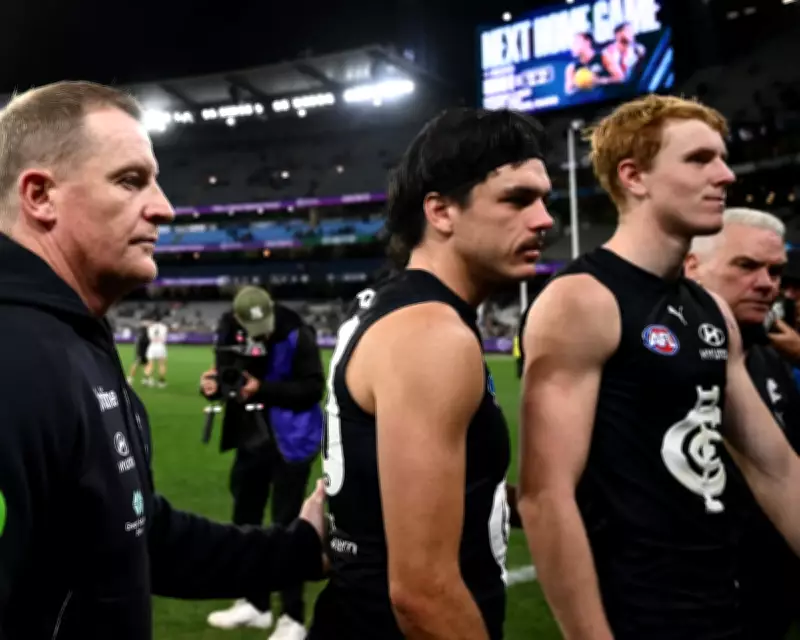
The Australian Football League community is grappling with profound questions about player welfare and institutional responsibility following a distressing incident at the MCG on Thursday night. Carlton Blues player Elijah Hollands suffered what has been described as a "mental health episode" during the match, yet continued playing for an extended period before being followed off the field by coach Michael Voss.
A Failure of Leadership and Protocol
The grainy footage captured from the stadium's upper levels reveals a player in visible distress, raising immediate concerns about how such a vulnerable athlete could remain in play. In an era where football clubs employ armies of medical professionals, psychologists, and support staff, the incident represents a significant breakdown in duty of care protocols.
"How was a footballer in such a vulnerable state allowed to keep playing?" This question echoes through the AFL community as investigations begin. The environment at professional football clubs ranks among the most monitored workplaces globally, with constant tracking of heart rates, wellness markers, and performance data. Yet this critical situation appears to have been missed by those closest to the action.
The Immediate Aftermath and Investigation
From the moment the footage emerged online, speculation ran rampant about potential causes - from substance issues to panic attacks. Carlton initially described it as an "off night" for Hollands, while AFL executive Laura Kane now leads the formal investigation. The incident has reignited debates about the league's illicit drugs policy and mental health support systems.
What makes this situation particularly troubling is the contrast between the immediate recognition by spectators in the "nosebleed" sections and the apparent failure of the professional support network on the ground. Football clubs frequently emphasize their internal care systems "within the four walls," but this incident exposes potential gaps in protection during the most exposed moments - in front of 80,000 spectators and millions of television viewers.
Historical Context and Changing Attitudes
Mental health challenges among athletes are not new phenomena. Historical examples include Mitch Morton's pre-game anxiety rituals, Gavin Crosisca's self-medication during his playing career, and James Hird's hidden struggles behind his composed public persona. These athletes coped according to the expectations and support systems of their eras.
Today's generation of footballers, including Hollands himself in previous interviews, have shown remarkable openness about mental health challenges. Bailey Smith's candid discussions last year and Hollands' own revelations about panic attacks and self-medication demonstrate this cultural shift. Yet this progress makes Thursday's incident even more concerning - if players are more willing to discuss their struggles, why weren't support systems better prepared to intervene?
The Core Questions Demanding Answers
The investigation must address several critical issues: Why did multiple layers of professional oversight fail to recognize Hollands' distress? How can a coach operating from the bench to "build greater connection" with players miss such obvious signs? What protocols exist for immediate intervention during games, and why weren't they activated?
Perhaps most importantly, the AFL and Carlton must examine why spectators recognized the problem before the professional support team did. In an environment of constant monitoring and data collection, how could such a significant welfare issue "slip through" the safety net designed to protect players?
The coming weeks will determine whether this incident becomes a catalyst for meaningful change in AFL player welfare systems or merely another moment of crisis management. What remains clear is that the duty of care extends beyond training facilities and club rooms - it must be most robust precisely when players are most exposed and vulnerable.