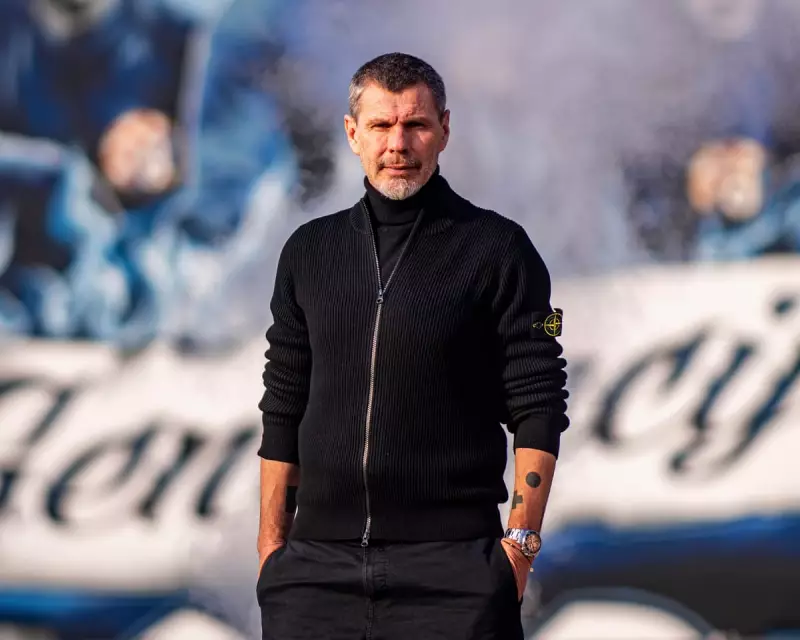
In the fading light of a Zagreb afternoon, a football legend is explaining why he has come home. Zvonimir Boban, the former Croatia captain and a pivotal figure in European football administration, has returned to the club where it all began. For him, Dinamo Zagreb represents not just a new role as president, but the final, emotional destination of his long journey in the sport.
A principled stand and a dramatic departure
Boban's return to Maksimir Stadium follows a dramatic and principled exit from one of football's most powerful institutions. In January 2024, he resigned from his position as Uefa's chief of football, a role he had held for nearly three years. The catalyst was his profound disagreement with President Aleksander Ceferin over proposed statute changes that would allow Ceferin to seek a fourth term.
"I'm just sorry for the personal relationship with Aleksander," Boban reflects, confirming the two have not spoken since. "We had a very nice relationship... But I did what I had to do." He insists his decision was not impulsive, but the result of two months of careful thought. "I didn't react like a kid, like a spoiled child. I thought a lot." He believes he would still be at Uefa had the rift not occurred, but staying silent would have betrayed his values.
Criticism of FIFA's 'shameful' direction
Boban's commitment to principle extends to his views on his former employer, FIFA, where he served as deputy secretary general from 2016 to 2019. While he vigorously defends the body of work he undertook with President Gianni Infantino, particularly the implementation of VAR to protect the game's integrity, he is scathing about recent events.
He describes the decision to award a 'peace prize' to Donald Trump during the World Cup draw as "disrespectful and irresponsible" and "shameful." "I couldn't watch it," he admits. "Gianni has always been accountable and very responsible, but he isn't aware of what he is doing to himself and FIFA now... It shouldn't be a political organisation but now you're doing this."
Boban also criticises the expanded 32-team Club World Cup format, a project he once championed in a more limited form. "Thirty-two teams and 30 days, you are killing the players," he states bluntly.
The mission to rebuild a beloved club
Now, at 57, Boban's entire focus is on Dinamo Zagreb. He returned initially as CEO before being elected president in the club's first democratic election in September 2024. He is undertaking the immense challenge of revitalising a club scarred by the scandal-ridden era of former chief executive Zdravko Mamic, and he is doing it without taking a salary.
"If I didn't do this it would be a betrayal of every value I have lived for," he says with palpable emotion. His vision is clear: to build one of Europe's finest academies, blending the methodology of Barcelona's La Masia with the fierce competitive heart of Croatian football. He has already brought in Albert Capellas, a former Barcelona youth coach, to lead the project.
Boban believes Dinamo can become a crucial developmental stop for young talents from Europe's biggest leagues, citing the recent signing of young defender Sergi Domínguez from Barcelona as a template.
The iconic kick and a lasting legacy
The conversation inevitably turns to that day in May 1990, when a young Boban launched a flying kick at a policeman during violent clashes between Dinamo and Red Star Belgrade fans. The act made him an instant symbol of Croatian resistance on the eve of the nation's independence.
He is keen to contextualise the moment. "It was a collective moment, not mine," he insists. "What were we looking for? Freedom. We did the right thing. It was nothing about nationalism... simply justice and freedom." He reserves the title of true hero for those who later fought in the war for Croatia's independence.
Despite his degrees, his business interests, and his years in football's boardrooms, Boban's soul remains that of a player. He still occasionally laces up his boots to join academy training sessions, playing as a "joker" with the under-14s and 15s.
And so, in the mist of Maksimir, he has found his terminus. When asked if he would ever be tempted to return to the European political stage, perhaps to challenge for the Uefa presidency itself, his answer is definitive. "No, no... This was the first real station of my football life and it will be the last. And it's the one I love most... It's an emotion that I can't bring anywhere else. So what else can there be? What more?" For Zvonimir Boban, the journey ends where it began, driven by the same uncompromising heart.