Alex Honnold's Daring Taipei 101 Ascent Set for Global Netflix Broadcast
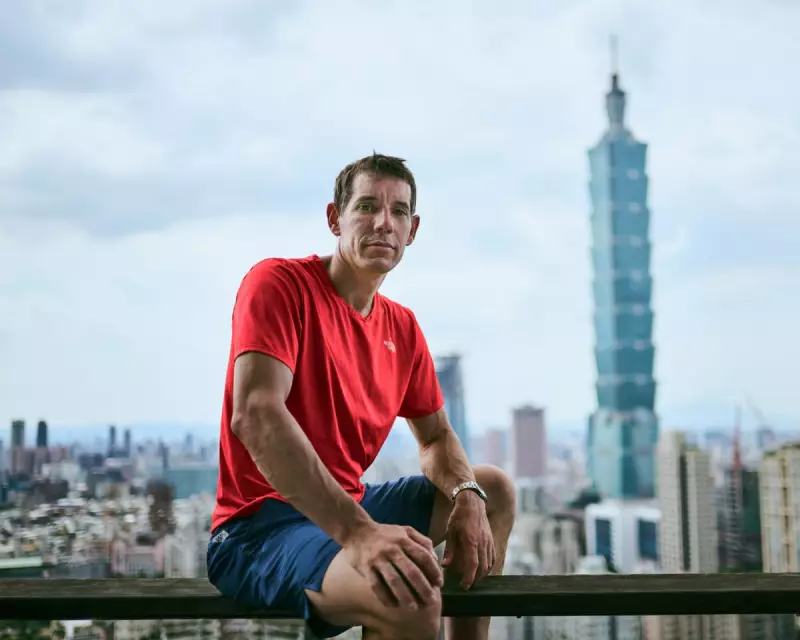
Alex Honnold, the celebrated star of the Oscar-winning documentary Free Solo, is poised to undertake one of the most audacious climbs of his career. After three months of intensive training, Honnold will attempt to free solo – climbing without ropes or a harness – the iconic Taipei 101 skyscraper in Taiwan. Standing at an imposing 1,667 feet (508 metres), this structure ranks among Asia's tallest buildings, making this endeavour a monumental feat in the climbing world.
Netflix's Live Sports Strategy Takes a Vertical Turn
The climb will be broadcast live globally on Skyscraper Live, marking Netflix's latest venture into live sports programming. Scheduled for 9am local time in Taipei on Saturday (8pm ET Friday in the US), this two-hour event represents a significant moment for the streaming giant. Netflix has been actively expanding its live sports portfolio, having previously aired NFL games and high-profile boxing matches, with plans to broadcast events like the MLB Home Run Derby and the 2027 FIFA Women's World Cup.
Richard Deitsch, a veteran sports media journalist, notes that Netflix's strategy focuses on "eventizing sports" – seeking one-off spectacles rather than extensive inventories. He describes Skyscraper Live as "sports adjacent", designed to attract viewers to Netflix's broader content library. "Sports drives audience," Deitsch emphasises. "You have to watch it live."
Ethical Concerns and Climbing Community Backlash
The decision to livestream such a high-risk activity has sparked considerable controversy. Critics within the climbing community and beyond have voiced concerns about the potential dangers and ethical implications. Some have labelled the event "voyeuristic, ghoulish and irresponsible", particularly given Honnold's roles as a husband and father. These concerns were amplified following the tragic death of an Alaskan climbing influencer last year, whose fall was livestreamed on TikTok.
Netflix has implemented several safety measures in response to these concerns. The broadcast will include a viewer-discretion advisory and operate on a 10-second delay, allowing producers to cut the feed if necessary. Honnold will maintain constant communication with his camera crew and production team throughout the ascent. The streaming platform is collaborating with experienced production companies Plimsoll Productions and Secret Compass, both of which have worked with Honnold on previous high-stakes projects.
Taipei's Climbing Community Reacts with Mixed Emotions
Within Taipei itself, local climbers have expressed divergent views about the event. At Long Dong, a popular climbing destination northeast of Taipei, amateur climber Ai Chien stated he would avoid the live broadcast. "I don't want to see something I'm not supposed to see," he explained, adding that he would only watch a replay if Honnold succeeds.
At a climbing gym in Taipei's Zhonghe district, teacher Tse Hsiao-yang, who has climbed for six years, expressed opposition to the livestream despite expecting Honnold to succeed. "I don't understand why it has to be done this way, other than for commercial reasons," he remarked. "If he falls, the price is huge."
Conversely, Yen Shin-chou, a climber with 24 years of experience, viewed the event more positively. He believes Honnold would not attempt anything reckless and sees Skyscraper Live as an opportunity to "raise Taiwan's global profile".
Architectural Advantages and Psychological Preparation
While Taipei 101 appears forbidding to the untrained eye, climbers recognise certain advantages in its design. The building's distinctive "bamboo box" architecture features stacked segments with balconies every eight floors, providing regular resting points similar to a multipitch rock climb. Honnold himself has noted that skyscraper climbing tests endurance more than technical skill, with the challenge lying in "the overall physicality" rather than individual difficult moves.
The only person with comparable experience is Alain Robert, the French climber known as "Spiderman", who climbed Taipei 101 on top rope in 2004. Robert expressed confidence in Honnold's abilities, stating "There is not even a one-in-100-million chance that this will be his last climb." When questioned about the potential trauma of witnessing an accident, Robert responded pragmatically: "Wars, riots and coups are livestreamed every day. Death is part of life."
Dr Jamie Shapiro, a professor of sport and performance psychology at the University of Denver, emphasised the importance of Honnold's mental preparation. "You can't predict every challenge," she noted, "but you can trust your training and your competence. He has enough experience to stay composed if something unexpected happens." She added that audiences are often drawn to genuine risk, and watching elite athletes attempt extraordinary feats can inspire people to push themselves in positive ways.
Global Attention and Unprecedented Stakes
The event has captured worldwide attention, with thousands of people placing bets on Honnold's fate and completion time on Polymarket, a cryptocurrency-based prediction market. Current odds suggest he will complete the climb in approximately 75 minutes. An on-air panel featuring elite climbers, a former ESPN anchor, a WWE champion, and a NASA engineer turned YouTuber will provide commentary and context throughout the broadcast.
In recent days, Honnold has been conducting rope-assisted test runs with permission from the Taipei city government, navigating drizzle and the sound of ambulance sirens. A small live audience has been invited to watch from ground level in Taipei, adding to the event's spectacle.
As the climbing community and global audience await this unprecedented event, the debate continues about the ethics of broadcasting such high-risk activities. Whether viewed as inspirational or irresponsible, Alex Honnold's attempt to free solo Taipei 101 represents a defining moment in both climbing history and the evolution of live sports broadcasting.