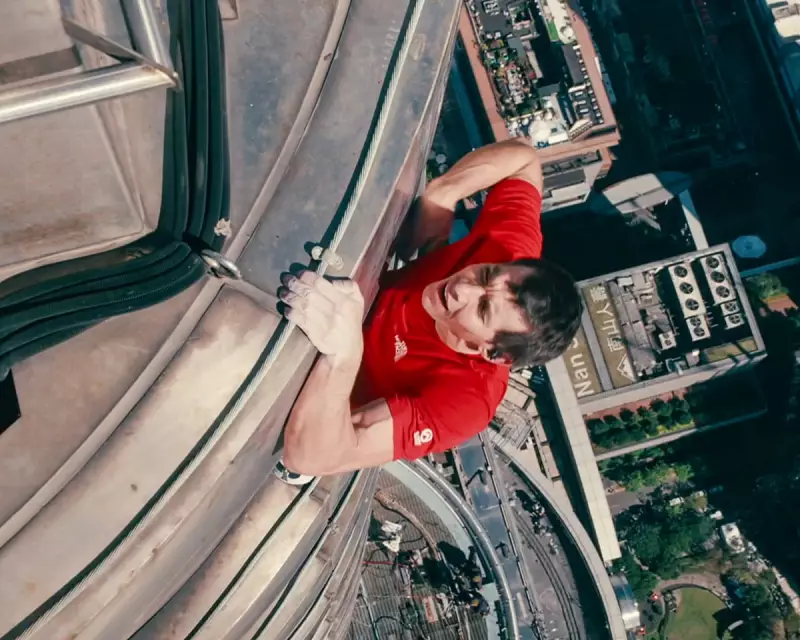
Netflix's recent broadcast, Skyscraper Live, has left viewers in a state of sheer panic, as it documented free climber Alex Honnold's unassisted ascent of the 508-metre Taipei 101 skyscraper in Taiwan. This live event, which aired without the safety net of ropes or editing, has been dubbed by many as the most stressful television experience ever recorded, raising profound questions about the future of entertainment and the ethics of broadcasting activities where death is a real possibility.
The Unforgiving Nature of Live Broadcasts
Unlike Honnold's previous work in the documentary Free Solo, which was carefully edited to maximise drama, Skyscraper Live offered raw, uninterrupted footage of his climb over an hour and a half. This lack of post-production safety meant viewers were confronted with the unvarnished risk, amplifying anxiety to unprecedented levels. The event stripped away any illusion of control, forcing audiences to grapple with the live possibility of a fatal mishap, a stark contrast to pre-recorded formats that could be altered after the fact.
A Test of Viewer Endurance
Watching Skyscraper Live proved to be an endurance challenge in itself. The human mind, not designed to sustain prolonged panic, often drifted during repetitive climbing movements, leading to moments of boredom interspersed with sudden spikes of terror. This dynamic mirrored a turbulent long-haul flight, where monotony is shattered by intense fear. Despite this, the climb's structure—featuring heights, overhangs, and a nerve-racking 45-degree angle ascent—kept viewers on edge, with even replays inducing sweaty palms and visceral reactions.
The Ethical Dilemma of Jeopardy as Entertainment
Beneath the spectacle lies a queasy truth: Skyscraper Live thrived on the jeopardy of potential death. While Honnold's athleticism and courage are admirable, the primary draw for many was the morbid curiosity of witnessing a life-or-death scenario unfold in real-time. This explicit focus on danger echoes past events like Felix Baumgartner's 2012 space jump, where audiences tuned in partly for the thrill of possible disaster, prompting self-reflection on our roles as rubberneckers in macabre entertainment.
Implications for Television's Future
If Netflix capitalises on this success by commissioning more live events with similar risks—such as free diving or rooftop parkour—it risks reducing television to a Victorian freak show, where human peril becomes a central selling point. Such a direction could undermine the platform's reputation, potentially branding it as a hub for sensationalist, death-defying stunts rather than quality content. For now, Skyscraper Live stands as a one-off experiment, but its impact sparks debate on whether entertainment should ever be predicated on the possibility of tragedy.
Ultimately, while Skyscraper Live showcased an extraordinary feat, it forces us to confront uncomfortable questions about the boundaries of live TV and our own consumption habits. As viewers recover from the stress, the industry must weigh the allure of ratings against ethical considerations, ensuring that the future of television remains engaging without exploiting human vulnerability.