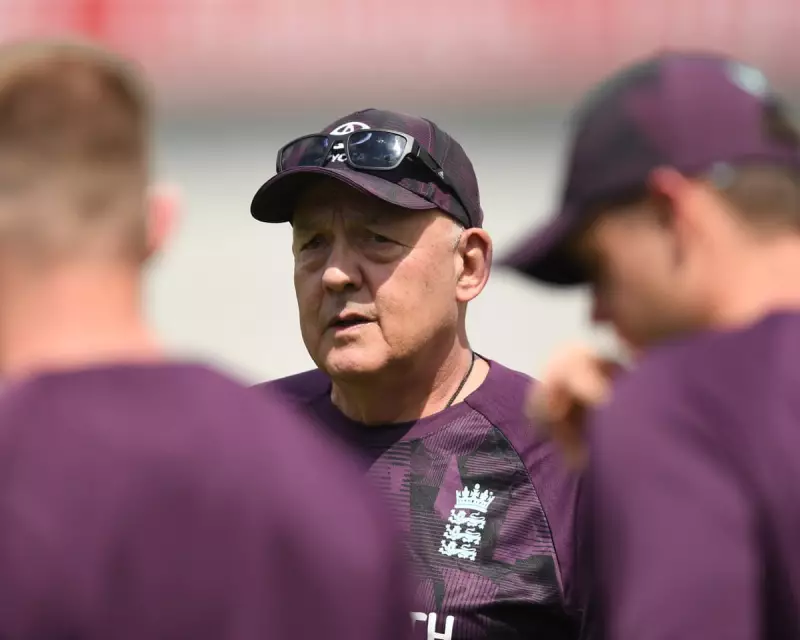
As England's cricketers prepare for their ultimate test in the 2025-26 Ashes series, they're being guided by one of sport's most remarkable mental skills coaches. Gilbert Enoka, the architect of the famous 'no dickheads' policy during his 21 years with the All Blacks, has joined Brendon McCullum's revolution as England seek to conquer Australian soil for the first time since 2011.
The Calm Before the Storm
Sitting in the bar of England's team hotel in Perth, Enoka reflects on the challenge ahead with characteristic calmness. 'We've got a smooth lake at the moment,' he observes. 'But the series is going to start and then there's going to be really, really choppy water in terms of what we actually have to sail. All I want is to help the guys develop structures that can help them be reliable when those waves come.'
His journey to becoming one of sport's most sought-after mental coaches is as extraordinary as his impact. After spending much of his childhood in an orphanage before moving in with his mother and her 'alcoholic, dysfunctional' partner, Enoka left home at 16, found a subsidised university course and became a PE teacher while representing New Zealand in volleyball.
From Schoolteacher to Sporting Legend
'I was looking at ways to get better and found that most of the problems people were having were in the mind, in their heads,' Enoka explains. 'Mistakes, setbacks, self-doubt, all those things. I started looking at that and created, before I knew it, a high-performance environment in the teams I was coaching.'
His big break came when All Black Wayne Smith visited his school selling PE kit. Over coffee, Smith confided his struggles with expectation and scrutiny, beginning a partnership that would take Enoka to the All Blacks for 304 games and a period of extraordinary success.
The McCullum Connection
Enoka's relationship with England coach Brendon McCullum dates back to the New Zealand academy days, but was forged in fire during the 2014 Test against Pakistan. When news filtered through that Australian batter Phil Hughes had died, a devastated McCullum called Enoka for guidance.
'That night I rang Gilbert and told him I didn't know what to do,' McCullum recalled in 2016. 'He was incredible. He said we should not judge anything anyone did during the week, that people should grieve in their own way.'
The result was transformative. McCullum scored 202 off just 188 balls, and his approach to cricket was forever changed. 'Gilbert Enoka's 'no consequences' brought a 'joy of life' in a cricketing sense that was richly ironic but nevertheless liberating,' McCullum said.
Earlier this year, McCullum invited Enoka to help prepare England for the Ashes. After an initial session in London, Enoka was impressed. 'I didn't meet one dickhead, which surprised me,' he admits. 'He'd created an environment that was very free. I don't mean free as in happy-go-lucky, he was allowing the players to be free in how they express themselves.'
Preparing for the Ultimate Test
Since the English summer, Enoka has become a familiar presence around the England squad, working with both red and white-ball teams. His approach is typically low-key: observing training, making himself available, and challenging players on their mental structures.
Former captain Joe Root is among his converts. 'I think he's brilliant,' Root says. 'When you get influence from, whether it's a crossover of sports or people coming from a slightly different culture, they're able to give you almost a different pair of glasses to see the world through.'
Enoka believes England's leadership duo of McCullum and Ben Stokes represents one of the team's great strengths. 'If the leadership's not right it's unwinnable down below,' he notes. 'In Baz you've got a leader that is quite unique. He's comfortable being in his own skin and he knows his method. Then you've got a skipper like Ben, well, his record tells it all: he's a stallion.'
History weighs heavily on England's shoulders - they've won only one Ashes series in Australia since 1986, and lost 13 matches without victory in their last three tours. But Enoka sees this differently.
'History doesn't lie, but the past doesn't have to tell the future what to do,' he insists. 'This is the Everest, the biggest. To come over to Australia, this beautiful country, and to play in their backyard in a series that has this iconic history to it, what a privilege that is.'
As preparations conclude, Enoka's commitment is absolute. 'How are we going to go? Don't know. But I know that we're going to fight in every moment,' he says. 'They're about to go to war, and I want to be in the trench with them.'